
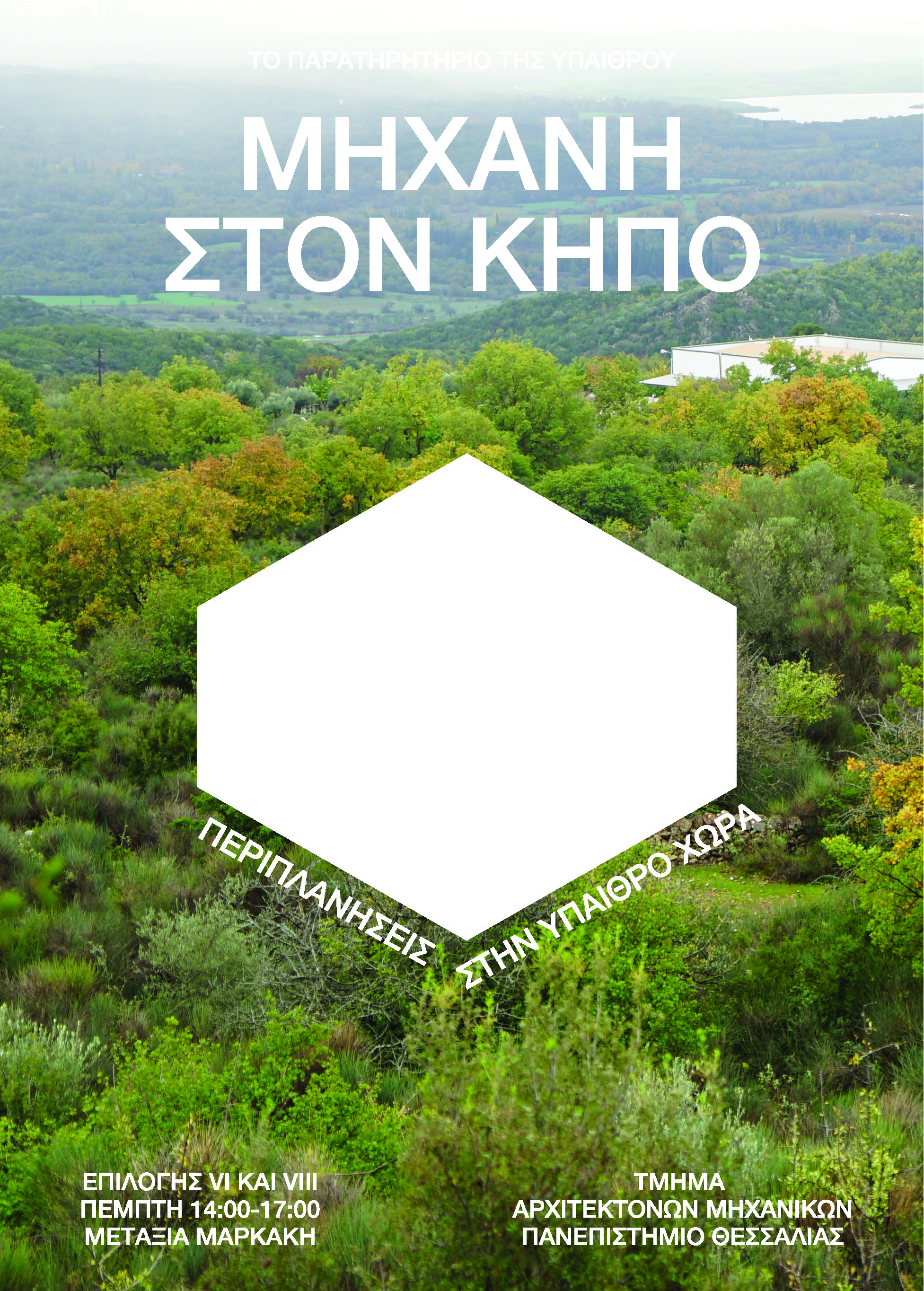
“Suddenly a shrill, humming sound reached my ears. I looked, and within the calm of the rural landscape, like a frozen avalanche, a large whitewashed factory rose before me.” This scene, from the book The Machine in the Garden (1964) by Leo Marx, condenses the central question of the course: what happens when the mechanical sound — and the material presence of a machine — enters an agro-pastoral landscape? What, ultimately, is the “machine,” and who or what is the “garden”?
By challenging traditional dichotomies — between theory and practice, research and design, machine and garden — the course proposes a pedagogical process in which these elements develop in relation to one another. In doing so, it seeks to enrich the field of urban studies with new perspectives for research and to encourage a critical and creative engagement with the peripheral landscapes of the countryside.
Upon completion of the course, students will be able to:
-
Understand key theories of extended urbanization, processes of transformation beyond the city, and the significance of the “urban outside.”
-
Critically identify and engage with traditional dichotomies (city/countryside, urban/rural, theory/practice, research/design) and reformulate them in creative and synergistic ways.
-
Apply methodological tools such as mapping, narrative techniques, and ethnographic research methods to the analysis and design of peripheral landscapes.
-
Connect theoretical approaches with applied design through group work and interdisciplinary collaboration.
-
Produce research and design outcomes that contribute to understanding and addressing the social and ecological challenges of rural and peripheral territories.
The course is addressed to students who wish to synthesize theoretical, research, and design approaches; to research through design and to design through research. It offers tools that can be further developed and applied in their research projects or final thesis work.
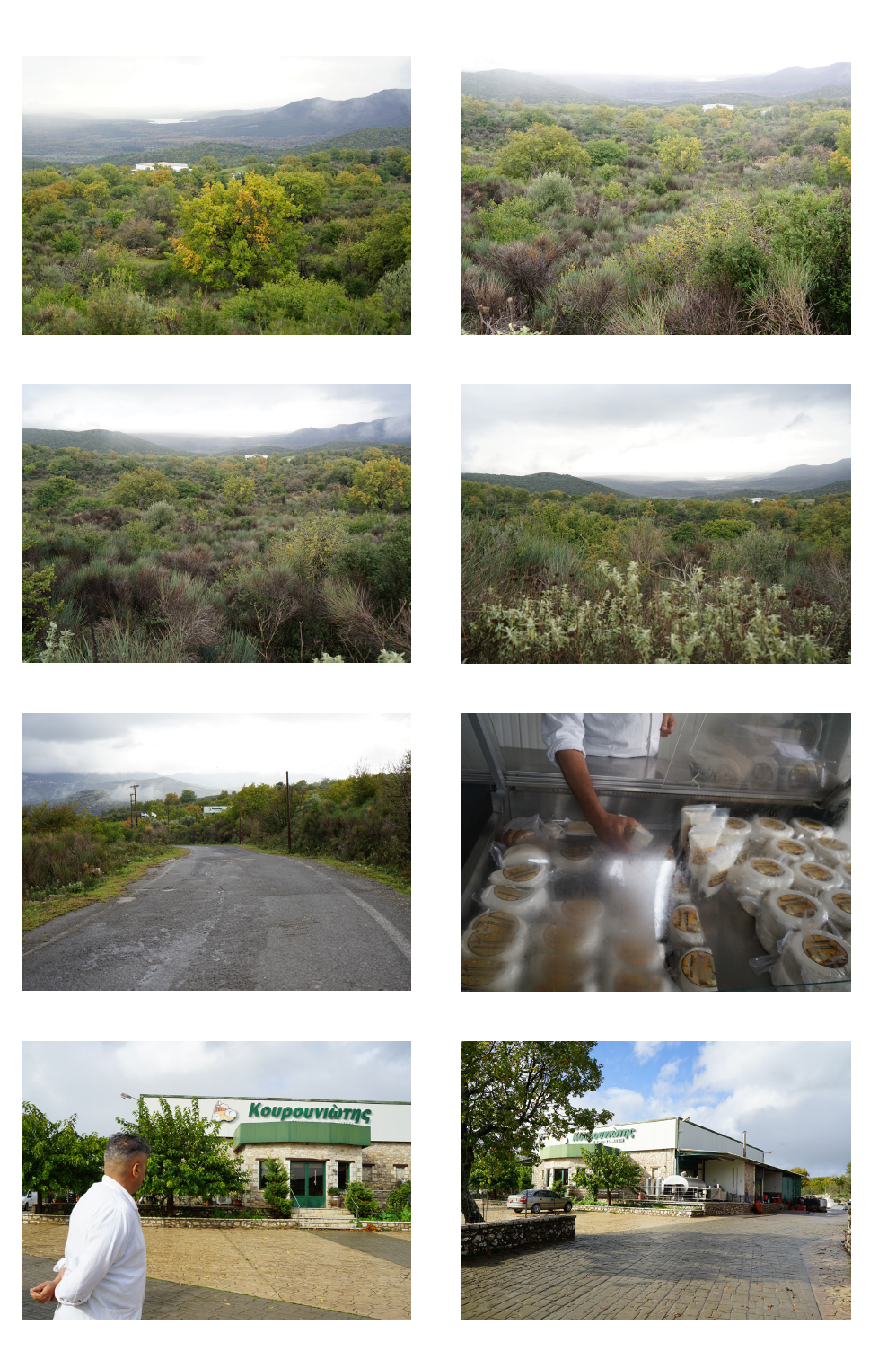
Machine in the Garden. Sensory Wanderings in Ypaithros Chora,
Feta Factory, Mountainous Arcadia, March 2022.
Assessment is based on attendance and active participation in class, contribution to interim oral presentations, and the final project (Narrative Experiment), with emphasis placed on analytical ability and critical synthesis.
Marx, Leo. The Machine in the Garden: Technology and the Pastoral Ideal in America. New York: Oxford University Press, 1964.
Williams, Raymond. The Country and the City. London: Chatto & Windus, 1973.
Gifford, Terry. “Pastoral, Anti-Pastoral and Post-Pastoral.” In Green Voices: Understanding Contemporary Nature Poetry, 146–174. Manchester: Manchester University Press, 1995.
Garrard, Greg. Ecocriticism. London: Routledge, 2004.
Buell, Lawrence. The Future of Environmental Criticism: Environmental Crisis and Literary Imagination. Malden, MA: Blackwell Publishing, 2005.
Morton, Timothy. Ecology without Nature: Rethinking Environmental Aesthetics. Cambridge, MA: Harvard University Press, 2007.
Heise, Ursula K. Sense of Place and Sense of Planet: The Environmental Imagination of the Global. Oxford: Oxford University Press, 2008.
Brenner, Neil, and Christian Schmid. “Planetary Urbanization.” In Implosions/Explosions: Towards a Study of Planetary Urbanization, edited by Neil Brenner, 160–163. Berlin: Jovis, 2014.
Brenner, Neil, and Nikos Katsikis. “Is the Mediterranean Urban?” In Implosions/Explosions: Towards a Study of Planetary Urbanization, edited by Neil Brenner, 428–459. Berlin: Jovis, 2014.
Clark, Timothy. Ecocriticism on the Edge: The Anthropocene as a Threshold Concept. London: Bloomsbury, 2015.
Schmid, Christian, and Milica Topalovic, eds. Extended Urbanisation: Tracing Planetary Struggles. Basel: Birkhäuser, 2023.
Markaki, Metaxia. “Expropriation and Extended Citizenship: The Peripheralisation of Arcadia.” In Extended Urbanisation: Tracing Planetary Struggles, edited by Christian Schmid and Milica Topalovic, 197–234. Basel: Birkhäuser, 2023.
Bathla, Nitin. “A Methodological Pluriverse: An Introduction.” In Researching Otherwise: Pluriversal Methodologies for Landscape and Urban Studies. Zurich: gta Verlag, 2024.