

Monday 05/10/2026 18:00-20:00
The lecture will be about practices of threshold spaces in the Occupied West Bank of Palestine. Tan will present her documentaries about the spatial production of Palestine, seed archives, alternative pedagogical activities between 2014 and 2023, and field research on Palestinian modernist architectural heritage.
The lecture will take place in the framework of the course: CRITICAL APPROACHES IN ARCHITECTURAL THEORY AND DESIGN| RECONSTRUCTIONS: GAZA (Instructor: P. Phokaides, Ass. Prof. Dept. of Arch, UTh)
Short bio:
Pelin Tan is a sociologist, researcher, and head of the Cultural Studies graduate program of Batman University, based in Mardin, Turkiye. She was the 6th recipient of the Keith Haring Art&Activism fellowship at Bard College, 2019–2020, NYC. Tan is a member of the curatorial board of IBA Stuttgart 2027, the research network steering committee of the Canadian Center for Architecture, Montreal, 2025–2027, and co-curator of Urgent Pedagogies (IASPIS). Tan was a visiting professor at the Hong Kong Polytechnic School of Design (2016), the Architecture Faculty of the University of Cyprus (2018), and the Orient Institute in Beirut, Lebanon. She leads research on the threshold infrastructure of the Culture of Assembly, at the Luxembourg University’s Architecture Faculty; and Landscapes As Archives, a spatial research on the region of the Tigris River in Iraq. Her books include, Forms of Non-Belonging, e-flux books/Sternberg, 2026. Unconditional Hospitality –Threshold Architecture, dpr-barcelona, 2027.
Download the poster.
Zoom link.

Associate Professor Ioanna Symeonidou of the Department of Architecture has won First Prize in the International Competition for design and construction using 3D concrete printing with a robotic arm. The prize includes the implementation of the project, which is scheduled to be completed in November 2026 in Eindhoven, Netherlands.
As part of the Greenfield Residency 2026, the company VERTICO is giving 10 students from the Department of Architecture at the University of Thessaly the opportunity to participate in the construction under Ms. Symeonidou’s supervision and receive training in robotic arms and 3D concrete printing. The students will have access to the machinery at VERTICO's factory for one week.
Ms. Symeonidou will coordinate the student team, and an informational meeting will be held on Tuesday, September 22, 2026, in Room D at 19:00. The students selected for the team traveling to the Netherlands in November will participate in weekly meetings to finalize the construction drawings and code for the robot. A key requirement for participating in the robotic construction team is prior experience with Grasshopper3D and/or 3D printing slicing software. Upon applying, submit a two-page PDF featuring sample work related to the above.
Interested applicants are invited to fill out the form by September 21. Grade Point Average, specifically grades in digital media courses, and the submitted sample of work will be taken into account.
PELION CHORA
Presentation of Student Work & Book Vernissage
According to myth, the Giants Otus and Ephialtes piled mountains on top of one another in an attempt to reach the gods on Mount Olympus, creating Mount Pelion as a natural “stairway” to the sky. In another account, Pelion was the summer residence of the gods—a place of transition and coexistence between different worlds. Between these two myths—of ascent, claiming territory, and hybrid inhabitation—the course poses its central question: what are the present and future of mountainous territories and, more broadly, of peripheral places? How do mountains, islands, and villages experience processes of urban transformation? How are they affected by the climate and economic crises? And how can we, as architects and urbanists, respond to these challenges?
To mark the conclusion of the course Pelion Chora: Untangling and Reweaving a Mountain, we invite you to a presentation of the students’ work and to the vernissage of the book PELION CHORA, which brings together the work and research developed throughout the course.
For our final gathering, we present the projects, leaf through the book, and “untangle once again” the mountain we collectively constructed over the course of the semester.
As part of the course
PELION CHORA: Untangling and Reweaving a Mountain
by The Countryside Observatory
Tutor: Metaxia Markaki
COST Action CA23145 – CitySenZ
Architectural and Urban Ambiances of European Cities
Call for Participation
Sensing Kypseli – Urban Polyphonies and Relational Architectures
28–30 November 2026
Kypseli Municipal Market, Athens
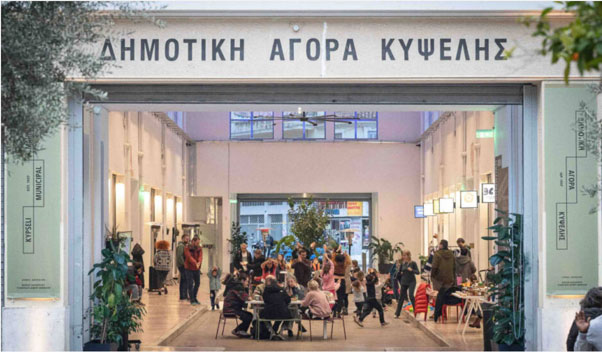
The COST Action CA23145 CitySenZ – Architectural and Urban Ambiances of European Cities, coordinated by Lusófona University and funded by the European Union, is organizing the workshop “Sensing Kypseli – Urban Polyphonies and Relational Architectures” at the Kypseli Municipal Market (Δημοτική Αγορά Κυψέλης – ΔΑΚ), a vibrant social and cultural hub at the heart of the neighbourhood.
The workshop programme and activities are developed and coordinated with the Department of Architecture, University of Thessaly, the Sustainable Design of the Built Environment Laboratory (Εργαστήριο Αειφόρου Σχεδιασμού του Δομημένου Περιβάλλοντος), and the AAU-CRESSON Laboratory, Grenoble School of Architecture – Université Grenoble Alpes.
The workshop invites participants to explore urban ambiances and public space through the sensory, environmental and relational dimensions of Kypseli, one of Athens’ most vibrant neighbourhoods. Through sound recordings, environmental measurements, photography, interviews, drawings and collective observations, researchers, practitioners, students and local inhabitants will investigate how urban ambiances emerge from the relations and interactions between people, places, objects, infrastructures, environmental conditions and other living beings. The workshop encourages more-than-human and relational approaches to understanding how public spaces are experienced, negotiated and collectively shaped.
Researchers, architects, artists, planners, practitioners, students, early-career researchers and local inhabitants are warmly invited to participate.
See the poster.

COST– CitySenZ Architectural and Urban Ambiances of European Cities
Call for Papers – ACT 3
Polyphonies of Ambiances
1–2 December 2026
Stavros Niarchos Foundation Cultural Center (SNFCC), Athens
The COST Action CA23145 CitySenZ – Architectural and Urban Ambiances of European Cities, coordinated by Lusófona University and funded by the European Union, is organizing its third conference, “Polyphonies of Ambiances”, at the Stavros Niarchos Foundation Cultural Center (SNFCC) in Athens.
The conference programme and scientific activities are developed and coordinated with the Department of Architecture, University of Thessaly, and its Sustainable Design of the Built Environment Laboratory.
Polyphonies of Ambiancesexplores how sensory, social, ecological, technical and more-than-human dimensions shape the experience of contemporary environments. Bringing together researchers, architects, engineers, artists, institutions and local stakeholders, the conference invites contributions examining how urban ambiances are perceived, experienced, negotiated and collectively transformed through everyday life.
Researchers, architects, engineers, artists, planners, practitioners and early-career researchers are warmly invited to contribute.
See the poster.
Official CitySenZ website https://www.citysenz.eu
Call for Papers – Polyphonies of Ambiances https://www.citysenz.eu/download/call-for-papers-act3-v.-05-06-2026.pdf
Abstract submission https://citysenz3.sciencesconf.org

Blended Intensive Program
Rural Futures
Larissa-Volos, 12-16/10/2026
Within the framework of the Erasmus+ program, the Department of Architecture of the University of Thessaly is organizing an Erasmus+ Blended Intensive Program entitled “RURAL FUTURES- Rural Heritage and the Architecture of Food Production”.
The Università degli Studi di Padova (Italy), the ICSTE- Instituto Universitário de Lisboa (Portugal), University of Lubljiana (Slovenia) will participate. Approximately 35 students from foreign universities and 8 students from the Department of Architecture of the University of Thessaly can participate in the program. It will take place in person in Volos and Larissa (October 12-16, 2026) and will include online meetings in September.
Many cities around the world are confronted with a critical question: on the one hand, they strive to safeguard their historical heritage, while on the other, they must manage the pressures generated by ongoing urbanization. This dual challenge often gives rise to conflicts, both social and spatial in nature.
Such tensions are manifested, for instance, in the clash between the demands of tourism and the needs of local populations, as well as in the friction between nationally constructed identities and the pressures exerted by the globalized economy.
On this basis, the workshop is structured around three main objectives:
- To examine the evolution of the historical urban landscape, as well as the tensions it entails, through the case studies of a major city (Athens) and a smaller urban center (Volos) in Greece.
- To compare these two cases in terms of scale, as well as their national and local significance.
- To discuss parallel case studies situated in diverse cultural contexts, including China, Morocco, and Europe.
Place of Venue: Athens (29/6, 30/6 and 1/7), Volos (2/7, 3/7, 4/7)
Participating Universities
- University of Thessaly (Greece)
- National Technical University of Athens (Greece)
- Budapest University of Technology and Economics (Hungary)
- Techical University Gheorghe Asachi of Iasi (Romania)
- Beijing University of Civil Engineering and Architecture, China
- Euromed University, Dept. of Architecture, Morocco
SPETSES 12-19 JULY
The Anargyrios Korgialenios School of Spetses (AKSS) and the Department of Architecture of the University of Patras are organizing the second Spetses Architecture Workshop SAW 2026 from 12/7 to 19/7 at the AKSS facilities in Spetses.
The Department of Architecture of University of Thessaly, organized a conference at 7-8-9 November 2025 with the title “Broken City” and subject the contemporary challenges for the architecture and urban environment where both undergraduate and postgraduate students, young graduates as well as phd candidates participated in a critical dialogue for the current issues of greek cities and the potential of architecture to become a tool for questioning and empowerment, shaping new collective dynamics and responses to social needs.
The conference created a framework of exchanging ideas in order to highlight the issues of our time, as well as new directions and proposals for cities and architecture through the lens of five topics:
- Surveillance and Repression
- Tourism, Gentrification and Urban Identity
- Architectural and Environmental Resilience
- Privatizations and common resources
- Visibility and Advocacy
As a closure a collective volume was created (conference proceedings) which includes texts of oral presentations presented.
Conference proceedings are available here.
Conference website: https://www.arch.uth.gr/spasmenipoli/