
Elective at semester(s) 5, 7, ECTS: 3
Generic Competences: Ability to work autonomously, Ability to work in an interdisciplinary environment, Capacity to generate new ideas (creativity), Ability to interact constructively with others regardless of background and culture and respecting diversity, Ability to demonstrate social, professional and ethical responsibility and sensitivity to gender issues, Ability to be critical and self-critical.
We live today in an era marked by an unprecedented intensity of armed conflicts and environmental crises—an era of widespread and unpredictable disasters, but also of increasing vulnerability to disaster. Against this backdrop, the notion of “reconstruction” is returning with growing frequency to the forefront, making a critical understanding of the concept, its history, and the practices associated with it a central concern of contemporary architectural theory and design.
The notion of “reconstruction” is often understood through its positive connotations: as a new beginning, a turning point, a new vision. Yet its very etymology points to an inherent negativity, insofar as it refers to a destructive event that has already taken place. Reconstruction emerges as an urgent need to build anew—whether a physical structure or a social order—something that has already collapsed. It is presented as a process of restoration, replacement, and, at times, correction.
In the face of recent violent events in Palestine, Ukraine, Syria, Yemen, and Sudan, as well as increasingly frequent and intensified ecological disasters, reconstruction plans and processes are unfolding across the world. These aim not only to rebuild homes, infrastructure, and productive landscapes, but also to reconstruct communities and entire “nations.” Reconstruction is often presented as a “healing” process through which affected societies can regain stability and return to a path of progress. Yet reconstruction processes are deeply entangled with relations of power, participate in the production of meaning, and often shape the very ways in which social subjects are constituted.
The elective course “Critical Approaches to Architectural Theory and Design” is being offered for the first time in the 2026–27 academic year. It focuses on critical and timely questions in architectural theory and design, as well as their pedagogical implications. In the 2026–27 academic year, the course explores the question of “reconstruction,” with particular attention to the case of Gaza.
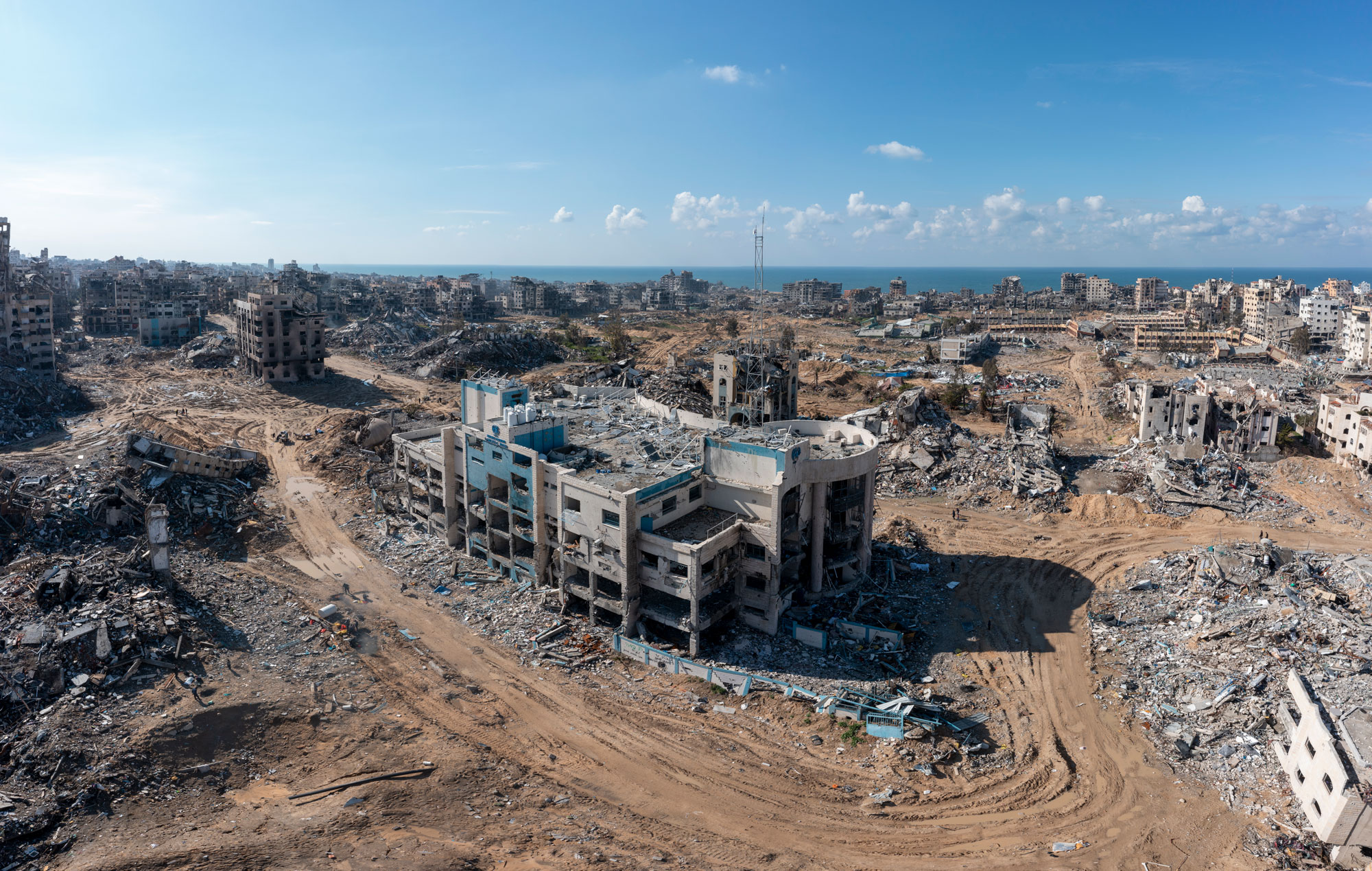
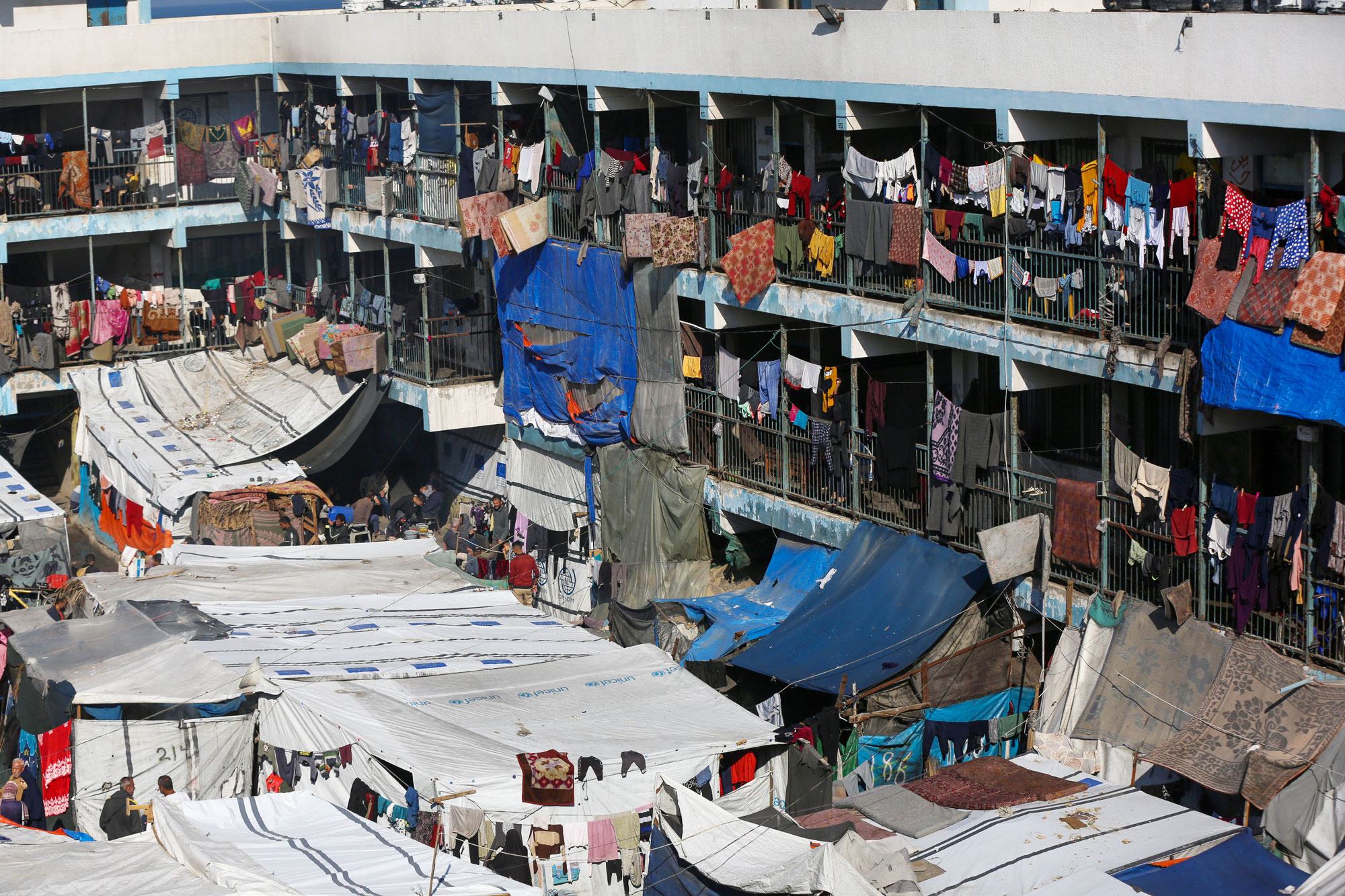
Gaza, 2024 (Photo: UNRWA)
, Knowledge, Comprehension, Evaluation
The course approaches reconstruction as a historical concept and critically examines its genealogy from the Second World War to the present, within the broader contexts of decolonization, the Cold War, and the post-Cold War period. It also examines the ethical and political dimensions of reconstruction: the ways in which dominant discourses reproduce existing hierarchies or produce new ones, as well as the ways in which reconstruction ultimately operates as a form of governance and, by extension, as a tool of soft power within broader projects of social engineering. At the same time, the course approaches reconstruction as a broad range of practices developed by individuals and communities, often amid conflict, protracted violence, and devastation, through which collective visions of survival, solidarity, and justice are articulated “from below.”
A central aim of the course is to map the expanded involvement of architecture and design in processes of reconstruction and their role in shaping dominant discourses and policies, as well as practices of reconstruction “from below.” Drawing on extensive research material gathered through the project Contested Reconstructions in Global Perspective and through lectures and invited talks, the course will connect these questions to the paradigmatic case of Gaza.
Students will be invited to engage actively with the questions and theoretical debates surrounding reconstruction. Drawing on relevant literature, seminar discussions, lecture materials, and invited talks, they will develop individual projects throughout the semester. These projects may critically examine concepts, practices, and places associated with processes of reconstruction, bringing into focus both theoretical debates and historical and contemporary examples. Projects will take the form of written work, while students are particularly encouraged to develop accompanying visual material using both digital and analogue design tools, including mapping, collage, drawing, models, and other media.
The projects will contribute to the Dictionary of Reconstruction, supporting the collective development of an open-ended and continuously evolving archive of concepts, practices, and case studies related to reconstruction.
Abreek-Zubiedat, Fatina. A Territory in Conflict: Eras of Development and Urban Architecture in Gaza. Pittsburgh, PA: University of Pittsburgh Press, 2025.
Weizman, Eyal. Ungrounding: The Architecture of Genocide. New York: Penguin Press, 2026.
Gordillo, Gastón R. Rubble: The Afterlife of Destruction. Durham, NC: Duke University Press, 2014.