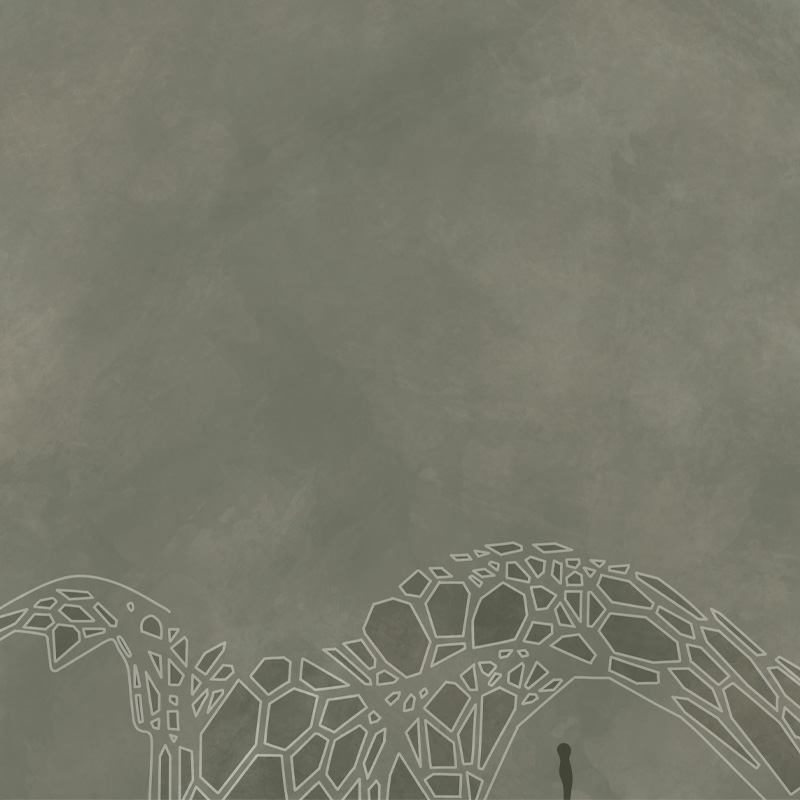
The present study, titled “Nature’s Patterns in Architecture,” explores how natural morphological patterns—such as symmetries, spiral structures, fractals, honeycomb systems, Voronoi arrangements, chaotic formations, and others—can be analyzed through mathematical and biological principles and integrated into architectural design using parametric and algorithmic tools, particularly the Grasshopper 3D plug-in within Rhino. The research focuses on the analysis, parameterization, and classification of natural patterns, highlighting their role in the design methodology for generating complex, sustainable, and efficient architectural forms. Initially, the study examines the literature and theoretical framework that presents nature as an inexhaustible source of inspiration for architects and urban designers. The literature review demonstrates that patterns emerge from mechanisms such as self-organization, evolution, and natural laws, granting forms their repetitive, efficient, and functional qualities. Special emphasis is placed on their connection with mathematics, which often provides answers to many of the questions arising from their analysis. The core contribution of the research lies in the parametric deconstruction of natural patterns using Grasshopper. Through a series of definitions, adaptable forms are generated, allowing for dynamic modification and flexible adaptation to specific design requirements. By altering parameters, the structure is transformed in real time, enabling the exploration of a wide range of morphological variations. A key axis of the study involves the classification of patterns into tables based on various criteria, families, or the complexity of parameterization. This categorization allows for a deeper understanding of their structural characteristics and offers a practical tool for selecting suitable morphological approaches. In conclusion, the study confirms that nature, as a source of inspiration, offers not only aesthetic templates but also functional principles that can be translated into design strategies. By understanding and parameterizing natural patterns, architecture gains the capacity to generate forms that are adaptable, sustainable, and inherently connected to the systems of the natural world.