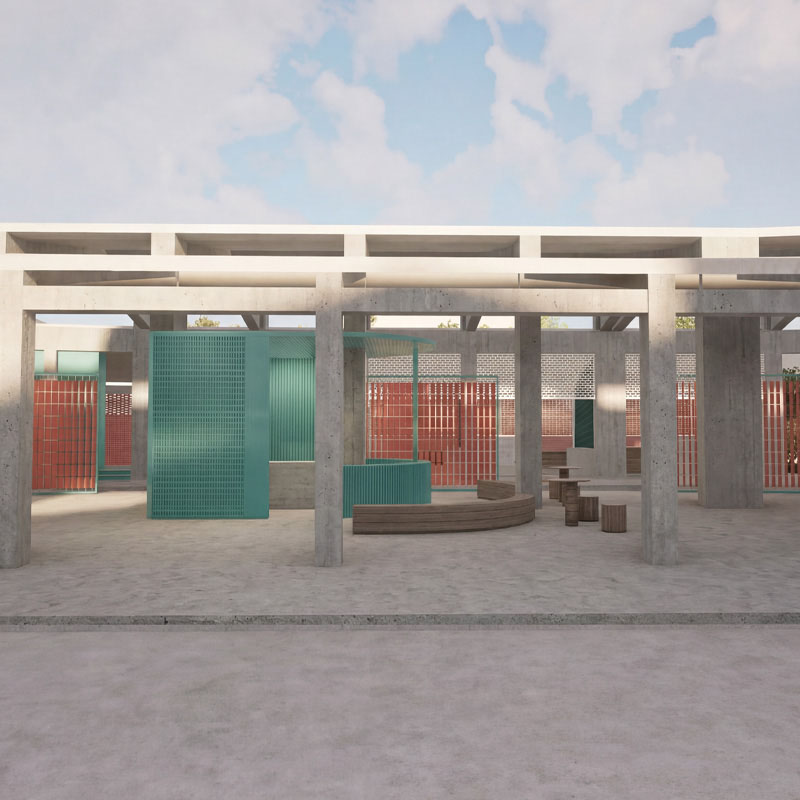
This diploma thesis investigates the potential for architectural interventions in the Municipal Market of Epanomi, which currently accommodates primarily fishmongers and related commercial activities. The project aims at the comprehensive upgrading of the building, both function ally and spatially, through the implementation of thin shell structures. A central objective is the reduction of odors, the improvement of hygiene conditions, and the creation of an attractive public space that reintroduces traditional habits and values of the village, while simultaneously fostering social interaction among residents. A key component of the design is water management, which is inte grated as an intrinsic element of the architectural proposal, establish ing both conceptual and functional connections between the sea and the stream that runs beneath the building, and the new fish market. The design is based on the concept of the thin shell as an independent yet organically connected element to the building’s structural system. Through experimental research on materials, morphologies, and assembly techniques, dynamic structures are developed that ensure harmonious in tegration into the environment and enhance the quality of life for users. Be yond functionality, the space of the Municipal Market acquires a new at mospheric and sensory character, where the thin shell activates visual and tactile experiences, transforming the everyday life of the visitor–observer.
Key words: Adaptive Reuse, Atmosphere, Restoration, Thin Shell, Water.