During a hazardous and often catastrophic event within the urban fabric - such as an earthquake, flood, wildfire, or industrial accident - an extensive civil protection mechanism is activated, aiming at the immediate evacuation and temporary accommodation of affected populations. However, this conventional response framework exhibits significant shortcomings: transportation constraints, excessive concentration of human and material resources in inadequately prepared locations, and the inability to secure dignified living and care conditions, even for short durations.
Urban and spatial planning can address this critical gap. Through strategic foresight and appropriate planning, it is possible to establish permanent refuge and temporary settlement infrastructures at key points within the public realm. These structures would operate continuously as part of a risk management system, rather than relying solely on emergency interventions, while simultaneously serving additional municipal functions and preserving their public character.
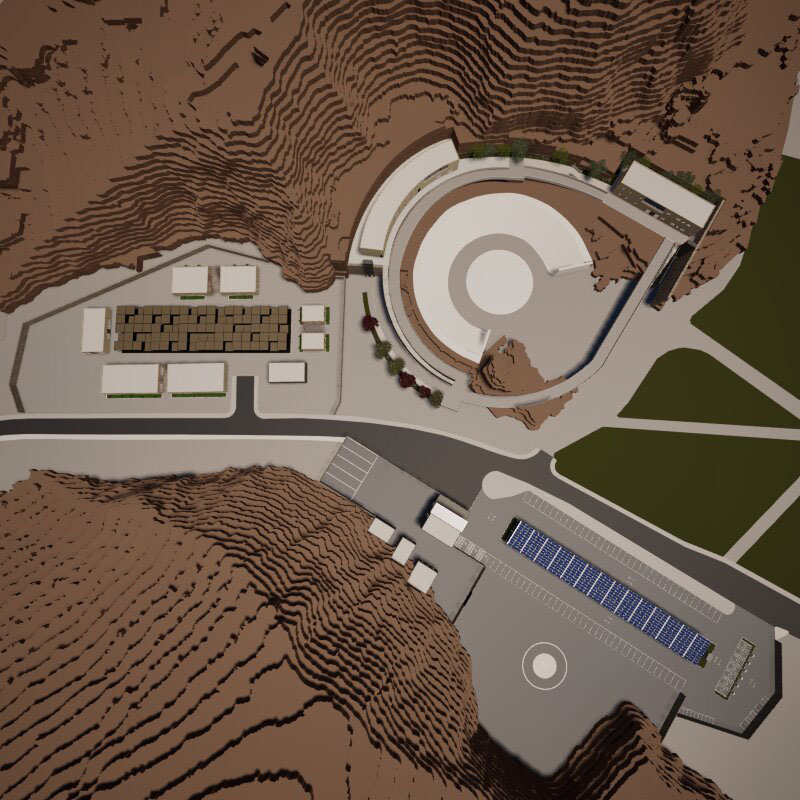
This thesis proposes a pilot urban resilience program in the surrounding area of the Katrakeio Theatre in Nikaia. Following an analysis of Athens’ geo-social vulnerability, existing emergency accommodation sites, and the cultural heritage of the area (former quarry landscapes), the proposal is structured into three distinct sectors:
1. Sector A (Logistics & Parking): Administrative center, storage facilities, helipad, and parking infrastructure integrated with photovoltaic systems.
2. Sector B (Shelter for 200+ individuals): Central accommodation canopy, dining facilities, sanitation units, medical services, and a psychological support center.
3. Sector C (Residential Units for 50+ individuals): Two two-story buildings with fully accessible rooms, accommodating a total of over 250 individuals.
The structures, designed for immediate response to emergencies, operate throughout the year in mild operation, complementing the already existing social structures of the area. The continuous maintenance and readiness of the infrastructure is ensured, while at the same time the emphasis is shifted from the management concept to a preventive, multifunctional and truly resilient urban policy that can inspire pilots and other areas with similar characteristics.
Keywords: Preventive urban planning, Urban resilience, Emergency architecture, Multifunctionality, Urban memory and geomorphology.