Supervisor:
2026
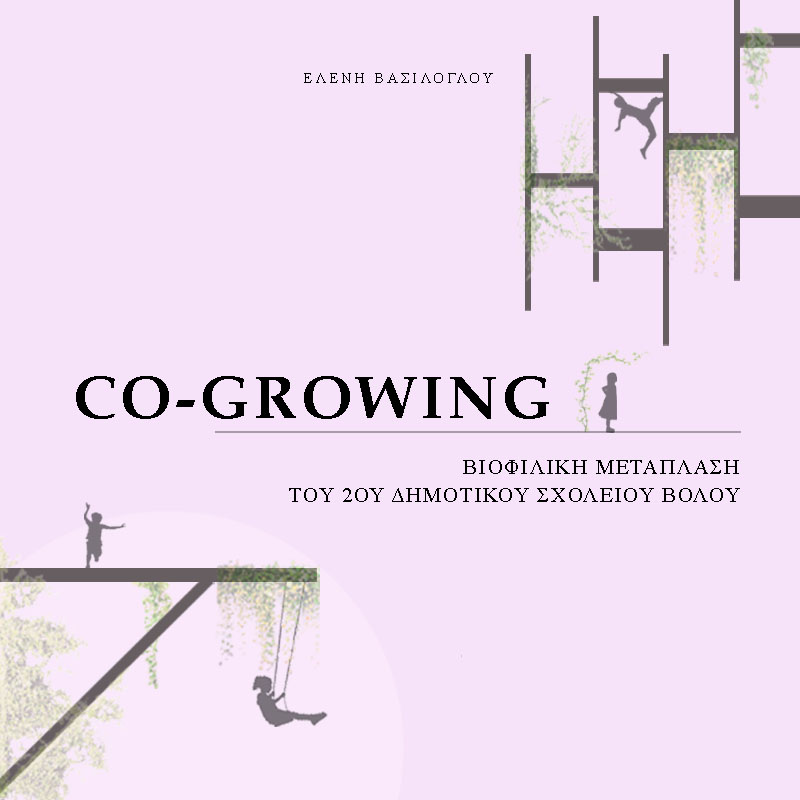
This diploma thesis examines the transformation of the 2nd Primary School of Volos into a living, hybrid space where architecture and nature coexist organically. The central idea is the reconfiguration of the school space into a dynamic ecosystem, in which vegetation is not treated as a decorative element, but as an active and pedagogical part of the school experience.
This proposal responds to the intensifying environmental challenges experienced by the city of Volos in recent years with interventions that aim to enhance both the bioclimatic properties and the overall experience of space. Inspired by simple architectural patterns based on the concept of care, the project seeks to create a more intimate and environmentally sensitive learning space. In the context of recent educational guidelines for schools and kindergartens, the vegetable garden is defined as an essential means of education, ecological awareness and responsibility. In this project, the concept of cultivation acquires both a literal and a metaphorical dimension, while “care” operates reciprocally. The children's involvement in planting and caring for plants enhances observation, cooperation and a sense of collective responsibility, while at the same time contributing to the meaningful appropriation of the school space. The title Co-growing refers to the ecodevelopment of children, plants and the school environment. Vegetation literally grows over time, while the students grow physically, emotionally and intellectually through experiential contact with nature and practices of care. In addition, subtle interventions are proposed to the existing building structure with the aim of shaping a unified architectural identity and activating the outdoor and semi-outdoor spaces as functional and accessible spaces of coexistence. The goal of the proposal is to expand the boundaries of the school experience, treating the school not only as a place of learning, but also as an emerging “central square” that encourages coexistence, socialization and solidarity.
Keywords: education, care, ecosystem, hybridity, vegetation