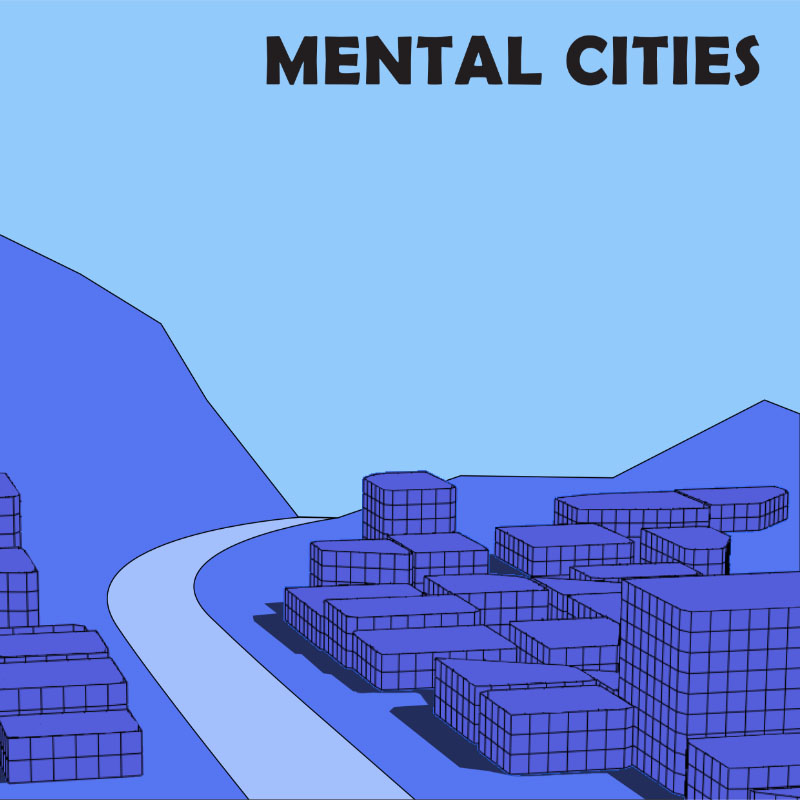
This thesis presents the design and development of a parametric system for generating digital cities, intended to serve as a dynamic foundation for video game environments. The theoretical framework of the study is rooted in the theory of Mental Maps and Kevin Lynch’s five structural elements of urban perception -Paths, Edges, Landmarks, Nodes, and Districts- as analyzed in his book The Image of the City. The main objective is the translation of these abstract urban design concepts into parametric programming functions.
The practical implementation of the system was developed within the Blender software, utilizing the visual programming language of Geometry Nodes. The resulting tool is structured into three sequential and interdependent functions. This architecture provides developers with an ideal balance between precise parameter control and procedural generation (systematic randomness), eliminating the need for monotonous and repetitive manual labor. The system is accessible to users without advanced expertise in the software, although an understanding of controlled geometry principles optimizes the final outcome. In conclusion, the tool harnesses the parameters of urban legibility, transforming them into directly customizable elements for the creation of functional digital worlds.