Supervisor:
2025
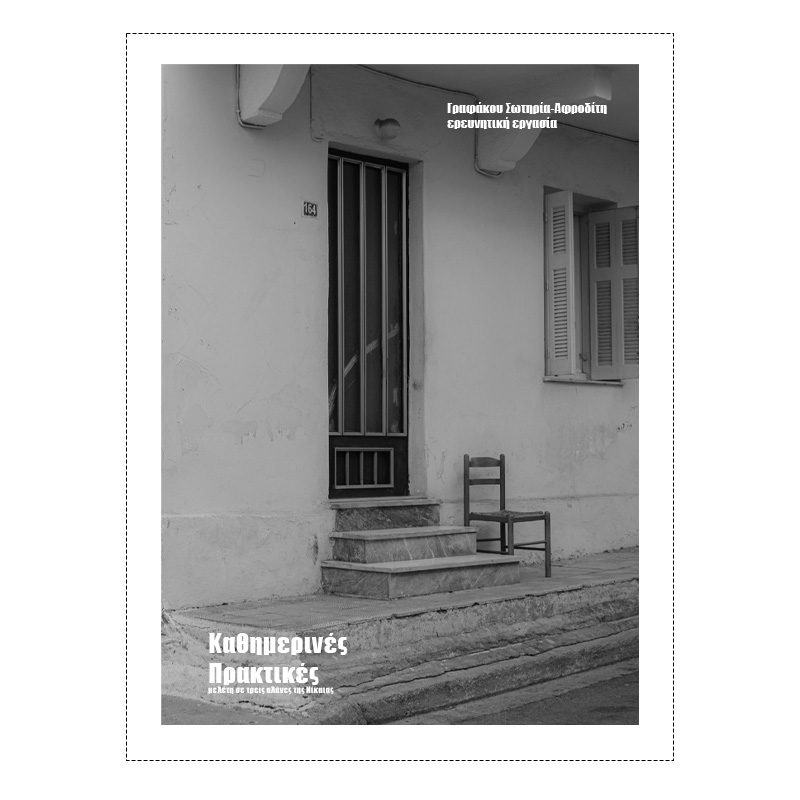
This research paper examines the relationship between public spaces, known as courtyards, and the public-private dichotomy in Nikaia, an area with a rich refugee history and a particular architectural identity. It focuses on how residents appropriate these spaces through activities and objects, turning them into hybrid spaces where the boundaries between private and public become blurred. From the 20th century to the present day, courtyards have evolved from everyday spaces of practical needs to places of social coexistence and personal expression. The first part focuses on the bibliographical overview, presenting the historical context of Nikaia, from its creation as a refugee settlement after the Asia Minor Catastrophe to its integration into the urban fabric of Athens, recording the urban planning interventions and social processes that influenced the configuration of public spaces. The fieldwork, which was the next stage of the study, was based on specific methodological approaches to record human activity in the courtyards, with Benedikt’s isovist approach as its main focus, and on field observation in selected courtyards to record human activities and objects. These practices highlighted the contribution of physical configuration and object placement to the transformation of the courtyards in intermediate condition spaces. The third part examines the courtyards as fields of social action and signification, where everyday activities and objects function as means of demarcation and individuation. Through collective practices and objects, residents negotiate the boundaries between public and private, creating spaces that enhance fluidity and social cohesion. In conclusion, the courtyards of Nikaia emerge as living spaces of interaction, combining the intimacy of the private with the collectivity of the public. These spaces, with their fluidity and transitivity, underline the importance of everyday life in shaping the urban fabric and social cohesion, while remaining crucial fields of spatial and social interaction.