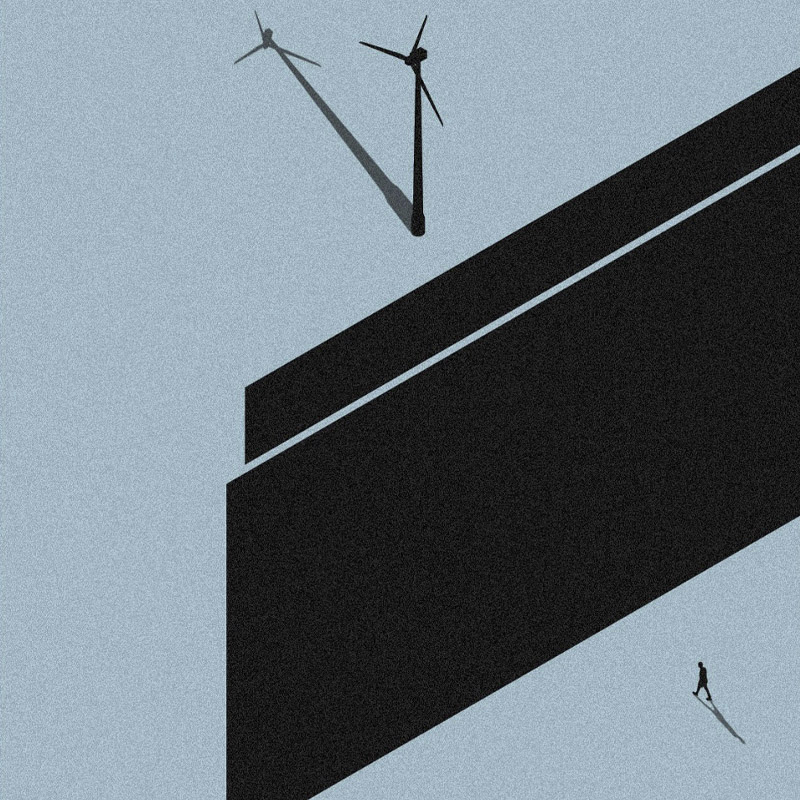
The paper explores the concept of dystopia, and its influence on contemporary urban planning, with The Line, an ambitious project promoted as a model for a sustainable and technologically advanced city, as a central example. The analysis converges on a post-Human Age, where human experience and anthropocentric values are challenged by the technological and functional ambitions of urban design. Through an analysis of the concept of dystopia, historical examples and cultural representations of dystopias, conclusions are drawn as to the characteristics of dystopian architecture. A comparative approach to the above examples highlights the possibility that The Line, despite its utopian intentions, embodies dystopian characteristics such as tight control of individual life, social alienation and dependence on technology. The paper links the development of dystopian architecture to contemporary social challenges, raising questions about the future of cities and the human experience in a technocratic environment.