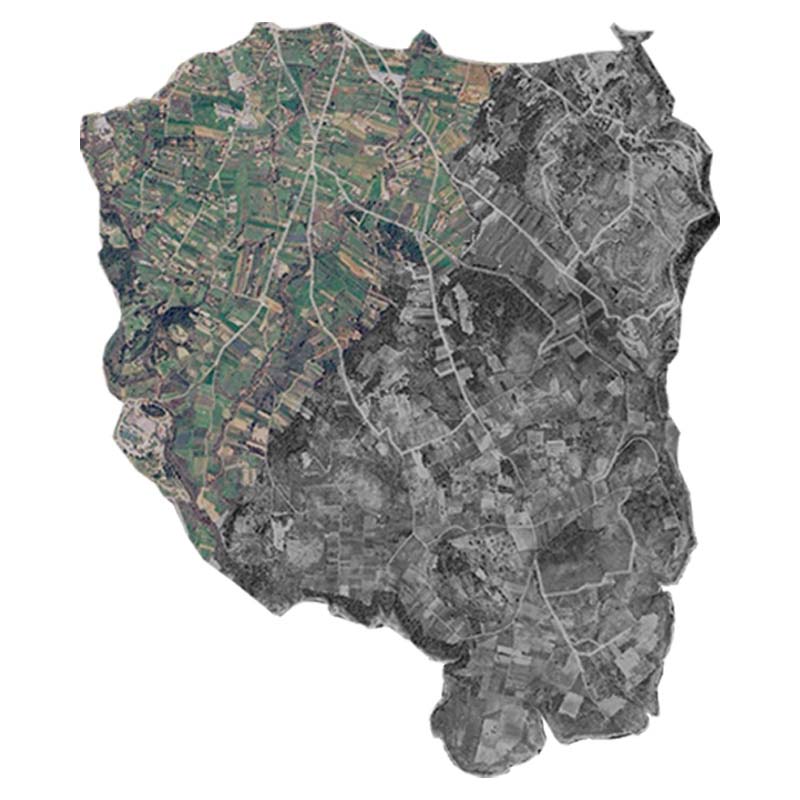
This diploma thesis examines the restoration and reactivation of a semi-rural area located north of Lake Marathon, which was affected by a wildfire in 2024, with a focus on its agricultural character and the potential for restoring its productive function. The study proposes the creation of an Agricultural Activities Learning Center as a tool for education, practical application, and collaboration, aiming to support post-fire regeneration through the active involvement of the local community.
The study area is characterized by gentle topography, the presence of streams and seasonal watercourses that flow into Lake Marathon, and a strong agricultural past, primarily associated with olive groves and vineyards. Although agricultural activities continue to exist, they currently function mainly as a secondary source of income. The wildfire had significant impacts on the landscape, agricultural land, and social use of the area, limiting both productive and recreational activities.
The proposed Learning Center is located in the northwestern part of the study area, on a site belonging to a poultry farming company that includes existing agricultural buildings. The project is based on the adaptive reuse of an abandoned building constructed of concrete blocks, integrating it into the surrounding agricultural landscape while taking advantage of the existing building stock. The design approach emphasizes reuse as a sustainable strategy and as a means of preserving the productive memory of the site.
The building is organized as a multifunctional space for education, meetings, and hands-on training, serving professional and amateur farmers, students, volunteers, and local stakeholders. Through educational programs and practical agricultural activities, the project promotes continuous learning and active participation.
By linking education with practice, this thesis proposes a model of agricultural regeneration that supports long-term recovery and sustainable development, contributing to the restoration of the productive, social, and spatial identity of the area.
Keywords: Adaptive reuse, Agricultural landscape, Restoration, Education, Community