TZIRITIS PANAGIOTIS
Supervisors:
2026
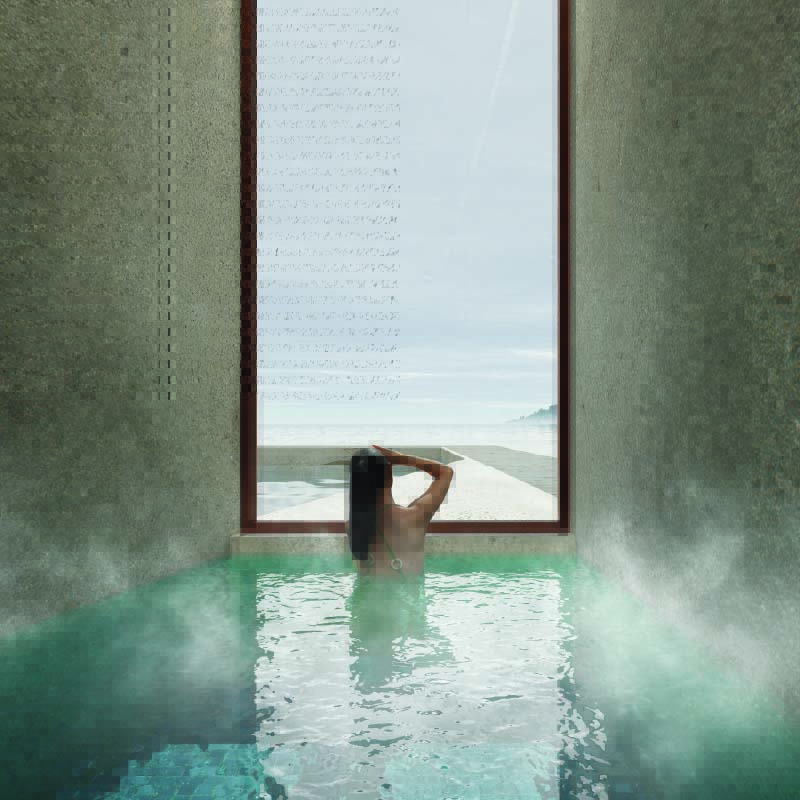
This study explores the evolving relationship between the city of Volos and its waterfront, focusing on the area of Anavros as a site where historical, social, urban, and environmental processes intersect. Although the sea has long been a defining element of Volos’s identity, recent environmental pressures and extreme natural events have rendered it increasingly inaccessible for everyday use. The loss of the possibility of swimming within the urban fabric highlights proximity to clean and safe waters as a critical concern of contemporary urban and coastal planning. The research situates the emergence of sea bathing in Greece from the late nineteenth century onward, approaching the bath not merely as a recreational or hygienic practice but as a socially constructed ritual embedded in regulations, gender norms, and spatial control. The transition from strictly segregated bathing facilities to mixed beaches (bains mixtes) reflects broader transformations in public space, social interaction, and the visibility of the body. Architecture plays a central role in this process, as bathing infrastructures organize movement, access, and sightlines, shaping both bodily practices and social relations. Anavros is examined as a representative case of these dynamics. In the early twentieth century, its wooden bathing installations, piers, and cabins formed a regulated and enclosed coastal landscape. Over time, structural decay, post-earthquake reconstruction, and urban expansion dissolved this controlled system, leading to the formation of an open public park and beach integrated into the city. Yet contemporary environmental degradation, intensified by flooding and water pollution, has once again disrupted the everyday relationship between the city and the sea. The study concludes with a design-oriented proposition that reconsiders water as an active spatial and social agent rather than a passive backdrop. Through the introduction of public bathing infrastructures, water-based spatial interventions, and ecological strategies, the proposal seeks to restore an inclusive, resilient, and sustainable relationship between the urban environment of Volos and its coastal landscape, reframing the shoreline as a shared civic space shaped by both memory and contemporary ecological challenges.
Key Words: Bath, Swimming, Plage, Park, Water