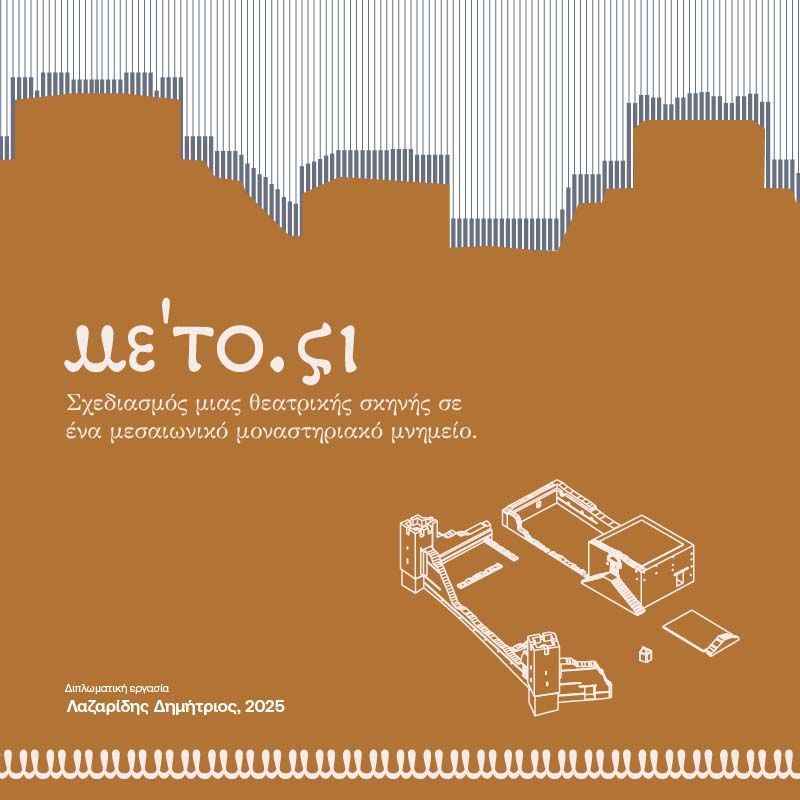
This diploma thesis, is an attempt to highlight and document, in terms of architecture and history, the post-Byzantine monument of the “Metochion” (monastic dependency; glebe) of Agia Anastasia “Pharmakolytria” in Epanomi, Thessaloniki.
The glebe consists of a fortified complex, dating back to 1530 AD, whose location and monastic organization are justified by the intense pirate activity of the era during which it was constructed. These elements have left a strong architectural imprint on the structure of the monument, which is considered the oldest and best-preserved monastic dependency in Northern Greece, as well as the only surviving section of the medieval settlement of Kritziana.
Following a failed initiative in 1965 to construct a new church, partial demolition of the chapel’s foundations and the last floor of the tower-house occurred. Various restoration works have been carried out sporadically from 1976 up until 2015. However, a comprehensive reconstruction and rehabilitation study of the complex remains pending—a "healing."
Thus, the goal is to formulate a proposal for the monument’s restoration and reintegration, giving it new life both architecturally and functionally. With the symbolic starting point being the figure of Agia Anastasia Pharmakolytria, as depicted in Christian faith, this space aspires to function as a new hub for cultural and social revival, healing, and purification. The aim, therefore, is to transform the *Metochion* into an open-air venue, capable of hosting a wide range of cultural events such as theatrical performances and music concerts, which will integrate and highlight the contemporary cultural developments of the broader region.