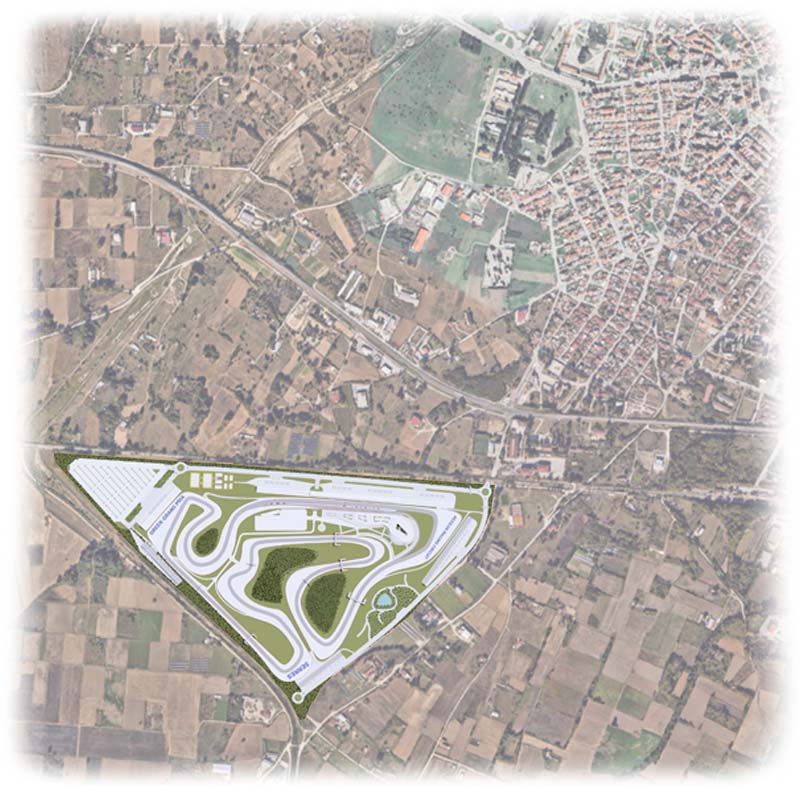
This thesis focuses on the architectural redesign of the Serres Circuit, with the aim of transforming it into a modern, internationally recognized, high-standard racing facility. The main focus of the proposal is the design of a new building complex, which will serve as the “heart” of the track, incorporating the basic technical, functional, and experiential requirements of a Formula 1 Grand Prix. The architectural approach is based on a combination of dynamic morphology, technological innovation, and environmental sensitivity. The identity of the complex draws inspiration from aerodynamics and mechanical design, with the aim of capturing the character of speed. At the same time, the aim is to create a direct visual connection between the interior spaces and the track, while adopting bioclimatic strategies, such as the use of natural lighting, shading, and natural ventilation, to enhance energy efficiency. The functional flexibility of the spaces allows for multiple activities to be hosted, both during races and at other times. Analysis and comparison of the existing situation with the proposed intervention highlights significant upgrades. The new track is designed in accordance with FiA Grade 1 specifications, while the entire infrastructure is being upgraded to fully meet the requirements of teams, spectators, and organizers. New hotel facilities, upgraded hospitality areas, a medical center, organized traffic and access, as well as broader interventions in the landscape with a focus on sustainability and environmental integration are planned. The proposed solution meets the requirements of motor sports, creating a hybrid hub of speed, culture, and technology. The new Serres Circuit is being repositioned as a multifunctional destination with an international character, which can serve as a model racing venue for Southeast Europe.