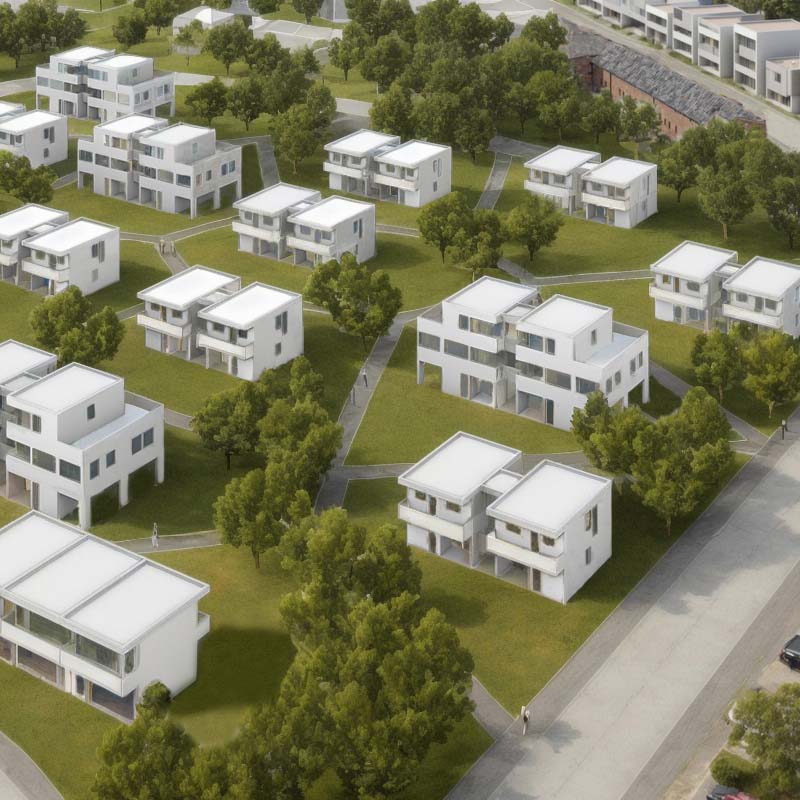
This diploma thesis, titled “An Automated Approach to Housing”, was completed during the academic year 2024–2025 by student Apostolos Mardyris, under the supervision of Professor Vassilis Bourdakis.
The thesis presents a methodology capable of generating design solutions - both at the housing unit scale and the masterplan scale - for issues related to organized housing complexes. The Controlled Temporary Accommodation Facility for Asylum Seekers in Kavala (Asimakopoulou Camp) serves as an ideal case study for applying an automated design methodology. Originally established in response to a sudden influx of refugees arriving by the thousands at the Port of Kavala during the 2015 –2016 refugee crisis, the facility continues to operate today, accommodating a smaller number of people. The evolving needs of such structures over time provide an opportunity for automated design methods to make a substantial contribution by offering more efficient solutions. Therefore, it is deemed essential to investigate cases like this - not only to ensure their effective and organized functioning, but also to be better prepared for any future refugee crisis.
The thesis involves an analysis of a database composed of housing settlements developed by the Workers’ Housing Organization (OEK). Using automated approaches, new plans are generated to meet contemporary housing needs. The analysis draws on the doctoral dissertation of Dr. Sofia Gouvousi, titled «Organized Housing Complexes in Greece: Possibilities and Prospects for Upgrading Settlements by the Workers’ Housing Organization» and includes a detailed mapping of housing needs in each case, as well as a classification of typologies and patterns found in the original settlement plans used as the database. The goal is to use Shape Grammars to develop shape rules through which new design solutions can be produced. Automating this process facilitates experimentation and enables the generation of results tailored to diverse housing scenarios in terms of scale and building programs. By employing a computational approach such as Shape Grammars, complex design problems can be addressed in a way that avoids stylistically-driven morphological decisions. The resulting designs focus instead on providing efficient solutions that prioritize functionality and respond to the needs of the residents.
Keywords: Shape Grammars, computational design, typologies, housing, accommodation facility