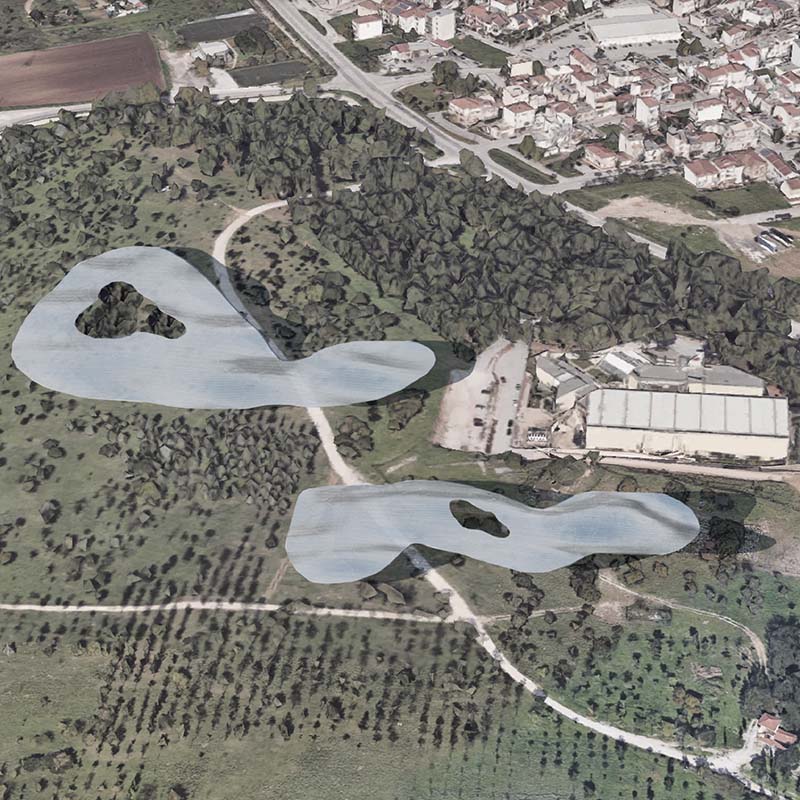
This diploma project originates from the need to expand the exhibition capacity of the Diachronic Museum of Larissa by 1,500 m², in order to showcase a significant number of
artifacts currently kept in storage due to lack of space.
The proposal goes beyond a functional extension and instead introduces a broader architectural strategy: to transform the Mezourlo Grove — a peri-urban natural landscape at
the southern edge of Larissa — into a dynamic cultural landmark for the city.
The project includes spaces for permanent and temporary exhibitions, an amphitheater, a multipurpose hall, a café, and open-air courtyards. These spaces are unified through two
metal canopies that follow the site’s natural topography and are carefully woven through the existing vegetation, aiming for minimal intervention in the natural landscape. The form,
materials, and integration of the structure reinforce visual and ecological continuity with the surrounding environment.
Importantly, the design explores the coexistence of indoor and outdoor exhibition, activating both built and open-air environments and expanding the ways visitors interact with
cultural content.
The canopies employ passive solar design principles, using thermoresponsive elements that adjust to climatic conditions and provide comfortable, shaded public areas.
The proposal envisions a cohesive spatial system where architecture, nature, and culture coexist and interact, reimagining the museum as an open cultural landscape. At the same
time, it seeks to operate in synergy with the existing museum, complementing its function and enriching the overall visitor experience and cultural presence in the region.