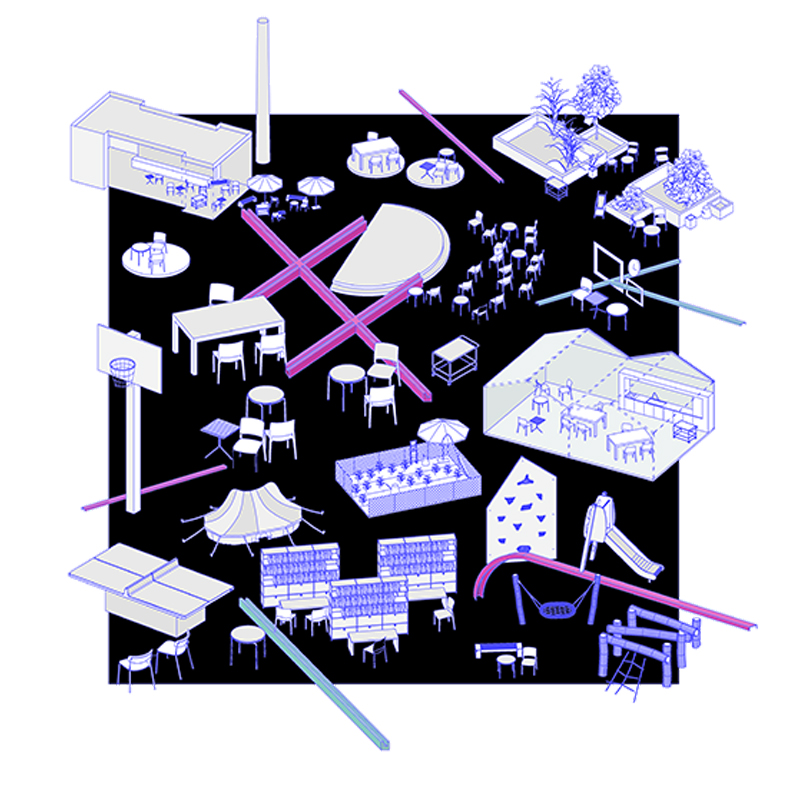
Observing the modern urban fabric, we notice that among the functionally defined spaces, there are places for which it is difficult to determine their exact use. These inactive landscapes are called urban voids and have been analyzed over time differently by many theoreticals. This research focuses on the potential of these spaces to host new activities, thus acquiring a new functional identity. The possibility of their transformation, combined with their contribution to the transition of the user-flaneur from one place to another, links the concept of urban voids with the inherent characteristics of the concept of thresholds, as presented in the theoretical work of the architect Stavros Stavrides. Through the study of thresholds-urban voids, a new relationship between residents and urban space emerges, ultimately classifying it under the concept of the common space. The research shifts to urban commons and examines different tactics for inhabiting urban space that concern both architects and the community itself. Inspired by the study of these two concepts, a new definition is introduced that describes the simultaneous dual condition of spaces that are both urban voids and urban commons. Finally, four case studies of urban voids-commons in Greece and Spain are presented, analyzing both their way of inhabitation by the community as well as their new functional program.