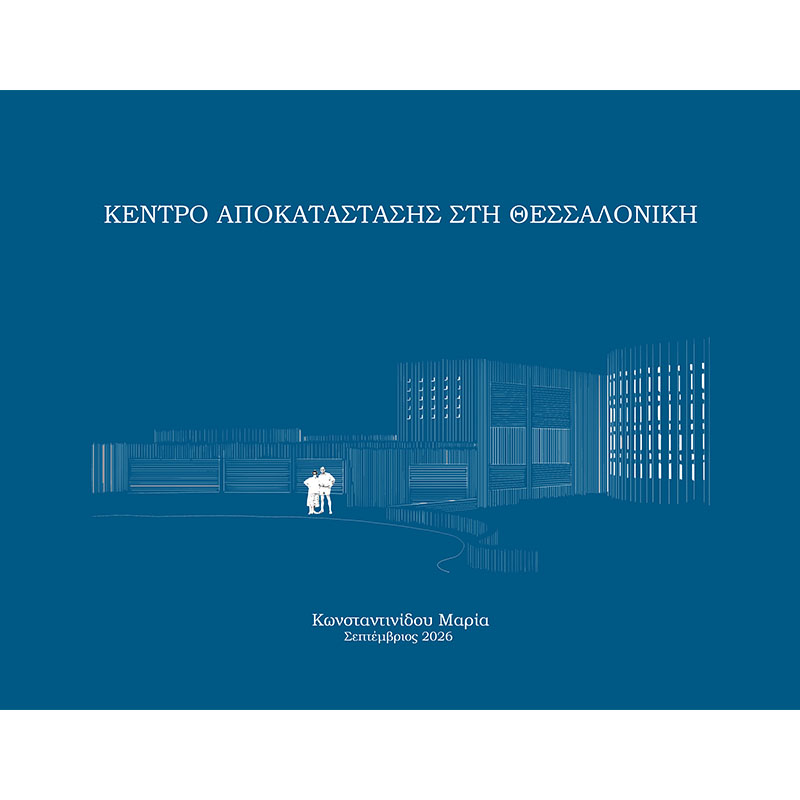
This diploma thesis explores the design of a model rehabilitation facility for individuals with musculoskeletal or neurological impairments, with the aim of providing holistic treatment and supporting their equal reintegration into society.
The concept of rehabilitation is not limited to strictly medical care but is approached as a complex experience that encompasses the physical, psychological, and social dimensions of the individual. Within this framework, architecture functions as an active therapeutic medium, contributing substantially to improving the users’ quality of life.
The design proposal is organized around the clear division of spatial units and the establishment of distinct boundaries between functions with different degrees of privacy. The gradual transition from private to public spaces, combined with the creation of intermediate spatial structures, enhances the users’ sense of security and familiarity. At the same time, natural elements are integrated into the design as fundamental components of the therapeutic process, with outdoor spaces playing a supportive role and strengthening the users’ connection with nature.
Ultimately, the design proposal moves away from the stereotypical and institutionalized typology of hospital facilities. Instead, it creates a human-centered and welcoming environment, incorporating communal spaces that encourage social interaction and facilitate the smooth transition of patients back into everyday life.
Keywords: Rehabilitation, Patient, Therapy, Quality of Life, Stop