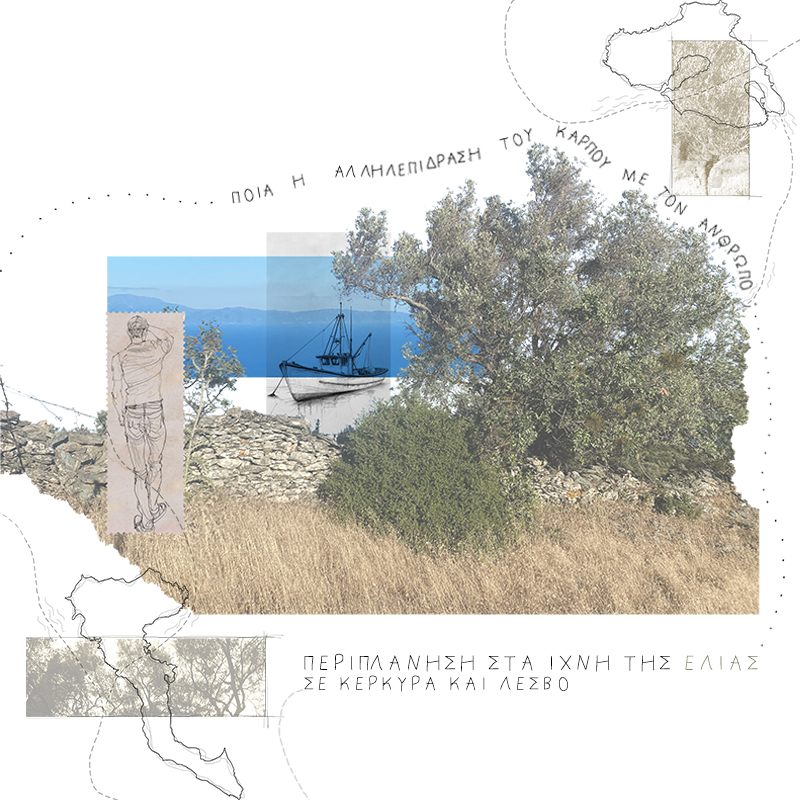
On two islands situated at the eastern and western edges of the Greek archipelago, Lesvos and Corfu, the olive tree emerges as a shared cultural thread, weaving through centuries of occupations, exchanges, and social transformations. Amidst differing regimes, Ottoman rule in Lesvos and Venetian domination in Corfu, the olive grove is not merely an economic resource, but a living symbol of humanity’s enduring bond with the land, a constant amid shifting historical tides.
In Lesvos, olive cultivation rises as the island’s primary productive activity during the Ottoman period, reaching its peak in the late 19th and early 20th centuries. The island becomes a key transshipment hub, with olive oil and its by-products travelling to ports across the Mediterranean and the Balkans, reshaping local economies and social landscapes.
Conversely, in Corfu, Venetian authorities replace vineyards with extensive olive groves. The intensive cultivation of the olive tree transforms both the landscape and the island’s social fabric: the estate, the communal olive press, and the shared paths leading them to form a distinctive culture centered around the olive grove. Corfiot olive oil, both a product and a carrier of local identity, is exported to Italy and England, inscribing the island within the broader geo-economic networks of its time.
The shared routes to the fields, patterns of land ownership, and the strategic placement of buildings amid the centuries-old trees compose enduring images that withstand the passage of time. The olive tree, evergreen and constant, not only structures societies but preserves memory and reestablishes the connection between people and their lost ancestral land.