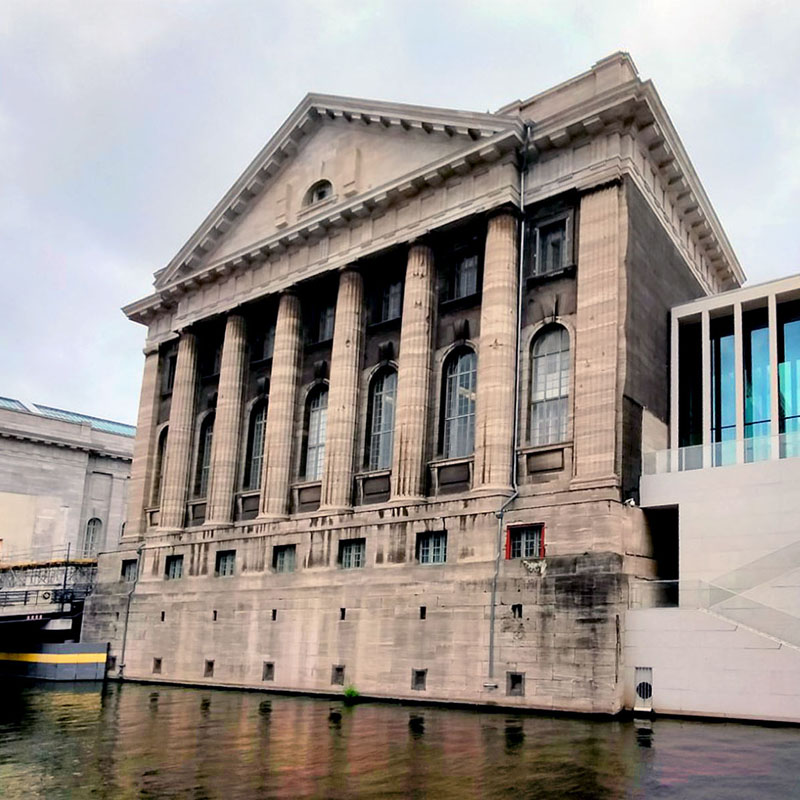
The proposed research paper, titled “The contextualization and decontextualization of the historical monument: The Pergamon Museum as a case study” aims to study the Pergamon Museum as a characteristic case of a museum-depository for selected monumental ensembles from antiquity, with the unique feature of their complete reconstruction in an effort to restore, as faithfully as possible, their original physical form—even though this occurs within the artificial environment of a museum. The Museum is examined as a space that both hosts and simultaneously showcases its exhibits as monuments of world heritage through various representational methods and techniques. Special focus is placed on its three main monumental exhibits: the Ishtar Gate, the Market Gate of Miletus, and the Altar of Zeus from Pergamon. This study examines the management of these specific monuments from the time of their forcible removal from their original context to the present day, with a particular emphasis on both the conditions of their reintegration into a new environment and the methods used for their preservation, conservation, restoration, and protection. Additionally, a significant topic of study is how this entire phenomenon is perceived by the global community, whether as museum visitors or as members of local/national communities who view these monuments as inseparable parts of their own heritage. This, in turn, gives rise to a variety of reactions. The ultimate goal is to draw broader conclusions, through the examination of these three examples, about the issues surrounding the contextualization and decontextualization of monuments into new settings, particularly those that have long ceased to belong to their original historical, cultural, or national context.