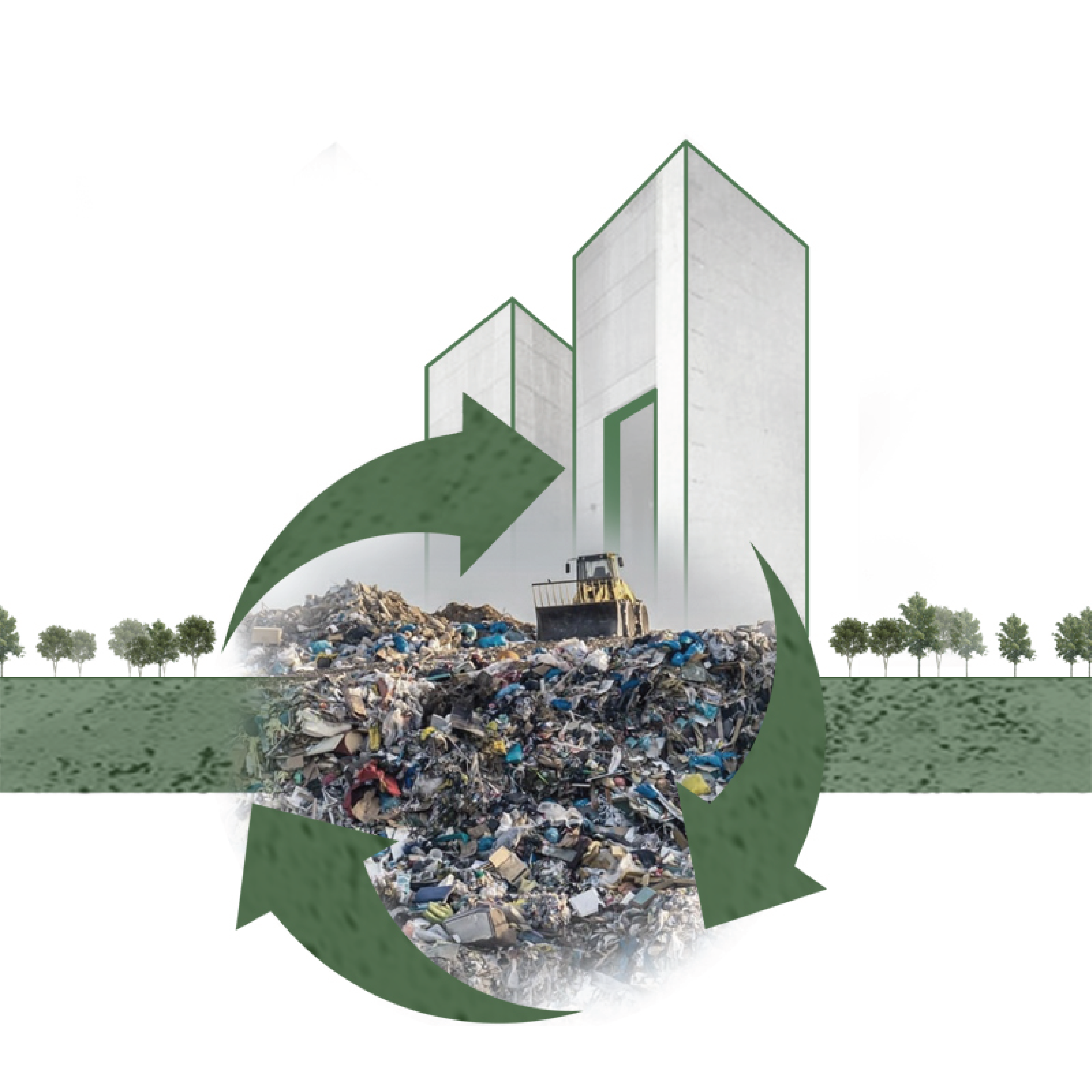
Over the last few decades, the rapid increase in the global population and the technological development, have led not only to overexploitation of natural resources, but also to the production of excessive amounts of waste, from every sector of life and more specifically, from the domestic, agricultural, industrial and construction sector. This has resulted, in serious problems for both the environment and humans. Some of these problems are the alternation of the terrain’s relief, the deforestation, the contamination of the soil, water and air, the increase in greenhouse gas emissions in the atmosphere and the emergence of human health problems. The overall activity of the construction sector also contributes to this prevailing situation, as the increasing population intensifies the need for the development of building facilities. Their design and construction are based on the linear economy model, according to which, many reusable materials end up as waste, while at the same time the constant exploitation of resources for the production of building materials, is required, a practice that the planet cannot sustain eternally. For a more sustainable future, a radical change in the management of waste and residues, through their utilization, is needed, for the production of alternative and sustainable building materials. Thus, it is essential for architects to incorporate environmentally friendly building materials into their designs, derived from the utilization of secondary building materials.