KARKALETSI STAYROULA-MARIA
Supervisor:
2026
The city is shaped not only by its dense built structures, but also by its voids. Urban voids often emerge as remnants of incomplete development processes or as sites awaiting redefinition. At the same time, however, they contain possibilities for reinterpretation and collective reactivation. As intermediate and transitional places, they may serve as fields for exploring alternative forms of dwelling and communal life.
This diploma thesis investigates the potential use of such a void as a temporary place of dwelling and urban solidarity. The research is situated within the context of the contemporary housing crisis and approaches homelessness as a complex condition that extends beyond the absence of shelter to include various forms of insecure, inadequate or unsuitable housing. Through the study of institutional structures and self-organized initiatives in Athens, the thesis examines different models of care, as well as the relationships between stability and autonomy, organized support and collective participation.
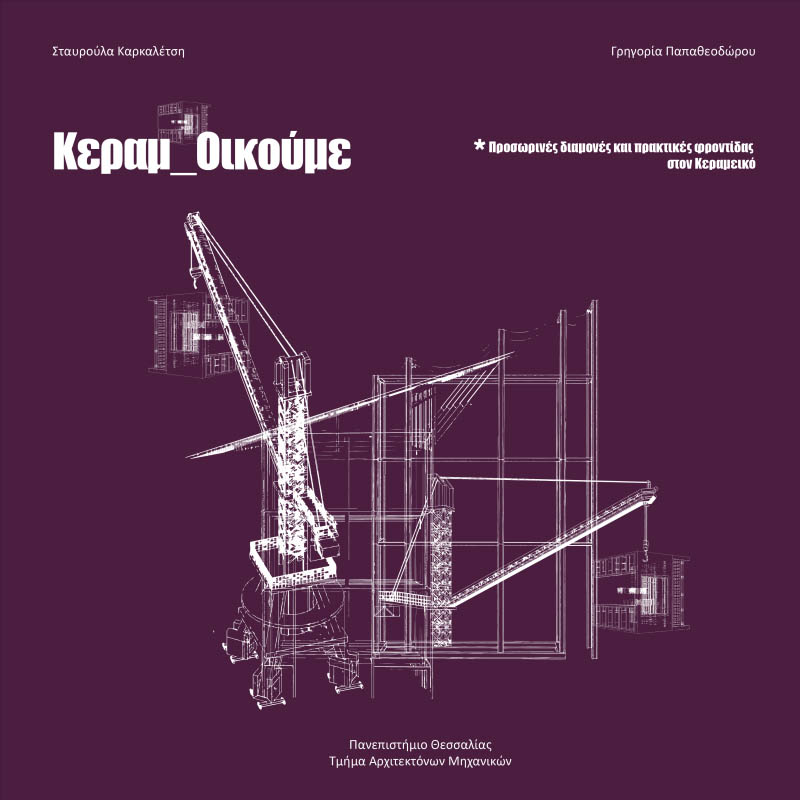
The architectural proposal, entitled “Keram-oikoume,” is situated at the intersection of Leonidou and Plataion Streets, between the neighbourhoods of Kerameikos and Metaxourgeio. The site, owned by the Municipality of Athens, remains partially inactive, as it is associated with archaeological findings and awaits future investigation. This particular temporality determines the temporary and reversible character of the intervention.
The proposal introduces the concept of “public dwelling” as an intermediate condition between the private and the collective. It develops a transportable system of temporary accommodation and shared functions, intended to provide protection and a sense of familiarity while maintaining an open relationship with the surrounding neighbourhood. The lightweight structures are inserted discreetly into the site and can be dismantled, transported and reinstalled in other inactive urban plots without imposing a permanent transformation on the ground.
Rather than presenting a definitive solution to homelessness, the project develops a transitional design protocol. It examines how a site in a state of waiting may temporarily acquire social and inhabitable content, while reconsidering the boundaries between housing, public life and collective care. Transportability, therefore, refers not only to the physical capacity for relocation, but also to an architectural logic that remains open to change, time and the evolving needs of the city.
Keywords: urban voids, housing precarity, public dwelling, temporariness, transportability, reversibility, urban solidarity.