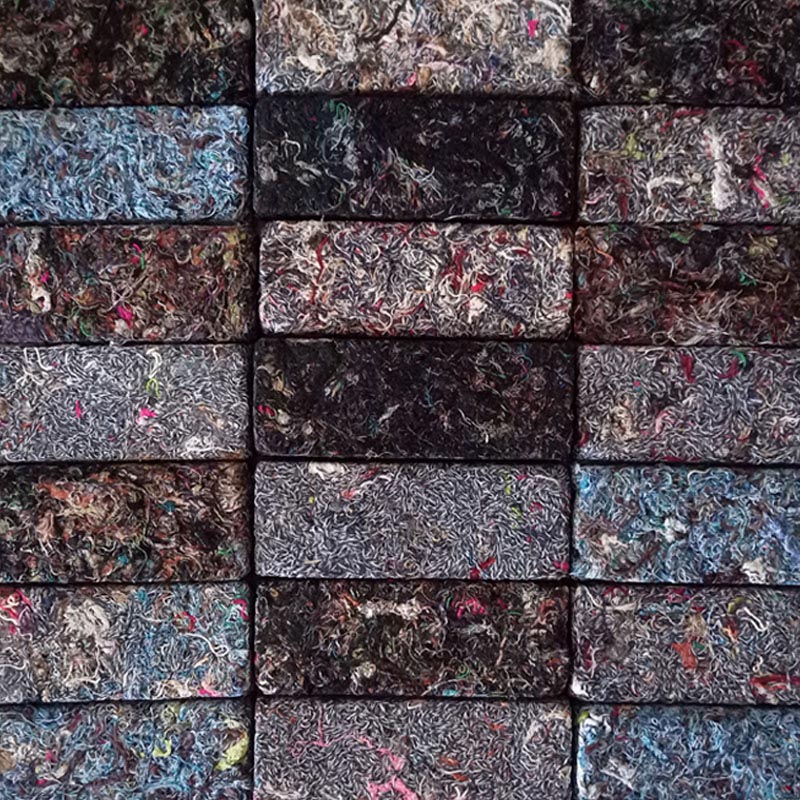
This diploma thesis proposes a rethinking of a space for research, creation, and production, with an emphasis on revealing the networks of material, human, and knowledge flows that develop around it. The research focuses on textile as a central material and explores the different forms it can acquire through processes of reuse, experimentation, and transformation. The thesis is structured into two main strands, connected through a common methodological and theoretical framework and developed across the scales of the building and the 1:1 scale. The first part concerns the adaptive reuse of a former tobacco warehouse in the center of Volos and its transformation into an open space for recycle, research, production, and workshop activities. The building operates as a collective and collaborative system, functioning as a node within a broader local network, with raw materials collected from shops and workshops throughout the city. Particular emphasis is placed on the documentation of both the material and the production process, with the aim of tracing their flows. This approach is embedded in the design through an archive and through the creation of a material passport for each object, documenting the origin and trajectory of the material. The second part focuses on the exploration and documentation of textile experiments conducted at a 1:1 scale. The testing process is organized into four distinct phases according to the scale and form of the resulting objects, while their development is examined in relation to the joining materials and assembly methods employed.
Keywords: textile, flow networks, reuse, recycle, experimental research