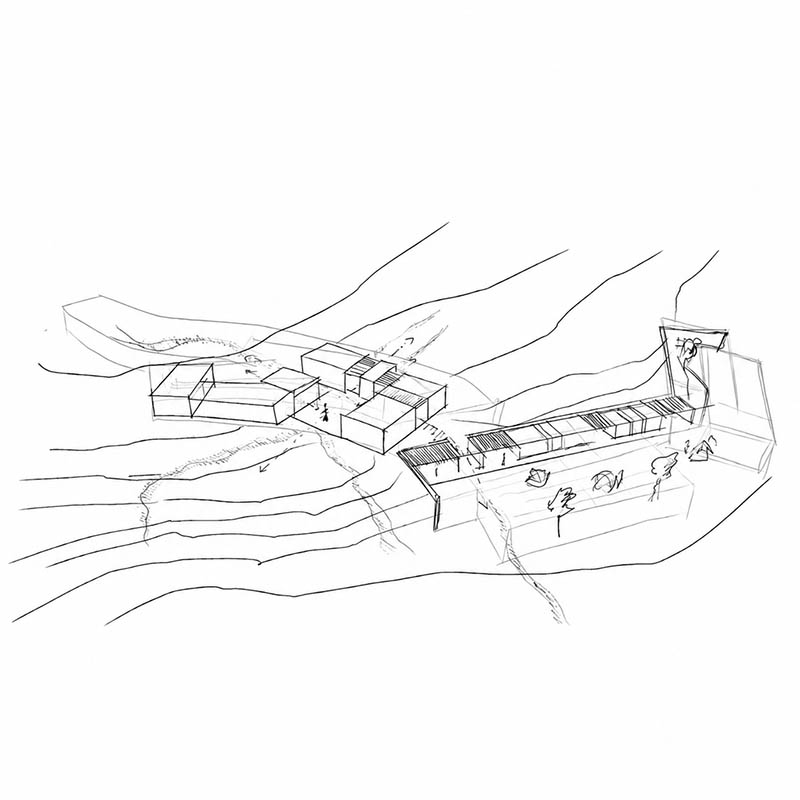
When and under what conditions can an architectural intervention be more meaningful than its complete absence, in a landscape already burdened by the excessive development of the past?
This diploma thesis explores the design of a camping complex in Alyko, Naxos, investigating the possibility of introducing a new architectural presence into a place that already bears strong traces of previous interventions. The coexistence of land and sea, the sandy expanses, and the cedar forest form a landscape of distinctive morphology. A defining element in the reading of the site is the footprint of the unfinished hotel complex that remained abandoned in the area for decades. Even after its demolition, traces of the intervention persist, shaping a landscape in which architecture is called upon to redefine its position.
This condition formed the starting point of the proposal. The new intervention does not occupy an “empty” site but is inscribed upon an already shaped ground. Using the traces of the former complex as a generative element of the design, the proposal introduces the ephemeral dwelling of the camping complex as a gentler form of architectural presence within the landscape. With a minimal built footprint, the camping complex is organized through individual units and their relationship with the ground, vegetation, and patterns of movement.
The proposal seeks to shift the question from whether architecture should exist to how it can exist.
Keywords: Ruins, Reconfiguration, Camping, Memory, Minimal Dwelling