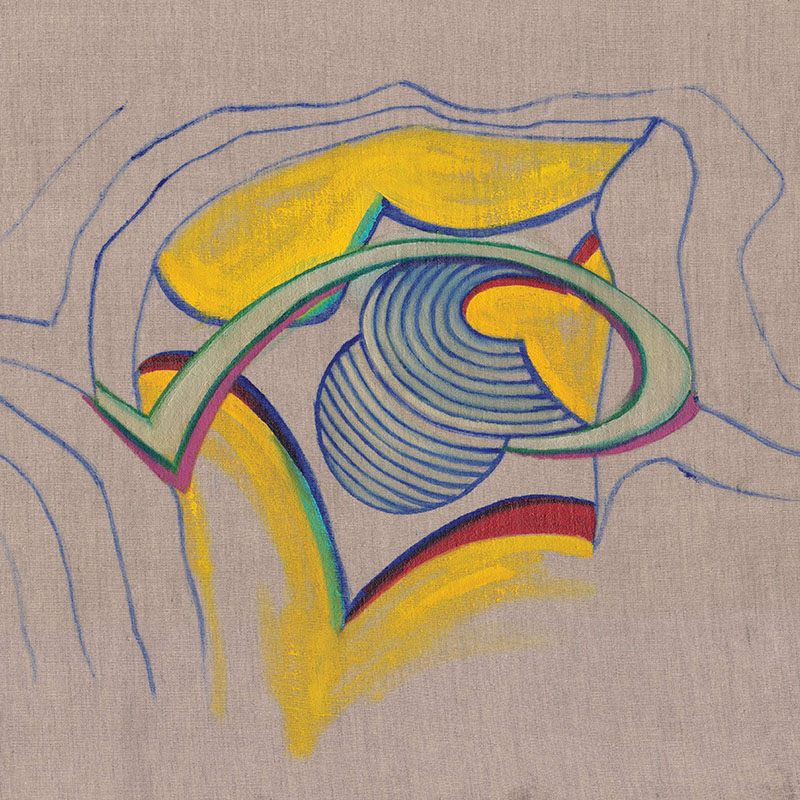
This document takes the form of a instrumentarium, constituting an environment that gathers “random encounters." Guided by a naturalist-tracer or a naturalist-artist, it examines how timbre, as a concept of the suspended, is applied to spatial and territorial regeneration.
Timbre constitutes a correlative relationship between its terms; for musicians, it becomes a kind of totem to communicate the objective relationships between sound and color that have been integrated into subjective relationships between human and sound, human and color. A totem serves to interpret dreams, myths, and anything on the threshold of the untransmittable. It is an instrument of tuning, a “tuning-subject". In timbre, as in a totem, the parts, the fragments, and the traces of the recognizable combine to offer the unrecognizable—an image of myth. Thus, I choose a terrain that functions as a totem-timbre, a corresponding hybrid of myth.
The quarry is a terrain of dual reality, an opening toward Chthonia, suspended in intermediate space and time, between the fertile and the barren. The quarry sites in Tourkovounia are the point where the terrain extends extensively into a smooth and striated space, and intensively into the “vertical and precipitous habitat" (Agamben, 2020). I infiltrate this terrain and design totemically in all three directions: regarding the fathomless depth, the abstract lines and traces, and the fleeting presences of the past in the present. I place a graft—an intruder—into this "body without organs" and leave it exposed to all the forces of nature, in complete entropy, to create a new "refrain," a new existential "tuning axis" of connection and correlation with life itself, existence, or the universe "to say what has not yet been said, to make new traces of orientation emerge within the world" (Mouriki A., introductory text in Cézanne’s Doubt. Eye and Mind, Merleau-Ponty, p. 15).
Λέξειςκλειδιά: totem, axis of resonance, refrain, transplant, entropy