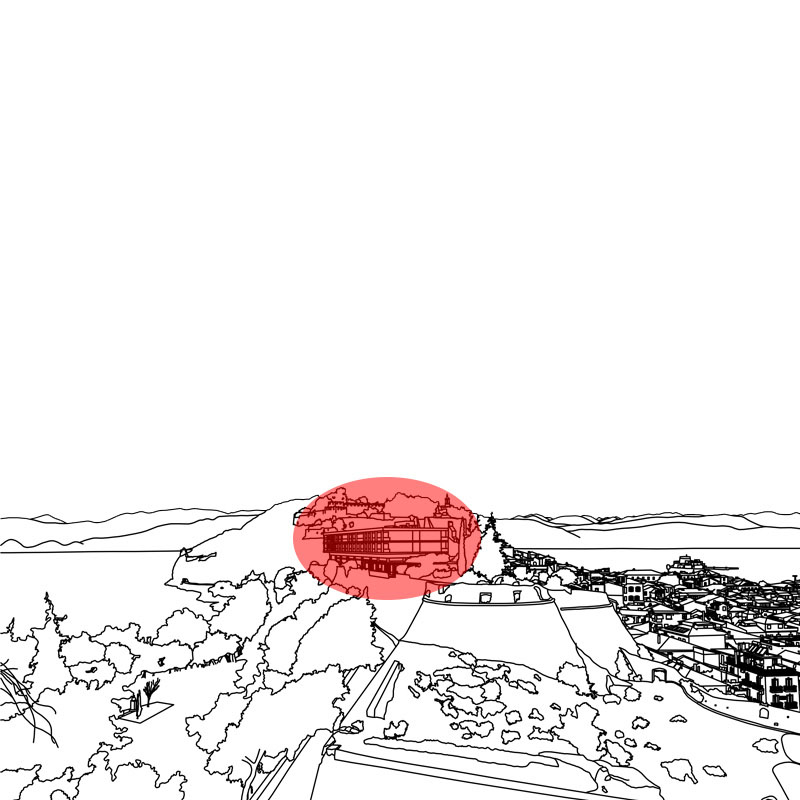
This thesis investigates the potential conversion of the Xenia Akronafplia Hotel into an Accommodation Facility for Patients Requiring Chronic Hemodialysis, seeking to combine the preservation and enhancement of its architectural identity with the specialized requirements of a contemporary healthcare hospitality building.
A comprehensive architectural proposal is developed, focusing on the following key objectives:
-
Analysis of the existing Xenia Akronafplia building;
-
Documentation of the facility’s operational requirements; and
-
Development and evaluation of the final architectural proposal.
Methodologically, qualitative and historical research approaches were employed through an extensive literature review of both Greek and international sources. Research methods included on-site inspection, field investigation, and photographic documentation of the existing building, as well as a visit to the Hemodialysis Department of IASO Medical Athens S.A. – Daphne Clinic, where medical, nursing, administrative, and technical information was collected. Data processing and design development were carried out using CAD software and three-dimensional modeling tools.
The theoretical part of the thesis presents, through a literature review, the definition of Medical Tourism, the history of Medical Tourism in Greece from antiquity to the present day, and highlights Chronic Care Medical Tourism in relation to architecture and the design of healthcare and hospitality facilities. Chronic Hemodialysis Units are briefly presented, including their definition, building program requirements, and electromechanical infrastructure specifications. Furthermore, the literature review examines the potential for adaptive reuse, accessibility, and the design of accommodation facilities for chronic care patients. The role and importance of the Social Community Clinic are also discussed.
The special part of the thesis initially presents the Xenia Program in Greece and provides a building typology description. Finally, the architectural proposal for the adaptive reuse of the Akronafplia Hotel is presented, including the design concept, master plan, circulation system, room redesign, hemodialysis unit, landscape design, and bioclimatic strategy across all building levels (Basement, Ground Floor, Mezzanine, First Floor, and Second Floor).
The thesis concludes with findings and recommendations for the further development and evolution of the proposed research and architectural design.
Keywords: Adaptive Reuse, Chronic Care Medical Tourism, Hemodialysis, Healing Architecture, Architectural Design Proposal