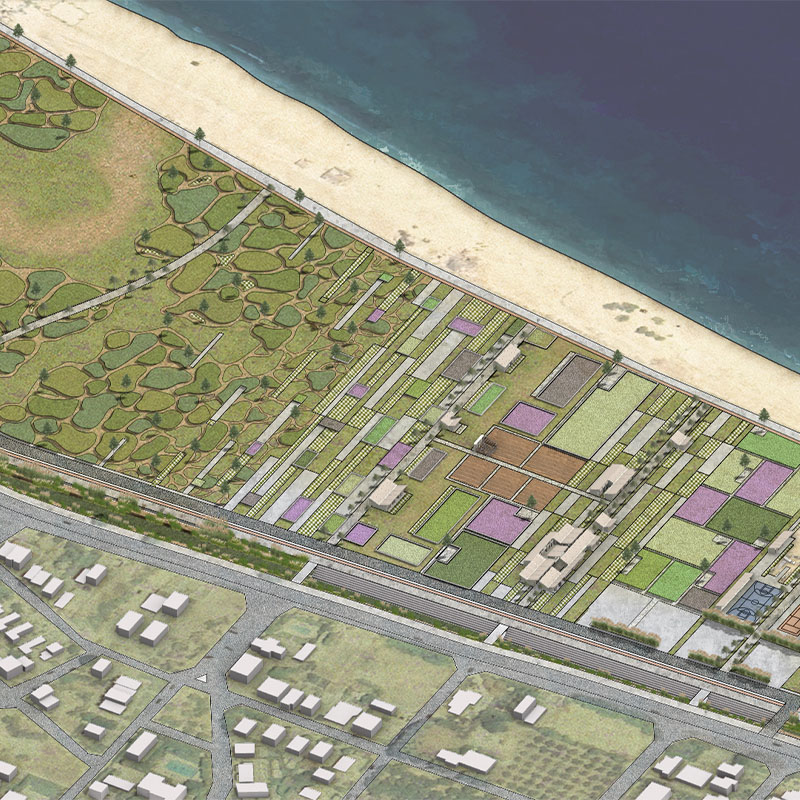
This thesis focuses on the design of the “Alana”, a coastal site located in Nea Iraklitsa, Kavala, and aims to highlight the identity of the area while addressing the needs of both its permanent and seasonal population.
How can an undeveloped site be transformed into a hub of activities that serves both residents and visitors? How can it respond to the intense seasonal fluctuations that characterize tourist settlements, which experience significant population growth during the summer months and reduced activity during the winter? These questions concern many coastal areas in Greece, whose development is largely based on tourism due to their distinctive natural beauty.
The proposed design seeks to address this issue through the creation of a multifunctional public space that combines local production, markets, outdoor activities and sports facilities. At the same time, the low building density preserves the open character of the “Alana”, as it is known tolocals, while allowing for the future development of additional structures should they be required by the community.
By strengthening the relationship between residents, visitors, and the natural environment, the project aims to contribute to the sustainable development of Nea Iraklitsa and to activate the area throughout the year.
Key words:Landscape architecture, Seasonality, Public uses, Semi-outdoor structures, Local identity