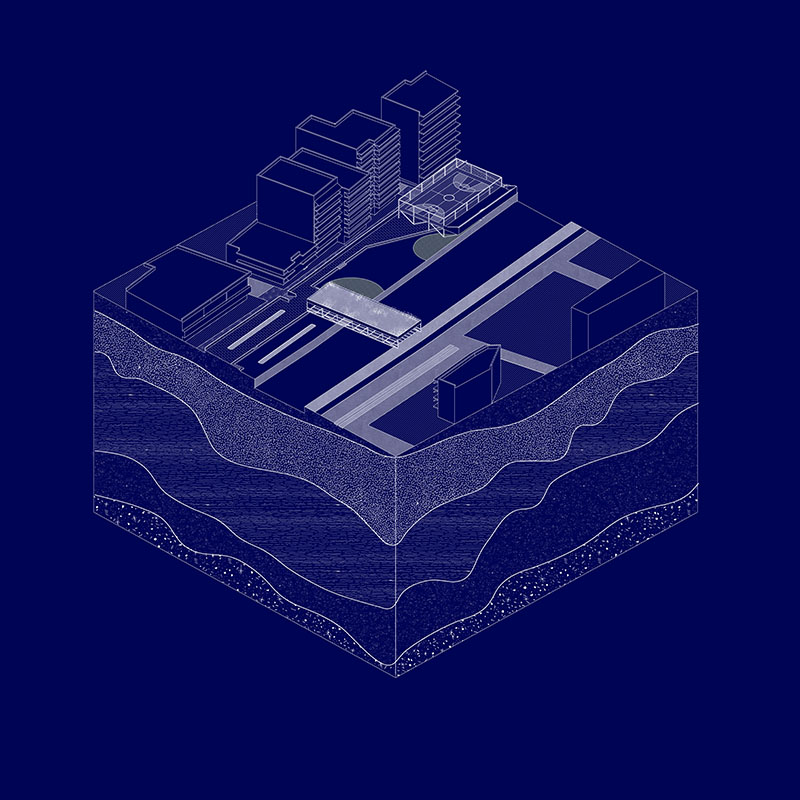
This diploma thesis addresses the historical, urban, and landscape palimpsest of the Ilissos River, a natural element that was decisive for the formation of Athens, but was gradually covered, channelized, and removed from the city’s daily experience. Through the study of areas where traces of its past and present existence are preserved or identified, the project focuses on the open, concrete lined riverbed of the Ilissos in the Kallithea–Moschato area. The proposal entails the radical redesign of one riverbank and the existing waterfront layout, aiming to reconnect residents with the water and highlight the river’s memory. The design is structured through successive levels of descent, which gradually guide the visitor closer to the riverbed, creating a physical and experiential relationship with the Ilissos. Programmatic bridges, small platforms, seating areas, and resting spaces function as intermediate thresholds for approaching the water. A central element of the proposal is the management of the water cycle. Rainwater is harvested from the riverbed and the park, filtered through rain gardens, and stored in underground tanks to be utilized during dry periods or for various other park features, such as fountains. In this way, the microclimate is enhanced, the sense of a waterfront landscape is restored, and the Ilissos reclaims an active role in Athenian public space. The new park retains traces of the previous design, such as playgrounds and core recreational uses, while simultaneously integrating new functions: a wetland, lavender gardens, a municipal bicycle parking station, amphitheatres, sports courts, fountains, shaded areas, a refreshment kiosk, a canteen, public restrooms (WC), and relaxation zones. Thus, the palimpsest is expressed both spatially and conceptually, through the harmonious coexistence of memory, water, and contemporary urban life.
Key words: Linear Park, Stormwater Management, Urban Stratigraphy, Bioclimatic Design, Accessibility