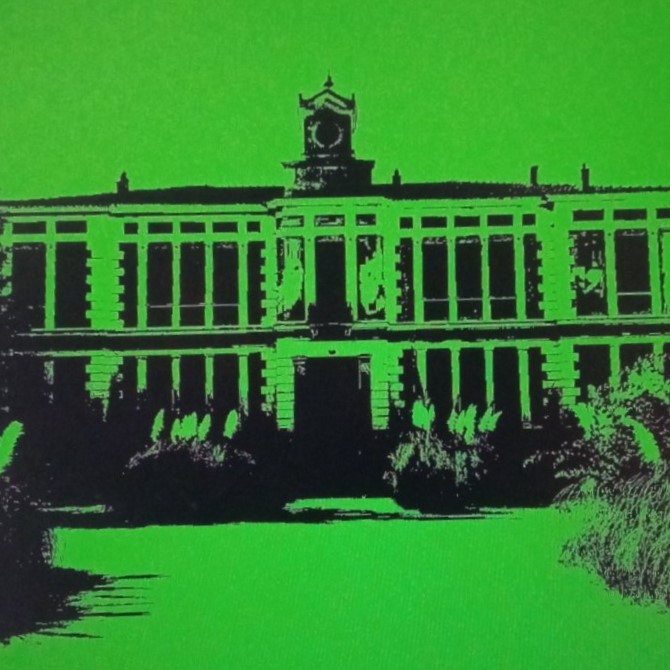
In this research, a retrospective study will be conducted on the early 20th century in the region of Larissa, during which one of the most significant architectural and cultural projects of the Greek state in the 20th century will be highlighted.
The Averof Agricultural School will be the central subject of our study, as it emerged for approximately three decades as one of the most important academic institutions focusing on agriculture, livestock farming, and agronomy. It was a school that undertook the task of educating Greek citizens in the primary sector, introducing new knowledge, equipment, and practices.
The study focuses on the architecture of the school’s building complex, its geography, technical construction details, as well as its history as an integral part of its long-standing operation. Furthermore, the research examines the materials used for the school's construction, as well as its exterior and interior architectural design. The primary aim is to analyze the spaces and buildings based on their architectural context.
Finally, the research concludes by comparing the school with other buildings of the same period in Larissa and documenting the current state of the Agricultural School, both in terms of its present form and its function.