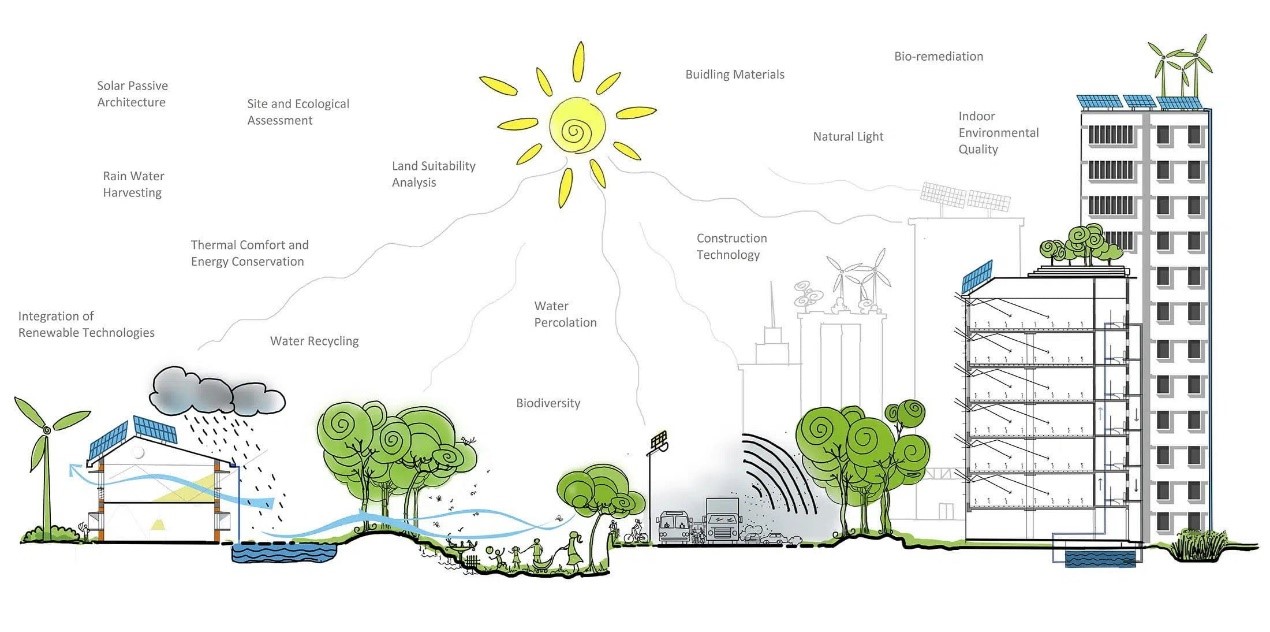
This research paper explores the bioclimatic design of open spaces, focusing on the sustainability of the urban environment. The study aims to analyze bioclimatic parameters and examine case studies.
The research paper begins with an introduction to the background and importance of bioclimatic design in open spaces, describing the research objectives, methodology, scope and limitations. The literature review chapter defines key concepts, such as sustainability and sustainability in urban design, and examines the principles and applications of bioclimatic design, including environmental issues, vegetation and renewable energy systems. The chapter of the research methodology describes the approach used in the study, focusing on the analysis of tree planting and temperature data and graphs for Volos. Two case studies are analyzed, comparing bioclimatic design features, their strengths and weaknesses. A bioclimatic design methodology is proposed, taking into account the urban morphology of the city, the geometric parameters and the urban microclimate. The results and discussion chapter presents the research findings, analyzes their implications, and addresses the limitations of the study. The paper concludes by summarizing the key findings and offers suggestions for future research in bioclimatic design of open spaces.
This study contributes to the understanding of bioclimatic design in open spaces, highlighting the importance of sustainable urban environments. The findings and methodology presented in this study can feed into future research and practice in urban planning, promoting the creation of environmentally conscious and resilient open spaces.