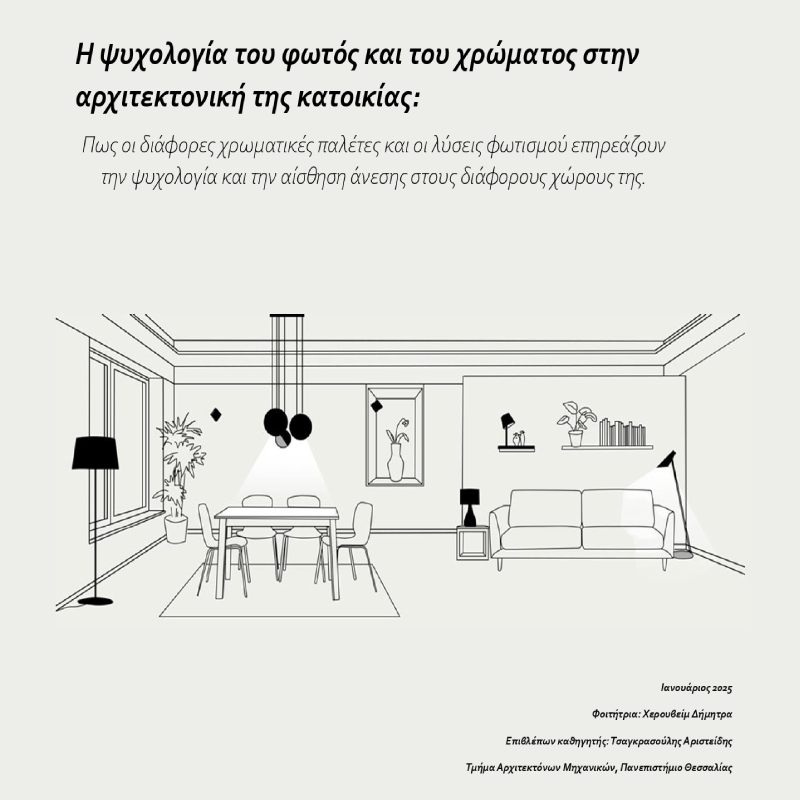
Both the element of light and colour are dominant aspects of our everyday life and influence all areas of human life, such as advertising, marketing, art, architecture and interior design. Consequently, the psychology of light and colour also plays a key role in the architecture of the home, whose role in recent years, especially since the COVID-19 era, has been redefined, making it a multifunctional space, where we spend most of our time and which must meet the requirements and needs of each user. The impact of light and colour in domestic spaces is vital, as they have the potential to radically change the mood, behaviour and perception of the occupants, while at the same time shaping the desired atmosphere of the space. On the one hand, colours have been inextricably linked to our emotional state, as through the science of colour psychology and colour theory it has been established that they have a strong psychological effect and that certain colours correspond to specific emotions and psychological reactions. For example, warm colours , such as red, yellow and orange, are known to promote energy and vitality in a space, while encouraging social interaction, which makes them suitable for common areas of the home, such as the living room and dining room, where increased sociability and communication is observed. Conversely, cool tones, such as green, blue and purple, known for the relaxation and tranquility they emit, are suggested for bedrooms and spaces for personal introspection and relaxation. On the other hand, light, whether artificial or natural, is an essential tool for designing the interior of the home, since both the strategic placement of openings and the right choice of intensity and direction of body light can largely determine the feel of the space and improve our productivity and performance in it, as opposed to weak and inadequate lighting, which tends to cause oppression and fatigue in users. Overall, the targeted use of light and colour within the context of the home shapes the experience of the space, taking into account aesthetic and functional purposes, thus improving the mental health and quality of life of the occupants.