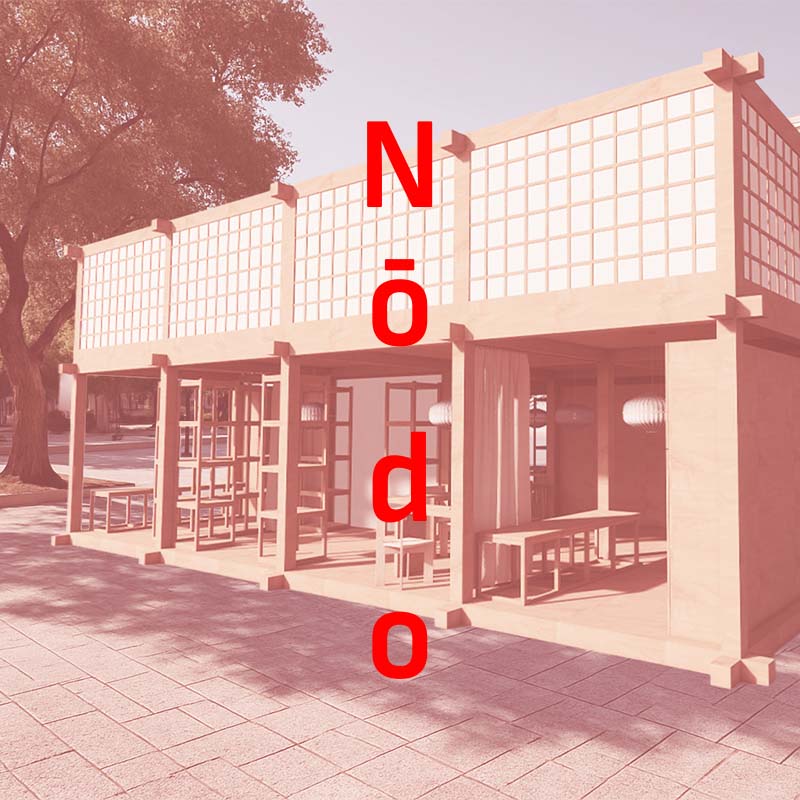
Nōdo is a small, agile hub that multiplies and is set up in the urban landscape, creating a space for those who want to exhibit their creations, while seeking visibility and an open dialogue. This proposal stems from my own personal experience in the exhibition space, but also from conversations with people I met there. Most people find a way through their creation to express themselves, but what they make remains locked in cabinets and warehouses, without being exposed to the public. I decided to design an open hub, where young creators and passersby are attracted to a core that is constantly changing and developing. Its architecture is based on the Japandi movement, in which Japan and Denmark meet. Its key characteristics are wood, light, fabric and transparencies, that let the eye wander, producing experiences. It adopts in its construction the traditional woodworking technique, Kumiki, which promotes ephemerality and leaves a zero footprint in the city. In Nōdo, every day, and every hour of it, changes the space. In this diploma thesis, a special reference is made to the example of Nōdo in the city center of Athens and specifically in Klafthmonos Square. Where thousands of people pass by every day, but no one stops to observe.
The application of Nōdo in the square creates a social and cultural capacitor, for meetings, synergies and small surprises that transform the “passage” into an experience. If anything remains, it is that the city can be more lively when it is given a reason to stop running.
Key Words:Unit Design, Exhibition Pavilion, Kumiki, Ephemeral Construction, Sustainability