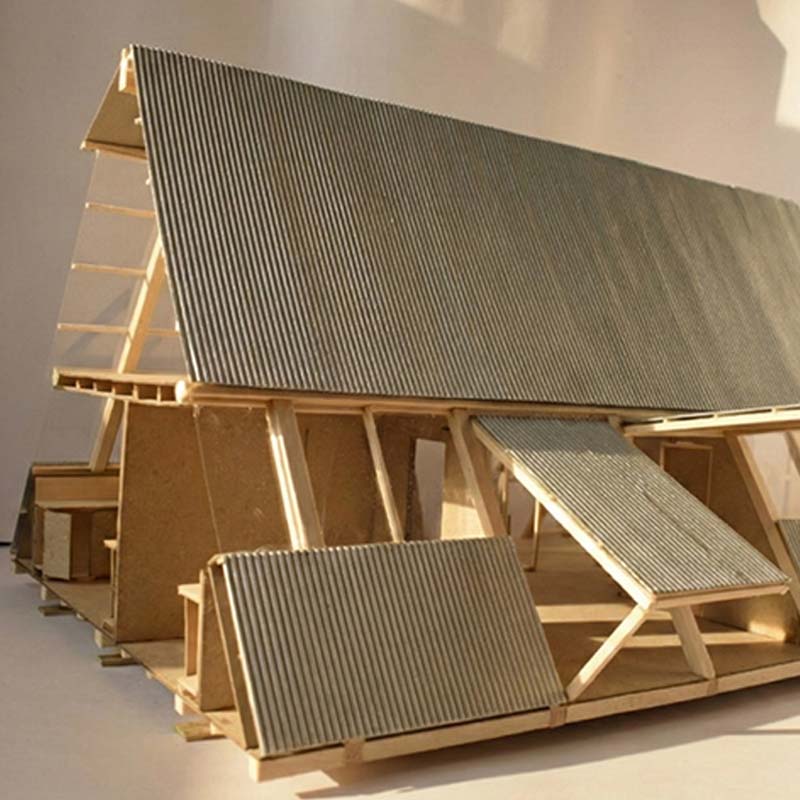
This thesis seeks to evolve the architectural framework of animal care facilities by proposing a new, specialized design language for companion animals. The objective is to create a model stray dog shelter within an active olive grove in the Volos. The inspiration for this project stems from the lived experience of adopting a dog from the Volos municipal kennel, an event that led to on-site observation and served as a catalyst for research into Greek shelters. Through this process, a significant "architectural void" was identified: while human habitation is governed by clear standards, there is a profound lack of corresponding architectural care for companion animals.
Existing shelters, despite being intended for animals, are designed based on anthropocentric criteria. Priority is given to operational speed, ease of cleaning, and the convenience of caretakers. The result is spaces that function as “cold storage units” characterized by smooth concrete floors, inadequate heating, and cramped cages arranged in rigid linear layouts. These conditions induce stress and institutionalization, reducing "animal welfare" to mere biological survival.
The current proposal seeks to overturn this conventional model by introducing a new typology that focuses exclusively on canine well-being through zoo-centric design. The study approaches space through the senses and needs of the dog, creating a stress-free environment centered on enrichment. The goal is to provide the animal with the space to express its natural behavior, explore, play, and essentially exercise its right "to be a dog".
An active olive grove in Volos was selected as the site, where the architecture follows a gentle pace, observing nature before intervening. The dog dwellings and the paths within the grove develop organically, avoiding strict geometries. The A-frame typology is chosen as the primary structural unit for all constructions, drawing inspiration from the archetypal form of the dog house - the classic gabled roof of a backyard kennel. These forms, constructed incorporationg upcycled materials, are positioned among the trees. They are supported by point foundations and are slightly elevated from the ground, fully respecting the natural grid and the root systems of the olive trees.
 In this new framework, the role of the human is radically transformed. Architecture shifts from a logic of enclosure to a medium for coexistence. The central building is not merely an administrative shell, but the "heart" of a community of animal lovers- a hub of activity that fosters education and encourages volunteerism. Furthermore, the project’s innovation lies in combining an extroverted public character with high operational standards, where specialized staff and thoughtful design ensure that daily care and safety are never compromised. Thus, the shelter is evolved from a place of sorrow and isolation into a pioneering, visitable destination of life, joy, and meaningful contribution.
Keywords: Stray Animal Shelter, Coexistence, Architecture for Animals, Olive Grove, Volunteerism