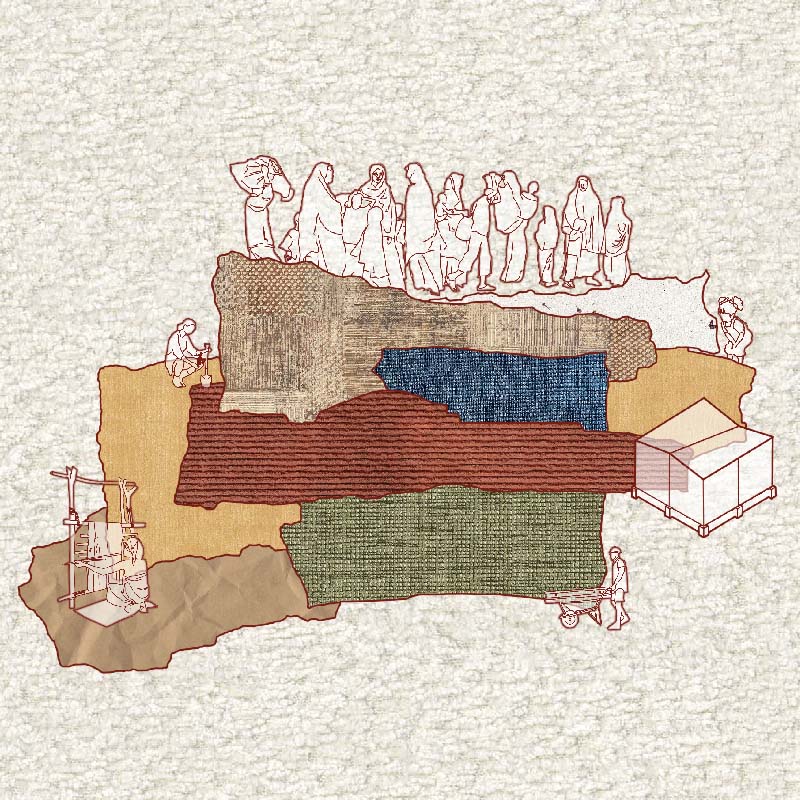
This thesis examines refugee settlements through an architectural lens. It treats camps not merely as temporary solutions, but as complex spatial systems that evolve based on their duration. The research focuses on the Dadaab refugee complex in Kenya, one of the world's largest settlements, and builds upon previous research that extensively analyzed the inhabitants' displacement profiles, local geographical context, and socio-economic background.
The methodological framework is informed by a comparative study of 40 shelter typologies worldwide, as well as an analysis of bibliographic sources and audiovisual materials. The investigation revealed significant gaps in professional training and the urgent need for infrastructures that promote self-reliance. Consequently, the design proposal focuses on creating standardized vocational training units that function as an intermediary stage between emergency relief and long-term recovery.
Specifically, these are:
1. An agriculture unit,
2. A sewing and textile unit,
3. A construction unit,
4. A nursing unit
5. A teaching unit, and
6. A livestock unit.
These units have a dual purpose, serving as both educational centers and collective production workshops. The architectural design utilizes local materials and low-tech construction methods to ensure environmental integration and replicability in other settlement contexts. This proposal's ultimate objective is to empower displaced populations, cultivate skills tailored to the local labor market, and gradually integrate refugees into the economy, thereby transforming the camp into a space of creative evolution and sustainability.
5 key words:refugee camps, displacement, standardized units, vernacular architecture, human-centered design