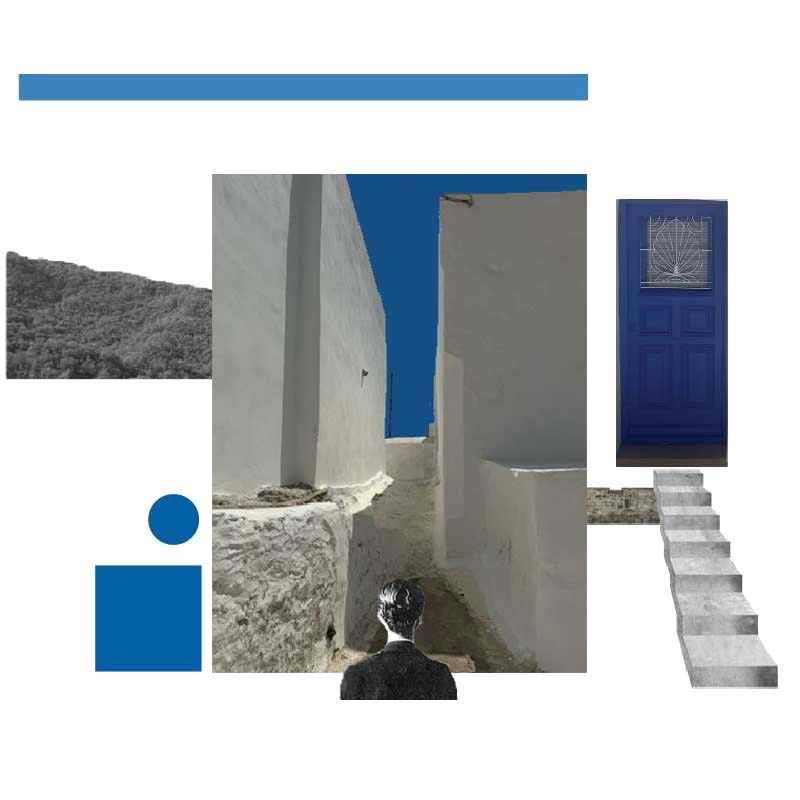
This thesis focuses on the architectural analysis and investigation of the traditional settlement of Castle in Serifos, with particular emphasis on the traditional dwellings that form its residential ensemble. Cycladic architecture, as a distinctive and recognizable expression within the broader Greek context, has played a pivotal role in both the design of houses and the shaping of urban planning practices, underscoring the inseparable relationship between architecture and the natural as well as social landscape. The research first examines the historical evolution of Castle, from its initial construction to its present form, analyzing its spatial organization and its interaction with the geographical and social environment of the island. It then investigates the typology of traditional dwellings, focusing on spatial distribution, constructional features, and the functionality of each unit, while considering the practices and habits of past everyday life that shaped their formation. Subsequently, the study addresses the re-evaluation and redesign of these houses, emphasizing their restoration as well as the correlation and unification of the building units. The analysis is based on a comparative study of existing structures, adopting a strategy that seeks to preserve the load-bearing system and the essential traditional features of each unit, while at the same time integrating contemporary architectural approaches.
The aim of this thesis is to propose a model that combines current architectural perspectives with the principles and requirements of traditional insular settlements, resulting in the creation of a coherent residential complex in Kato Chora, Serifos, while preserving the continuity of the local architectural identity.