Supervisor:
2025
Thingvelliris a national park located in the municipality of Bláskógabyggð, in southwestern Iceland, approximately 49 kilometers northeast of Reykjavík, the country's capital. The park spans an area of 24,000 hectares and stands out for its dramatic geological landscape. An astonishing feature of the area is the rift valley, formed by the separation of the North American and Eurasian tectonic plates, marking the crest of the Mid-Atlantic Ridge. What makes Thingvellir truly remarkable is the ongoing geological activity: as the tectonic plates gradually drift apart by a few centimeters each year, the landscape is continuously reshaped, giving rise to a dynamic and ever-evolving terrain. Beneath the apparent serenity of the site lies a landscape in constant motion, where new land is perpetually formed.
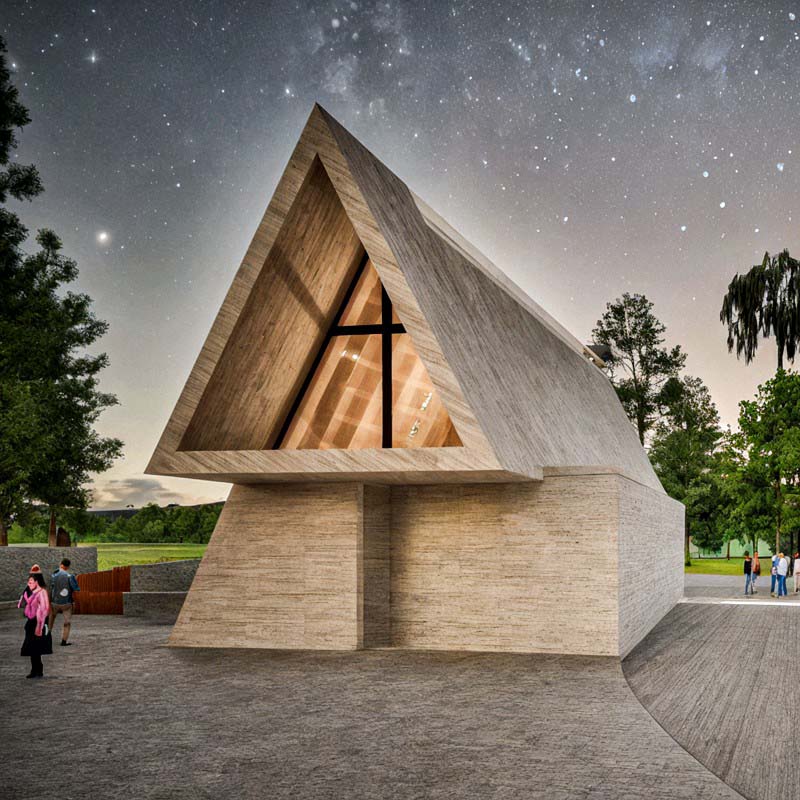
This thesis explores the wild and untouched landscape of the Icelandic countryside, with a specific focus on Thingvellir National Park, and proposes the design of a temple accompanied by both indoor and outdoor seating areas. The aim is to create a sacred space that serves the spiritual needs of both local residents and visitors, while being sensitively integrated into the park’s natural environment. The design draws upon principles of contemporary Icelandic architecture, moving away from the more conventional and widespread traditional church typologies found across the country.
The site’s strategic location and its unique morphological features played a key role in the decision to situate the temple and surrounding areas within this specific context.
Providing easy access to pedestrians via the park’s main road, and for drivers from Parking Area P1, the project establishes a connection between these two circulation paths, creating a space of pause, reflection, and rest within the landscape.
As part of the research process, it was important to investigate the evolution of temple typologies through time, to ensure that the proposed structure reflects the most representative and meaningful form for a contemporary sacred space.
In all, this thesis aspires to highlight the cultural and natural significance of the Icelandic landscape, encouraging a deeper connection among the locals, the visitor and the place. It seeks to foster awareness among both residents and visitors about the value of architectural heritage, and to promote a thoughtful appreciation of the country’s cultural and religious identity.