As the planet is tested by general climate change, widespread, ongoing, and long-lasting armed conflicts that force thousands of people to migrate, the neutralization, especially in our country, of the primary production sector (insufficiency of locally produced food), and the emergence of new work patterns, such as the movement of digital nomads, the need or intelligent response of national economies, countries, and associations of countries to construct and immediately make available industrially standardized housing units is imperative.
I imagine that the model of conventional aesthetic, construction, and institutionally defined housing strategies that have been established over a long period of history may soon undergo a critical change, from a new perspective of responding to constant changes in space and time.
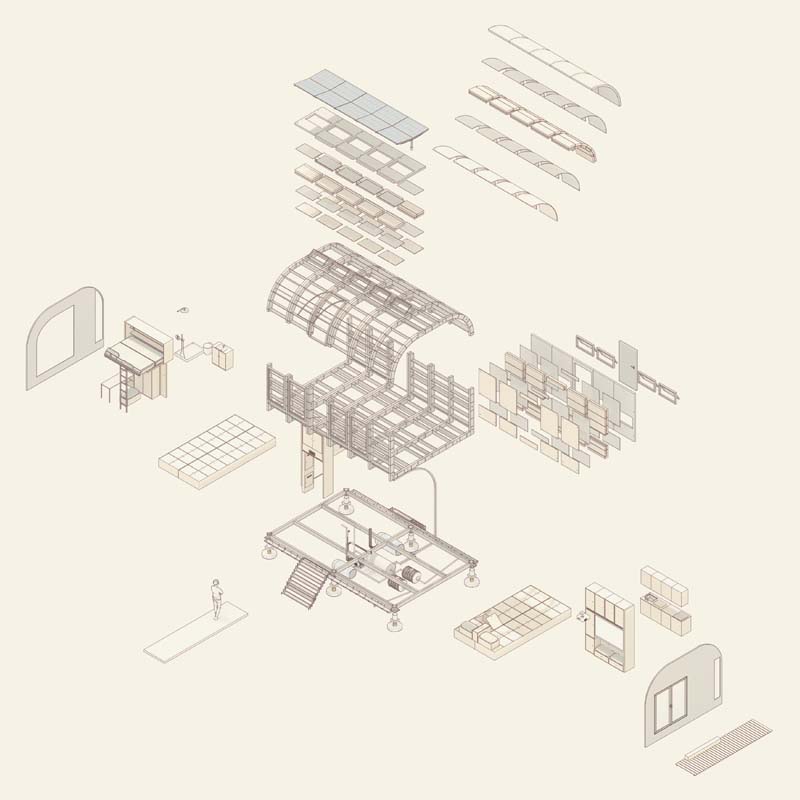
The research and design visualization I present aims to design emergency or regular shelter units constructed using industrial methods. These units should be transportable and quickly deployable in different environments, terrains, and political-cultural contexts (cities, villages, islands, borders).
These units must be quickly assembled and disassembled, be composed of small and large numbers, be combined and operate with additional functional relationships such as small-scale crops or vertical crops of medium and large-scale food production, support services (kitchens, cafeterias, carpentry workshops, LABFAB workshops, administrative support centers) Supporting small and large groups of people in emergency situations with a low ecological footprint in a circular economy context, but also as a new possible model of collective living adapted to the nomadic culture that will characterize parts -population groups in the 21st century.