What is the impact on the quality of living when spatial adequacy is not accompanied by corresponding functionality?
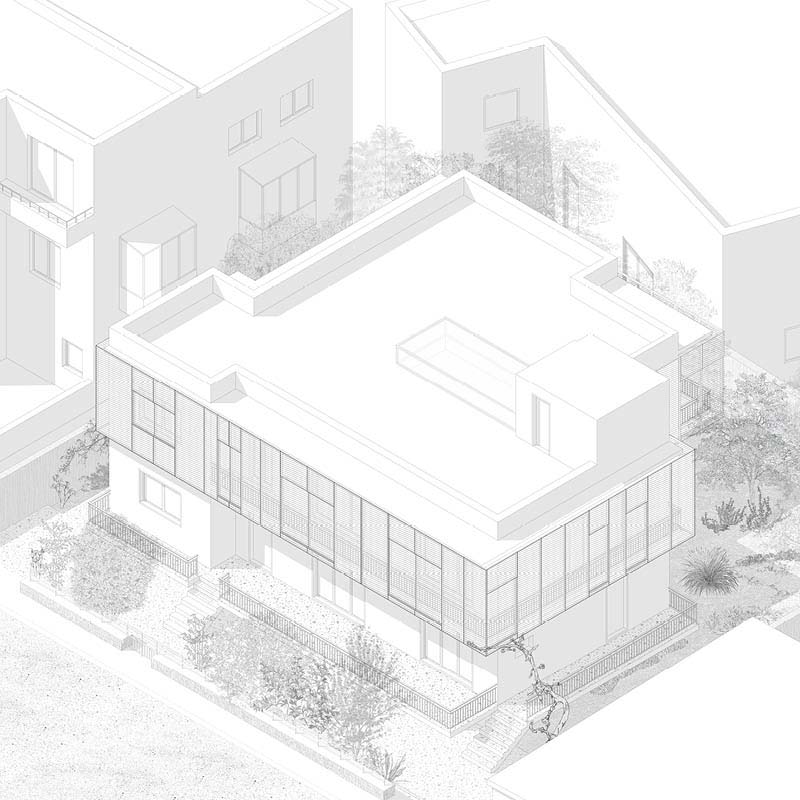
This study addresses the revision of housing standards, focusing on a floor apartment built in 1980, located in a semi-urban neighborhood of Mytilene.
The central research question concerns how space can be transformed to effectively accommodate the twelve family members who use it primarily during the summer months, surpassing its original housing specifications. The apartment examined follows the architectural norms of its era, featuring large underutilized interior spaces and narrow, dysfunctional balconies - elements that do not meet contemporary needs and, despite its proximity to the sea, do not reflect the characteristics of a vacation home.
The methodological approach included a review of the building’s historical and typological identity, detailed documentation of its current condition, and analysis of its structural characteristics. This was followed by a series of design experiments through which alternative interior layout proposals were developed.
These proposals preserved the apartment’s essential morphological and structural features while introducing flexible solutions that allow for better utilization of available space, the enhancement of collective living, and adaptability to the family’s changing needs.
The study demonstrates that, with appropriate architectural interventions, even older residences with limited functionality can be transformed into flexible and sustainable spaces, gaining new functional and aesthetic values, and making the home a lively and welcoming environment for all users.