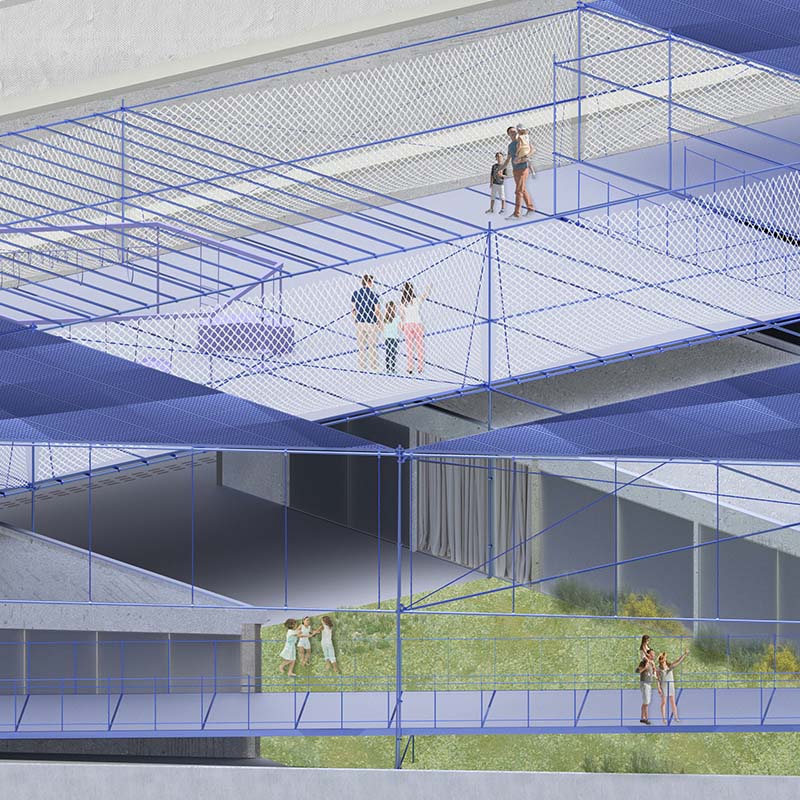
This thesis investigates the accessibility of visually impaired individuals to fitness facilities in the city of Volos, focusing on the interrelation between architectural design, social inclusion, and equal participation. Initially, a comprehensive mapping and analysis of local gyms is presented, highlighting the range of services provided as well as the existing infrastructure in relation to the concept of universal access. Subsequently, the main challenges and needs of blind individuals are examined, both in terms of everyday urban mobility and in relation to exercise and the use of fitness environments.
The study draws upon bibliographic sources, legislative frameworks, and personal testimonies in order to demonstrate how the absence of visual information can be compensated through alternative sensory channels (tactile, auditory, spatial memory). Furthermore, it proposes architectural principles and design strategies that enhance independent spatial use, such as the implementation of ramps and elevators, Braille signage, dedicated areas for guide dogs, and the avoidance of both excessive and insufficient information in the built environment.
The research addresses critical questions concerning the differentiation of spatial perception in the absence of vision, the role of spatial elements as carriers of information, and the ways in which this knowledge can inform the development of universally designed architectural solutions. Overall, the thesis argues that accessibility in fitness facilities is not merely a technical matter of design, but a fundamental condition for social inclusion, autonomy, and the improvement of the quality of life of people with visual impairments.