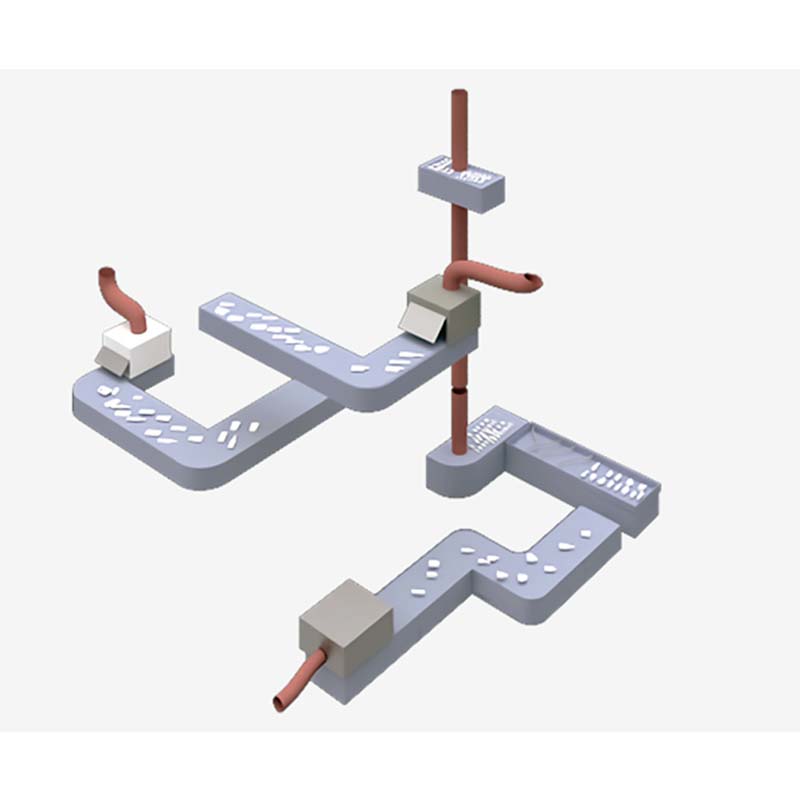
The continuous observation of the streets of Kypseli contributed to the initiation of research and documentation of the area for this thesis. The uncontrolled mass of garbage, mostly plastic packaging, served as the starting point for searching for spaces that could host a plastic reuse center. The focus on plastic was deliberate, as it requires the biggest process to be reused and acquire a new identity. Through the exploration of vacant (unbuilt) spaces in the Kypseli neighborhoods, the installation of a plastic processing and reuse hub has become a daily reality for its residents, familiarizing them with the process of recycling. The center stores quantities of plastic, so that larger recycling centers can obtain supplies for their own use. Following a series of operations, the plastic is distributed across four floors. Each floor is dedicated to a different process where special machines cut, shred, compress, and granulate plastic to achieve the desired result. The aim of the processing is to create everyday items that can be sold. The ground floor is both the beginning and the end of the processing, as the "sculptures" are directed to the ground floor, creating the hub's exhibition. The intermediate floors function as auxiliary spaces serving the daily needs of volunteers and the collection of plastic. The hub functions as a small factory where "materials" enter through the receptacles on the front and are processed in a vertical process. Pneumatic tubes installed on each floor are responsible for transporting the plastic from outside to inside.