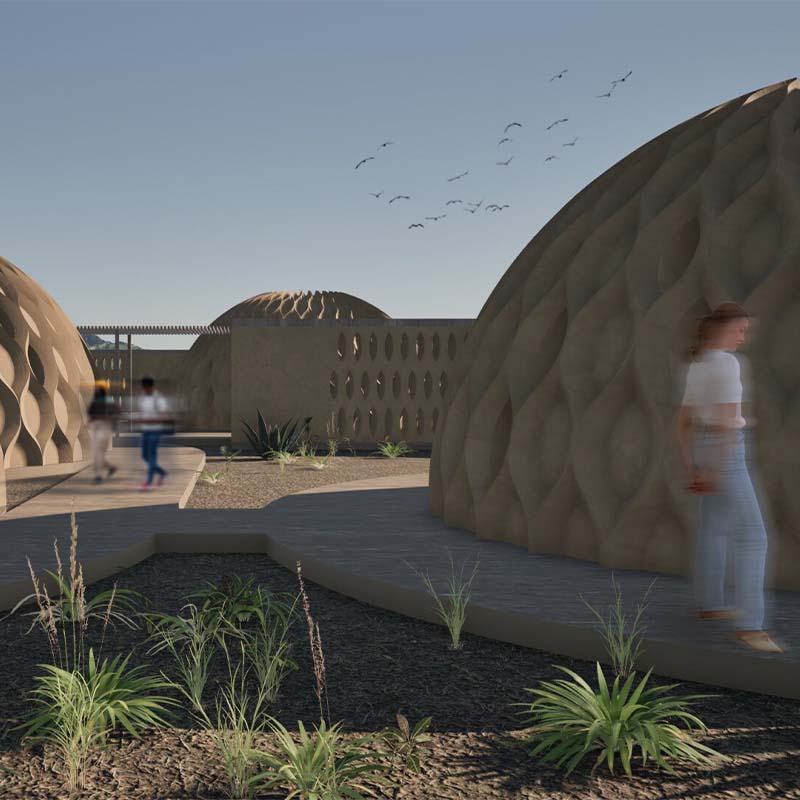
The rapid development of three-dimensional printing technology (3D Printing – 3DP), combined with the increasing demand for architectural solutions with an ecological character, has led to the search for new building materials and construction techniques. Within this framework, the use of earth-based construction technologies attempts to bridge the gap, marking a contemporary re-approach to traditional building methods (Personal archive). This study focuses on the architectural design of a building complex in Thrapsano, Crete, which will host a Pottery Museum. The implementation of the project is proposed through the use of three-dimensional printing technologies, utilizing locally sourced soil as the primary building material, thereby enhancing sustainability and integrating the construction into the natural environment. Thrapsano is one of the most important centers of clay vessel production in Greece, with an uninterrupted presence of this craft from antiquity to the present day. The operation of the museum will be organized around three main exhibition sections: the presentation of the evolution of clay production technology from antiquity to the modern era, the display of archaeological findings, the exhibition of contemporary artistic creations in clay, produced with the assistance of three-dimensional printing. At the same time, to enhance the interactive experience of visitors, the creation of a specially designed workshop is foreseen. There, visitors will have the opportunity to create their own ceramic objects, either through traditional techniques or by using innovative digital methods. This approach aims to connect the public with the material, the technology, and the cultural continuity of pottery.