KARAGIANNI ELENI
Supervisors:
2025
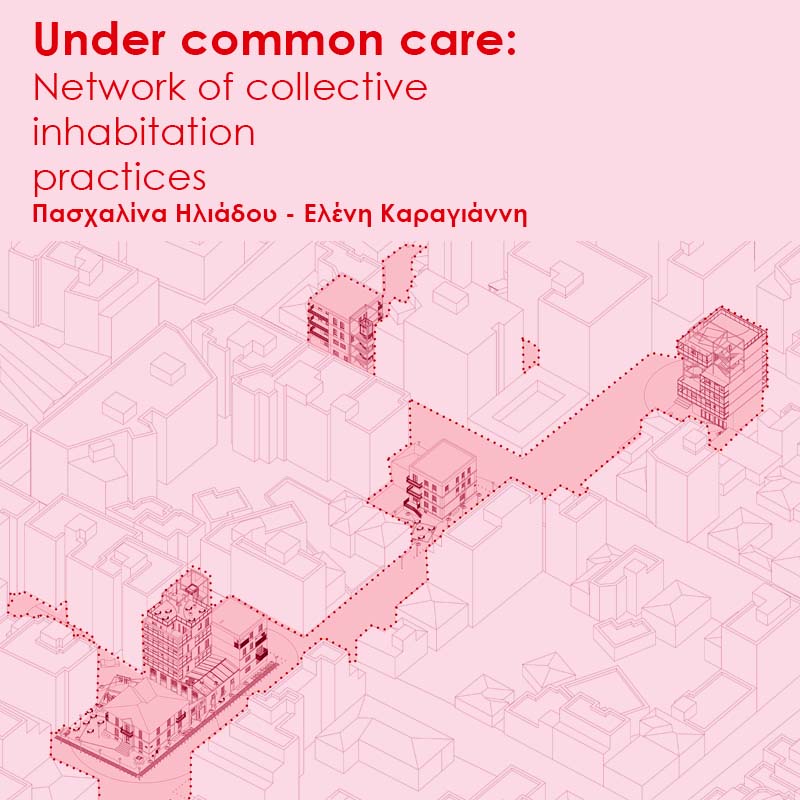
The "Under Common Care" project is a network of shared living spaces, amenities, and socialization areas that operate under collective care practices. The network is based on inactive buildings and land reserves, combined with the surrounding public space of a section of Gazi Street in the city of Volos. Specifically, the proposal was motivated by the high concentration of abandoned buildings in the area, the inability to find affordable housing in the urban center, and the lack of diversity in land use as we move away from it. The aim is therefore to redefine abandoned buildings and urban voids, such as vacant lots and empty block courtyards, into a network of collective housing units, common areas, and micro-services that will be able to meet both the physical and social needs of the members and users of the area. The design process is based on the familiarization with the concept of "commons," the analysis of the target area, the mapping of buildings and spaces of interest, and the proposal of solutions for their efficient reuse and redesign. The suggested project focuses on the formation of a sustainable collective way of life, third places and urban playfulness, while at the same time adopting an intergenerational character by embracing groups of different age profiles such as single-parent families, students, and the elderly. Furthermore, the intervention is not limited to the buildings themselves, but it extends to the surrounding public space and roads, an element that acts as a connecting link between the units. This friendly, inhabitable network of amenities will serve as a model in response to the city's housing shortages, high rents and loose social ties, while also attempting to strike a balance between the preservation of older buildings, the construction of new ones and the introduction of new materials, volumes, and movements. At the heart of the project lies the depiction of a daily dialogue of care, with practices and mechanisms of sharing and circular economy that aim to shape reciprocal actions, promote human interaction and develop community ties and healthy interdependence among the members. Opportunities to overturn existing dysfunctional systems exist all around us, with small initiatives of solidarity constantly sprouting, setting the example for new symbiotic scenarios of everyday life.
5 keywords: reuse, commons, practices, sharing, city