Supervisor:
2025
The concept of the flexible floor plan emerges as a contemporary architectural approach that offers effective solutions to various challenges within the urban and residential environment. The growing trendancy toward reducing the surface area of housing units and the resulting lack of adequate space, combined with the need for dynamic readjustment and adaptability of interior spaces, renders flexibility in floor plan design a critical factor for the sustainability and functionality of modern dwellings.
This thesis focuses on the study and architectural implementation of the concept of the flexible floor plan, as well as the flexible façade. The primary aim is to explore design strategies that allow residential spaces to adapt to the diverse and constantly changing needs of users. These needs may be related either to the evolving composition of the household or to different phases in the residents’ life cycle.
The study area is located on the eastern side of Thessaloniki, specifically in Pylaia, within the residential fabric of the Konstantinopolitika neighborhood. It is an urban area that retains characteristics of a suburban environment, without being spatially or functionally disconnected from the central urban core. It is in direct proximity to Toumba and is only thirty minutes from Thessaloniki’s city center via public transportation.
The area is characterized by extensive open spaces and sports facilities, while the relationships among residents retain a strong social dimension. Daily interaction among neighbors creates the feeling of an “urban village”, where the community fabric remains active and experiential, despite its geographical closeness to the city center.
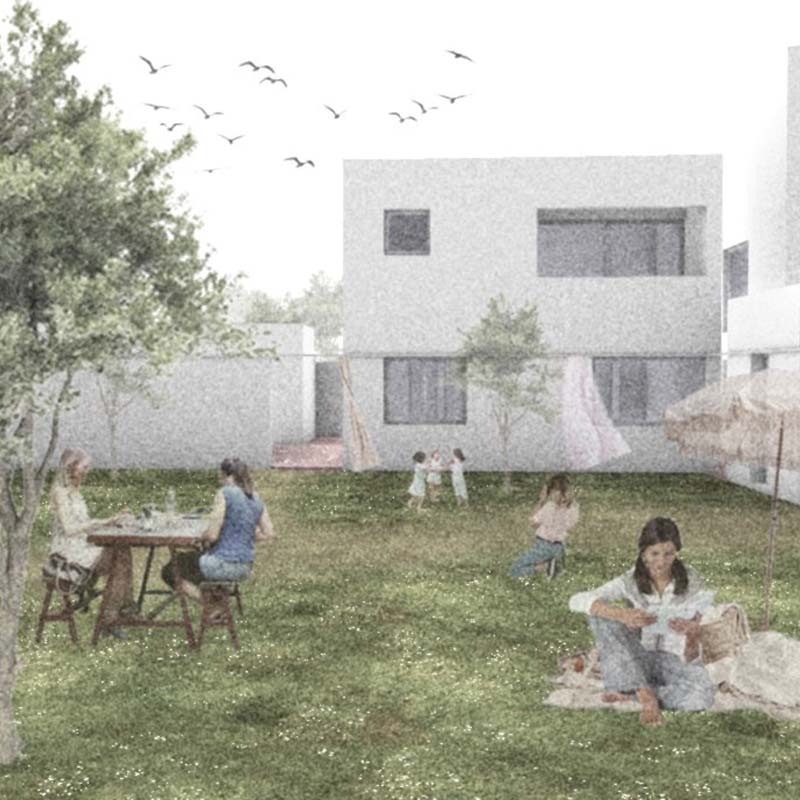
Within this context, the design proposal of the thesis seeks to enhance and preserve these local neighborly relationships through the development of a residential complex that adopts the “Low-rise, High-density” strategy. The design is based on the creation of shared courtyards and gardens, which function as extensions of the private living space. These communal areas offer residents the possibility for collective use and adaptation, according to their varying needs and desires.
Consequently, the notion of flexibility extends beyond the architecture of interior spaces to encompass the design of outdoor communal areas as well. In doing so, it reinforces the sustainability of the urban fabric and the dynamic social relationships that shape it.