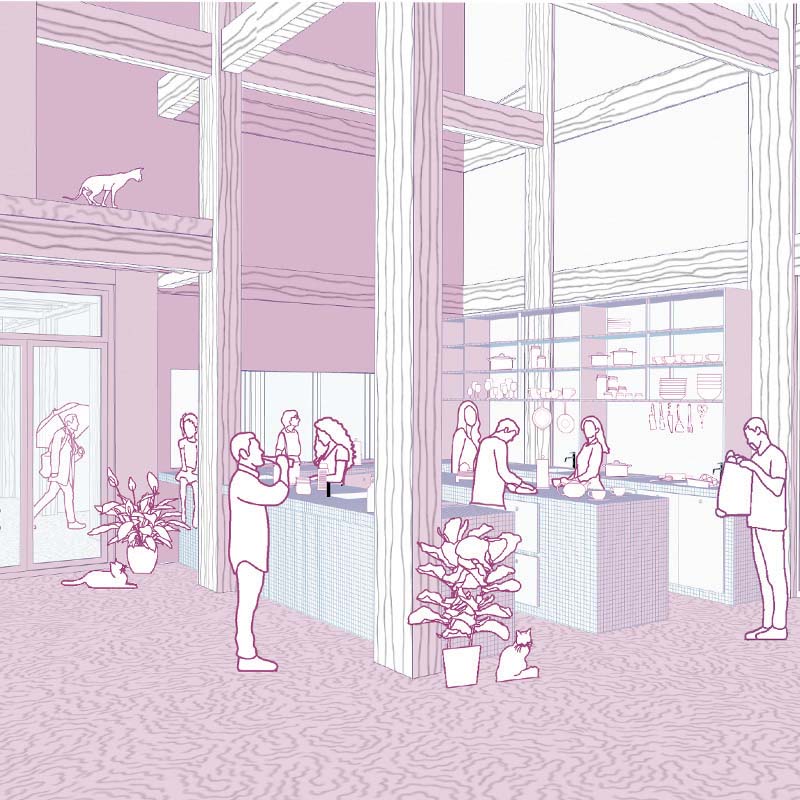
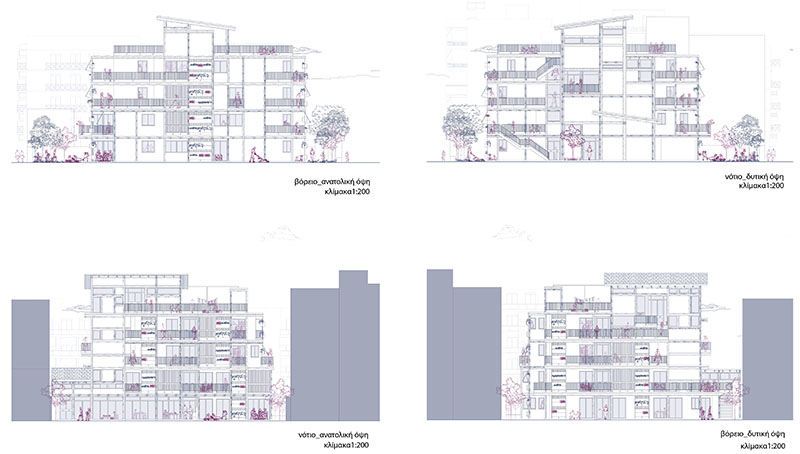
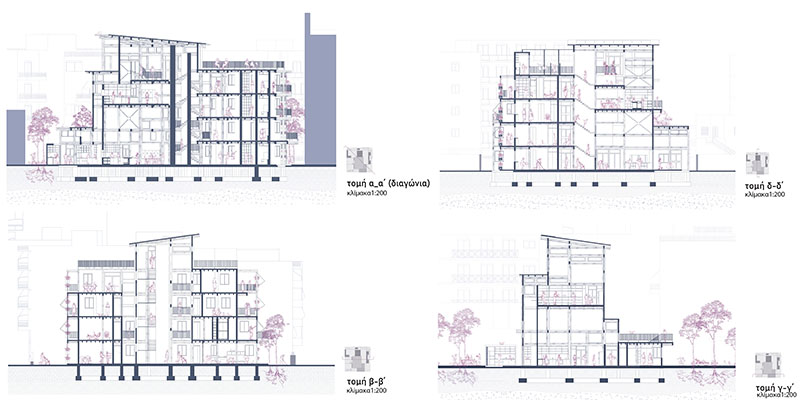
This thesis explores the kitchen as an architectural typology, as well as a social and cultural construct, aiming to rethink its role, function, and significance both within the private home and in collective living environments. Through historical review, sociological analysis, and case studies, it examines how the kitchen, once the central hearth of the home, became marginalized—carrying with it embedded gender and social constructs. The work poses the question: what would happen if the kitchen regained its place as the heart of social life, not just in a single household, but throughout an entire apartment building?
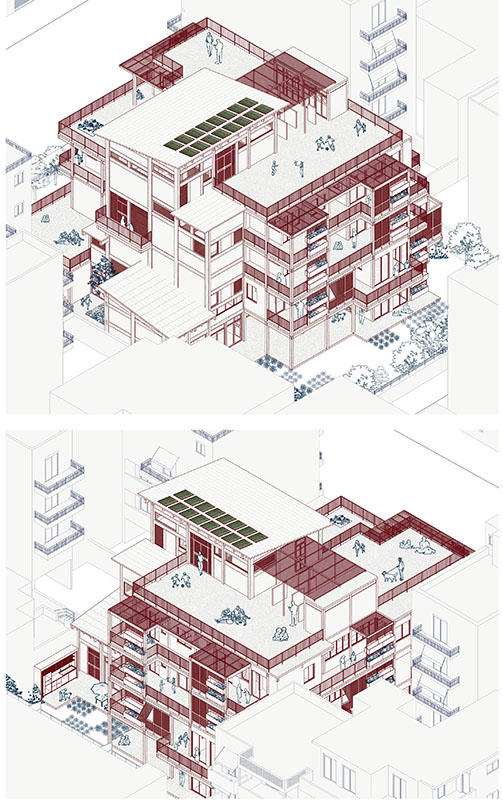
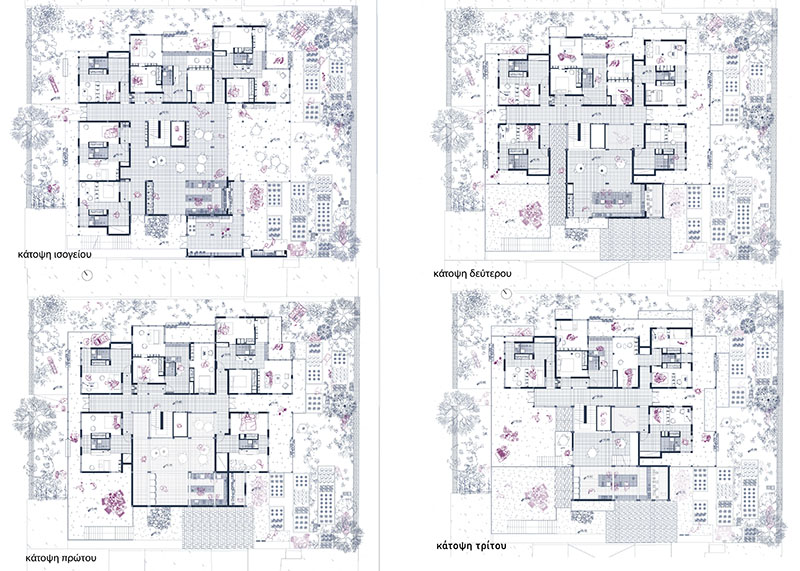
Inspired by cooperative housing models like La Borda, the proposal envisions a contemporary Greek apartment block where the kitchen is transformed into a shared metabolic hub. This space goes beyond food preparation and consumption to include the management of local raw materials, waste recycling, and the production of bio-materials. At the same time, the thesis deconstructs traditional housing typologies and designs new apartment types that respond to the needs of modern daily life and collective living.
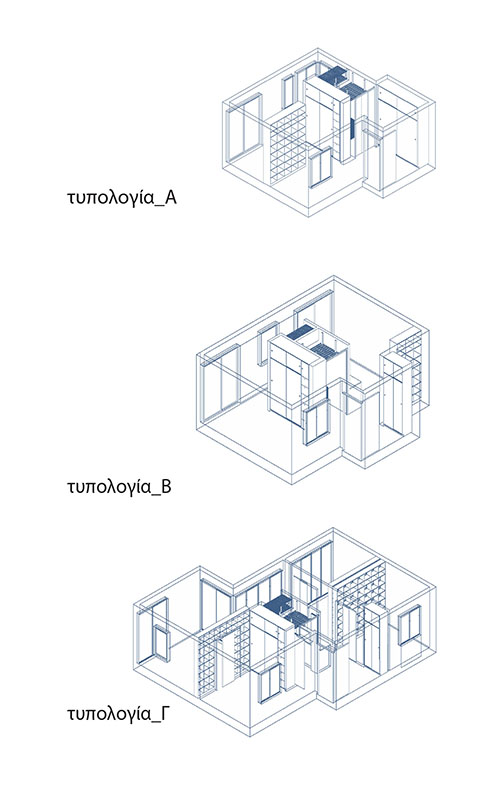
Three main housing typologies—designed for one, two, or three or more people—form a flexible network that adapts to each resident’s needs, strengthening community dynamics. Their shared “core,” which includes essential facilities (bathroom, kitchenette, storage, workspace, and greywater treatment), is surrounded by sleeping and living areas. The design of shared kitchens aims to liberate women from the sole responsibility of food preparation, redistributing care and production among all members of the household.
The apartment block is reimagined as a neighborhood within the city, promoting sustainable practices, collaborative design, reducing ecological footprint, and enhancing social interaction. By integrating bio-material production techniques and exploring the potentials of cast materials on both household and communal scales, the thesis proposes a new understanding of materiality, community, and habitation.
Finally, it asks: if we were to rethink housing by reducing private space and strengthening shared structures, could we address the pressing challenges of housing affordability, high rents, and social isolation in modern Greek cities?