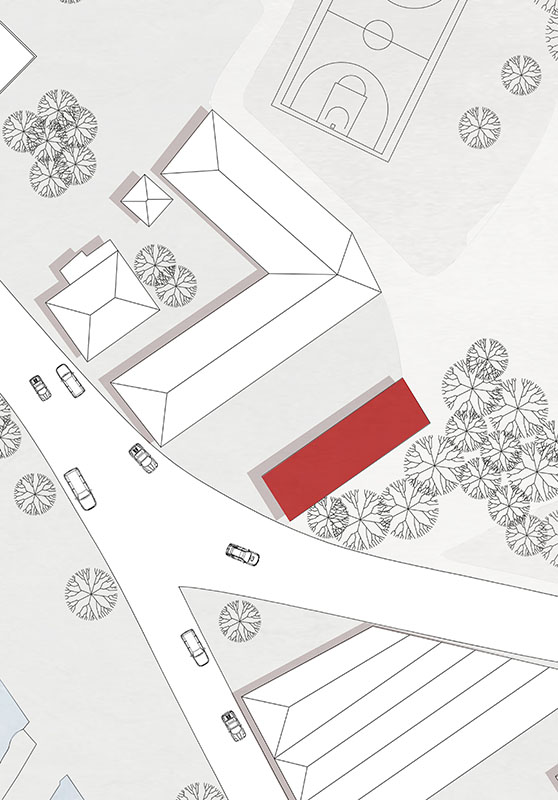
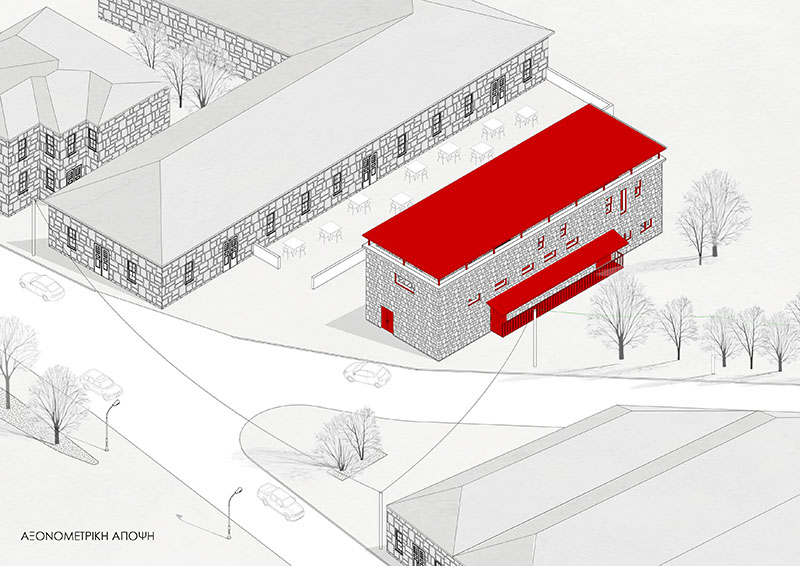
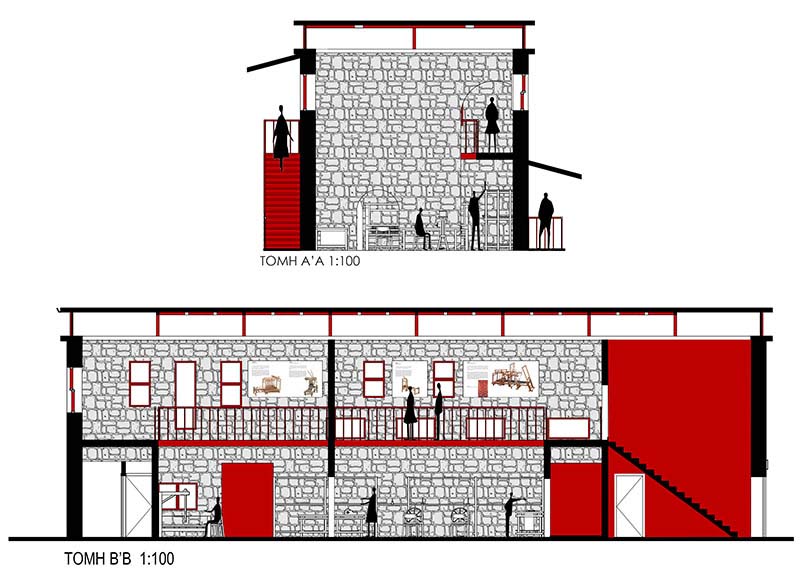
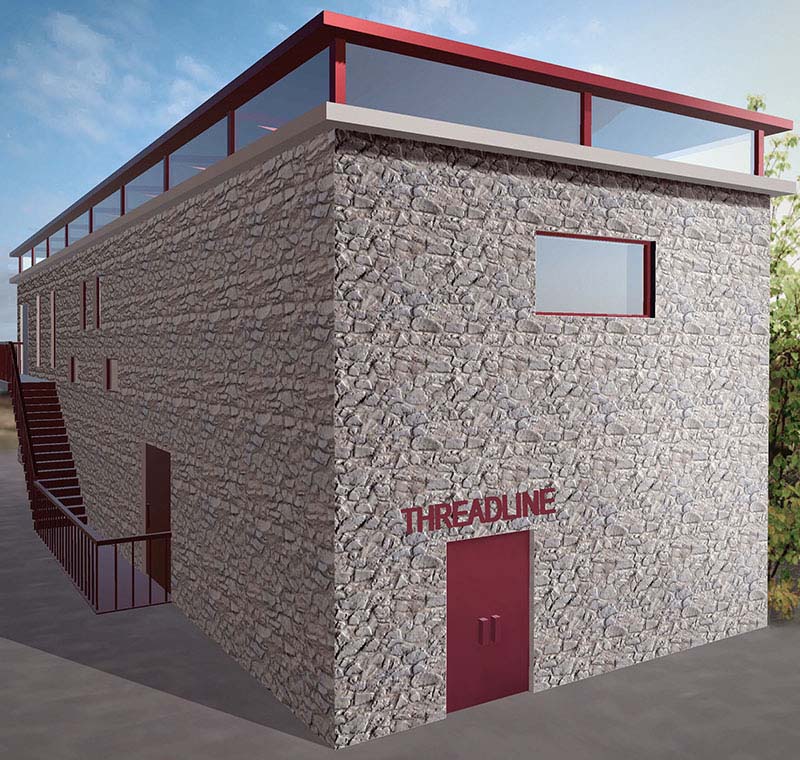
This thesis focuses on the adaptive reuse of an abandoned stone building located in the coastal area of Agria. The aim is to transform the structure into a vibrant and creative space dedicated to wool processing and traditional weaving. A key design intention is the preservation and enhancement of the existing stonework, in order to safeguard the historical identity of the building shell, while incorporating contemporary architectural elements that integrate harmoniously with the whole.
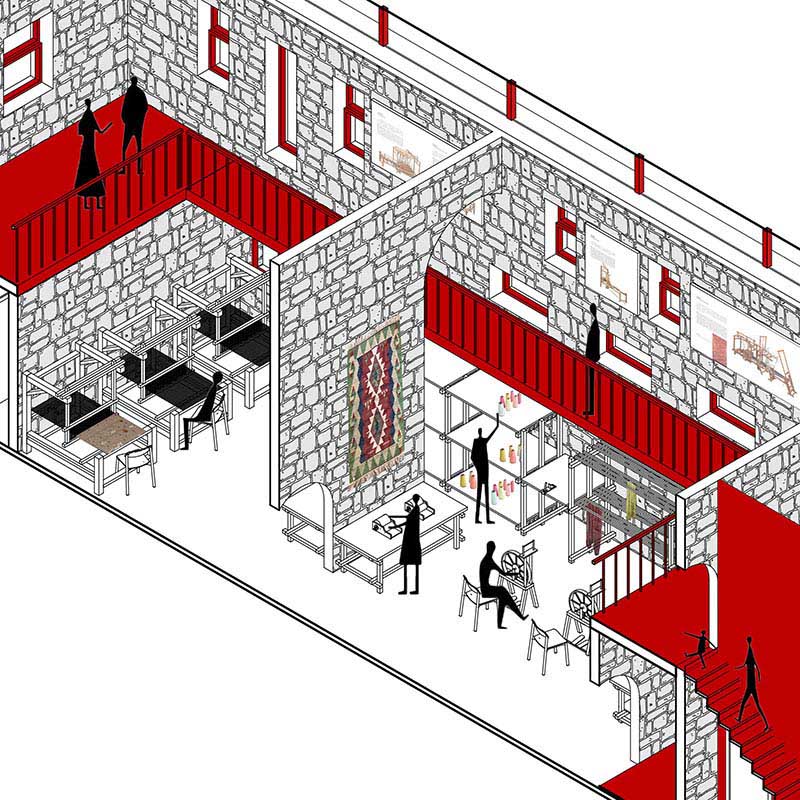
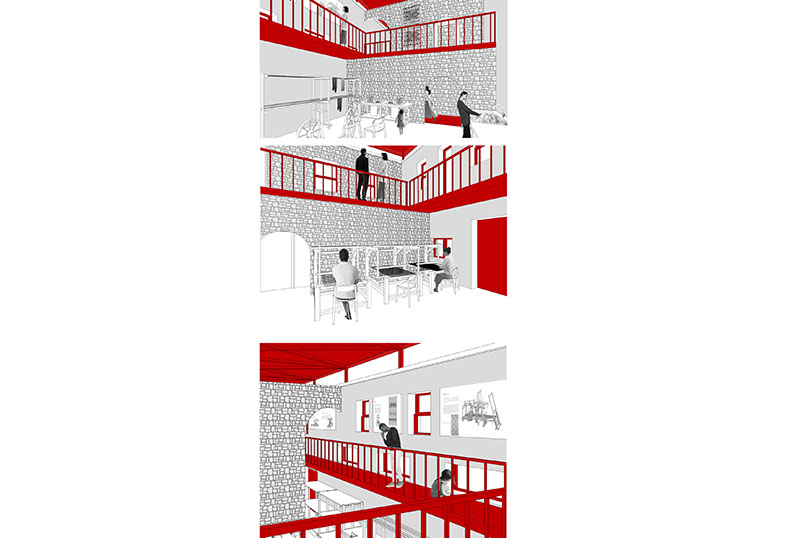
The new space hosts a fully functional workshop where wool is washed, processed, and spun into yarn, which is then used to create woven textiles using traditional looms. The design allows for public engagement in the production process, emphasizing the educational and cultural aspects of the project.
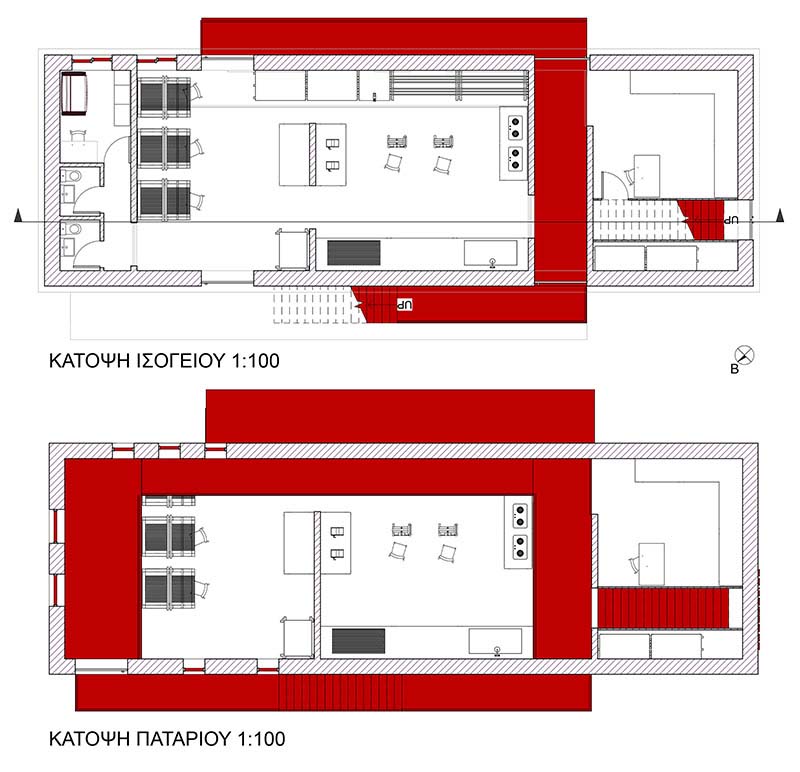
The central concept of the proposal is represented by a “red thread,” expressed through a red-colored metal walkway. This pathway runs through both the interior and exterior of the building, following the journey of the material and the visitor—from raw wool to finished textile. At the same time, it provides a narrative framework, offering historical references to the art of weaving and the use of the loom.
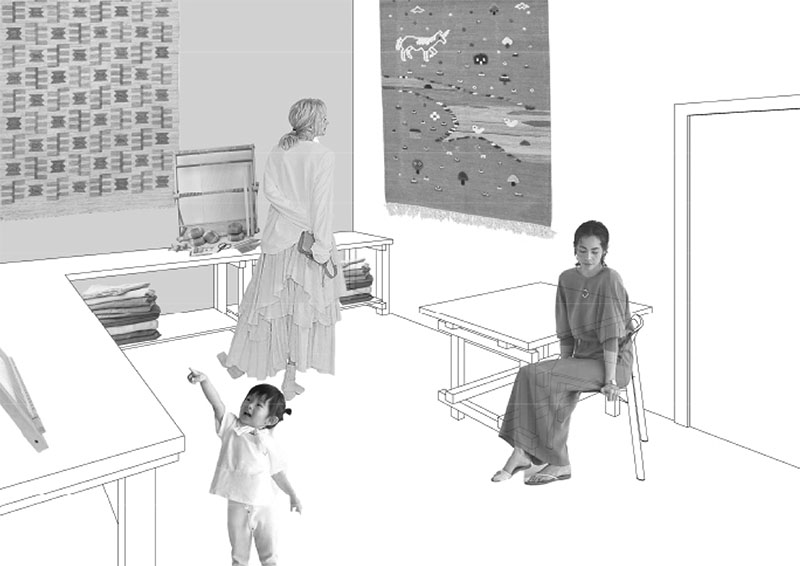
The interior is organized into two main rooms: one dedicated to wool processing and the other to weaving. Additional auxiliary spaces include a WC and a staff room. A small retail area has also been designed within the building, accessible to all visitors. The proposal aims to create a cultural activity hub that strengthens the public’s connection to tradition and contributes to the revitalization of the local community of Agria.