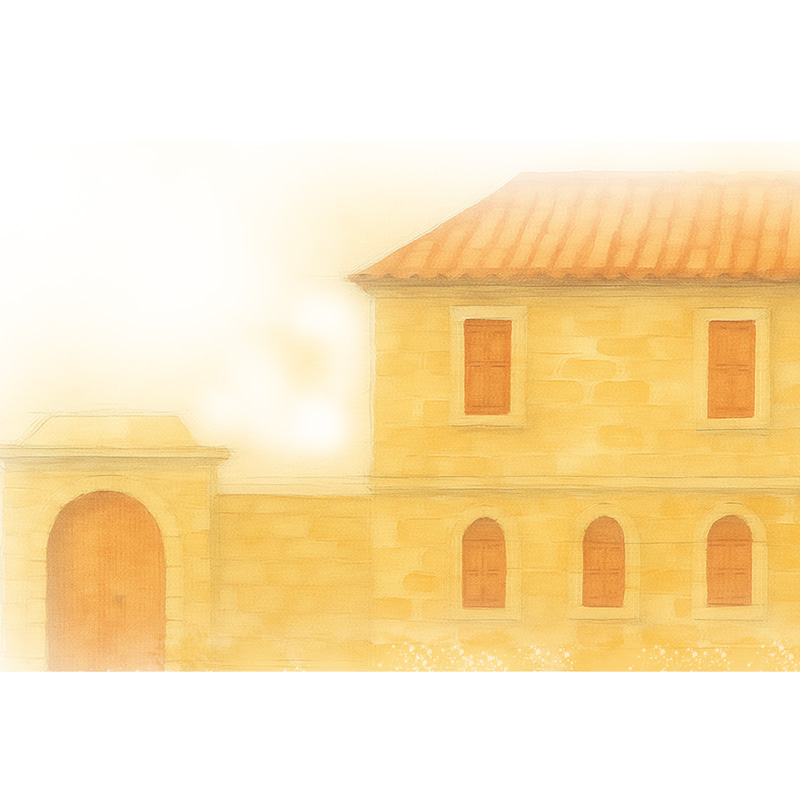
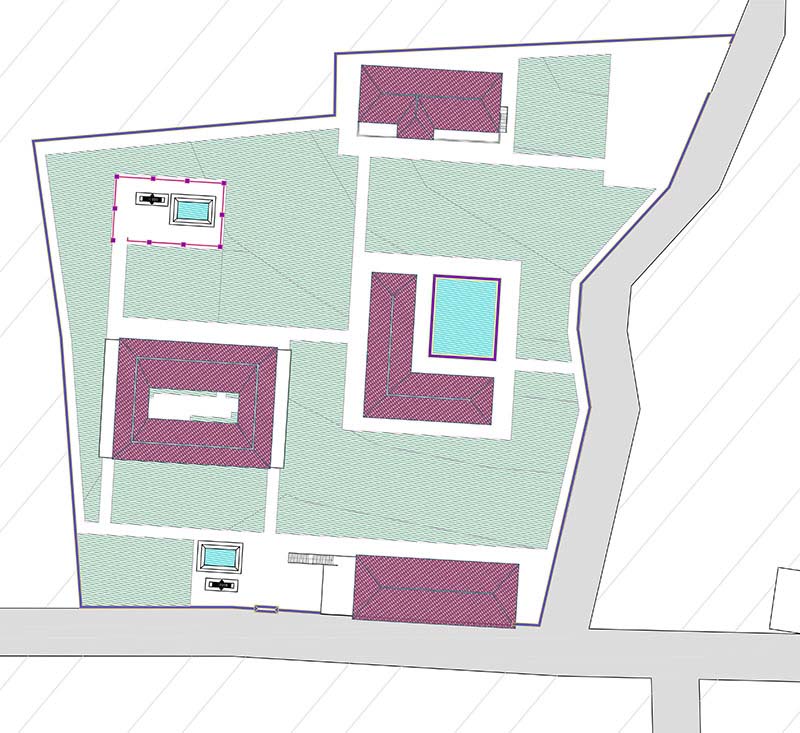
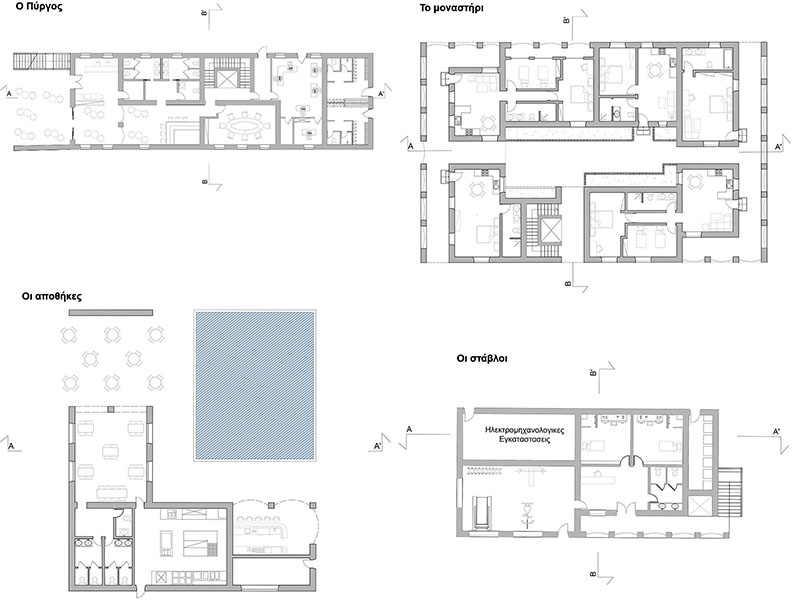
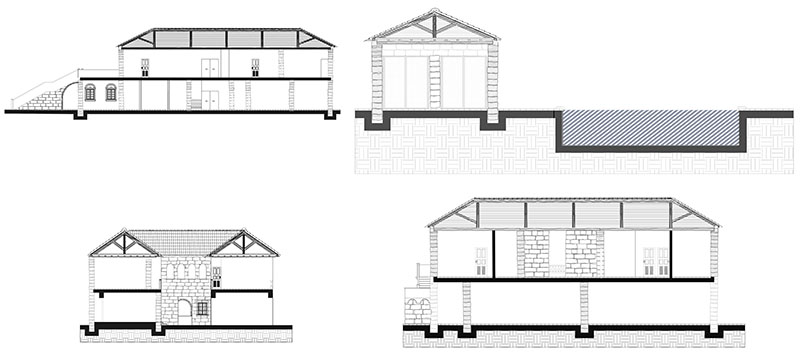
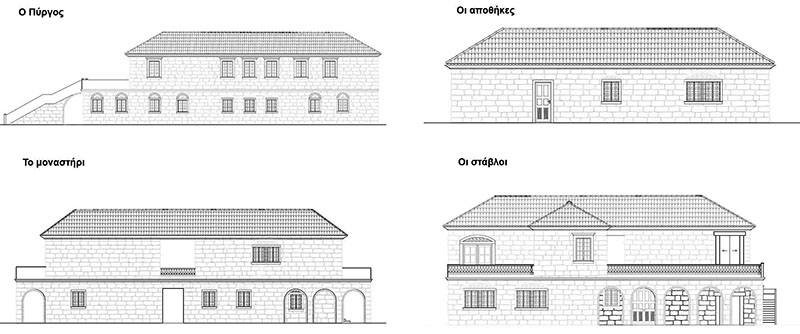
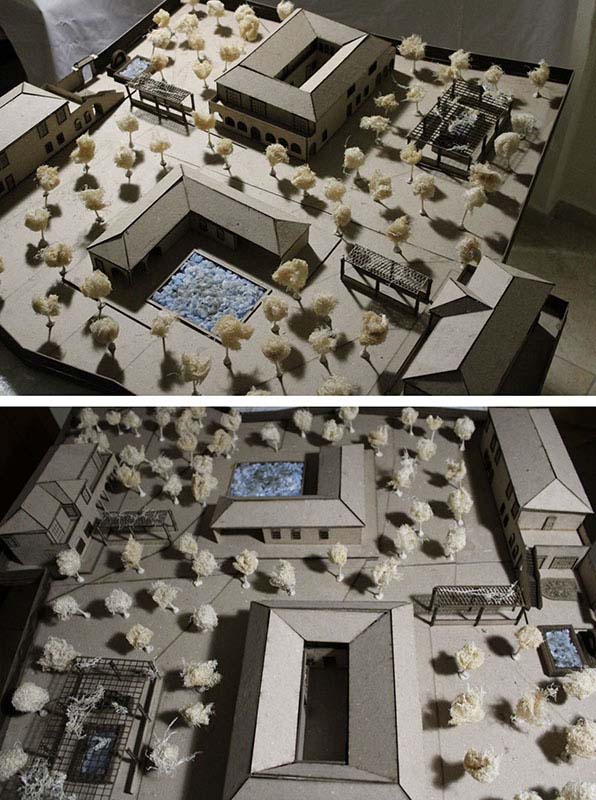
This diploma thesis explores the design of a contemporary hotel unit, drawing inspiration from the architecture and operational logic of the historic mansions found in Kampos, Chios. These mansions, built centuries ago, were not merely residences but complex, multifunctional estates that integrated domestic life with agricultural production, particularly focusing on the cultivation and export of citrus fruits, which played a central role in the island’s economy and identity.
The primary objective of this study was to design a modern hotel that respects and embodies the spirit of these estates. The architectural approach sought to preserve the characteristic atmosphere, human scale, and compositional principles that defined the mansions of Kampos, while adapting them to meet the functional and aesthetic demands of contemporary hospitality. Central to this effort was the detailed analysis of the traditional structures, their internal organization, and the way they facilitated both private living and agricultural processing, storage, and distribution.
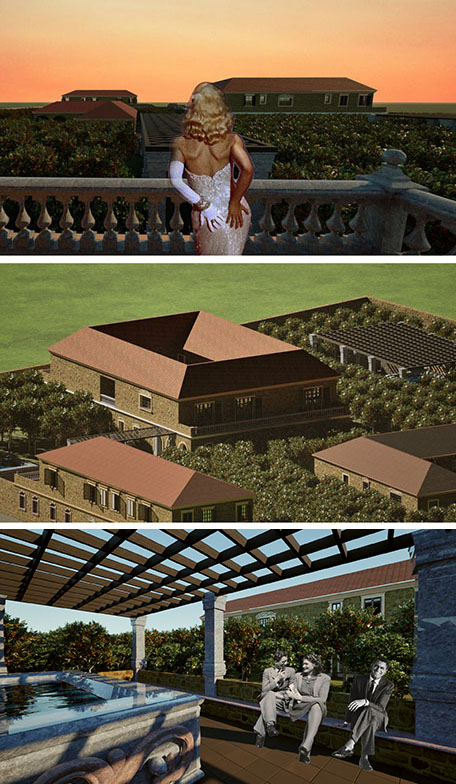
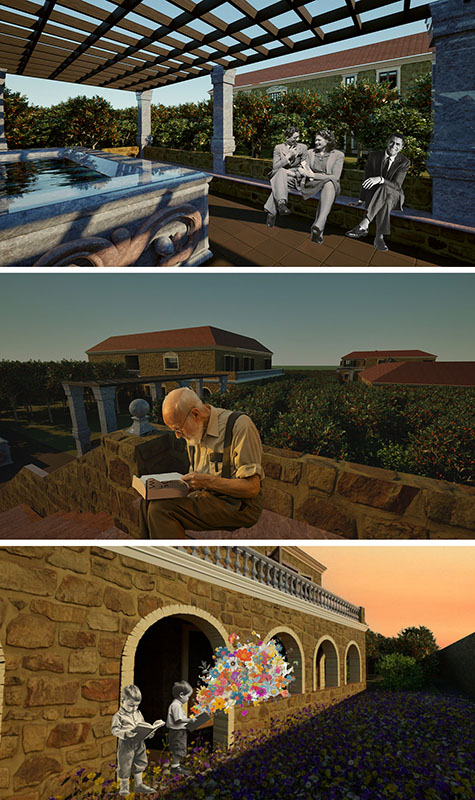
The synthesis emphasizes the dynamic interplay between architecture and landscape, aiming to integrate the new hotel organically into the citrus groves and the broader natural environment that characterizes Kampos. The design highlights the visual and physical connections between built elements and cultivated land, paying tribute to the region’s historical legacy while promoting a renewed dialogue between heritage and modernity. This blending of tradition and innovation offers guests an authentic experience rooted in the local context, reinforcing the enduring relationship between architectural form, agricultural heritage, and the unique natural wealth of Chios.