Humans depend directly on their environment. They adapt to it and its changes on a daily basis in order to survive. Over the years, due to the development of world civilization and the way humans function every day, their contact with their environment seems to have changed. Along with technological development and the dependence of an individual's daily life on it, people, especially in urban centers, are becoming increasingly distant from the natural environment. The long working hours allow little exposure to natural light, which is essential for people's physical and mental health. A variety of diseases and disorders have been linked to reduced exposure to adequate light around the clock. However, it seems that the main way of dealing with them is through light itself.
Research has shown that despite the lack of natural lighting in the everyday life of the modern man, combining it with appropriate artificial lighting can be significantly beneficial to physical and mental health. Human centric lighting revolves around the needs of the human being, especially the sleep cycle, as it tends to mimic the natural changes of light during the day in order to promote the health and well-being of each individual. More specifically, melanopic lighting is a type of human centric lighting that focuses on influencing and regulating melatonin secretion, which is activated by exposure to certain types of light, and the circadian rhythm, which is partly identical to the natural sleep cycle.
Because of this, architects and designers are trying to incorporate this type of lighting into the spaces they create. Based on the basic lighting requirements of a space and the new standards concerning human centric lighting and its achievement, they are designing light-flexible spaces that aim at smooth everyday life and human well-being.
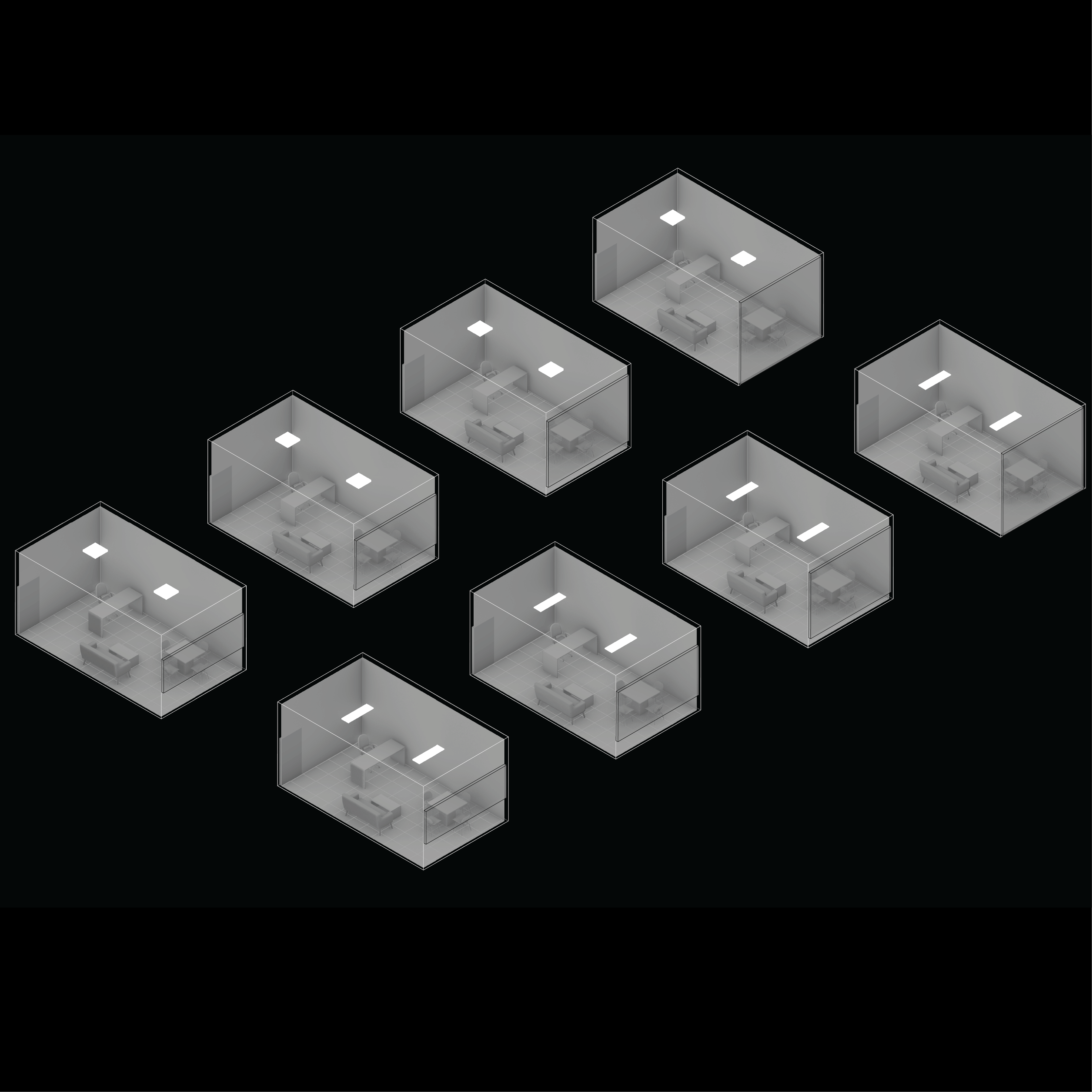
In this paper, firstly the issue of anthropocentric and melanopic lighting in relation to the physical and mental health of the individual is studied. In the second experimental stage, calculations are carried out using the programs Relux and CS Calculator to check the lighting levels in a typical office space, that are produced by two different systems - one indirect and one direct lighting system, as well as the natural lighting entering the room and whether they adhere to and comply with the standards set by the responsible organizations regarding the levels of melanopic lighting in similar spaces.
Abstract