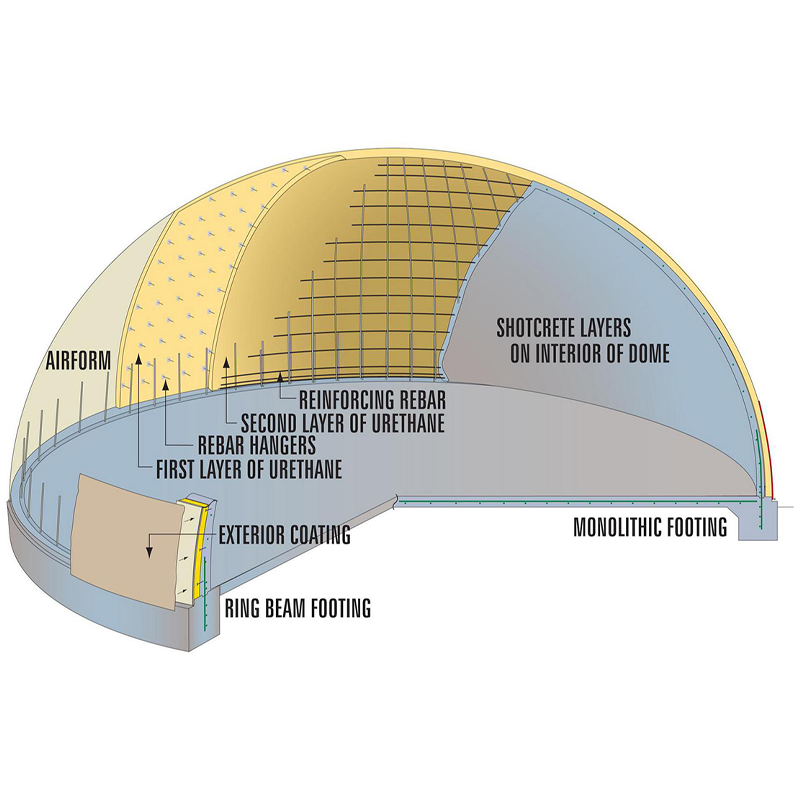
This study reflects the continuing development and efficiency of monolithic vaulted structures, starting in the 1970s in Europe and America. We focus mainly on chapters covering the development and application of monolithic vaulted structures. These structures combine economy, environmental friendliness and durability, as well as ease of maintenance. With easy construction and cost-effective performance, monolithic domes respond effectively to different climates, offering better and more comfortable living conditions. This project takes an extensive look at the exciting world of monolithic domes, highlighting the modern innovation, durability, and high energy efficiency that characterize them. The history, construction technologies, and social cultural factors that make up this impressive architecture are highlighted. Also examined are the innovative methods, materials, and challenges encountered in their construction. With a focus on energy efficiency, the dimensions that make monolithic domes special and their pioneering role in the field of architecture are highlighted. Furthermore, the flexible internal layout of monolithic domes offers freedom in the design and use of interior space. Taking a multidimensional approach, their overall impact on the environment and society is examined. In conclusion, the research highlights the importance of the interaction between history, technology, and culture in the creation of monolithic domes that combine aesthetics and functionality. It then focuses on their adaptation to different climatic environments, focusing on optimizing the design for energy efficiency and sustainability. Finally, the timeliness of this research is highlighted in the context of addressing the impacts of climate change and the need for resilient structures that protect communities from natural disasters.