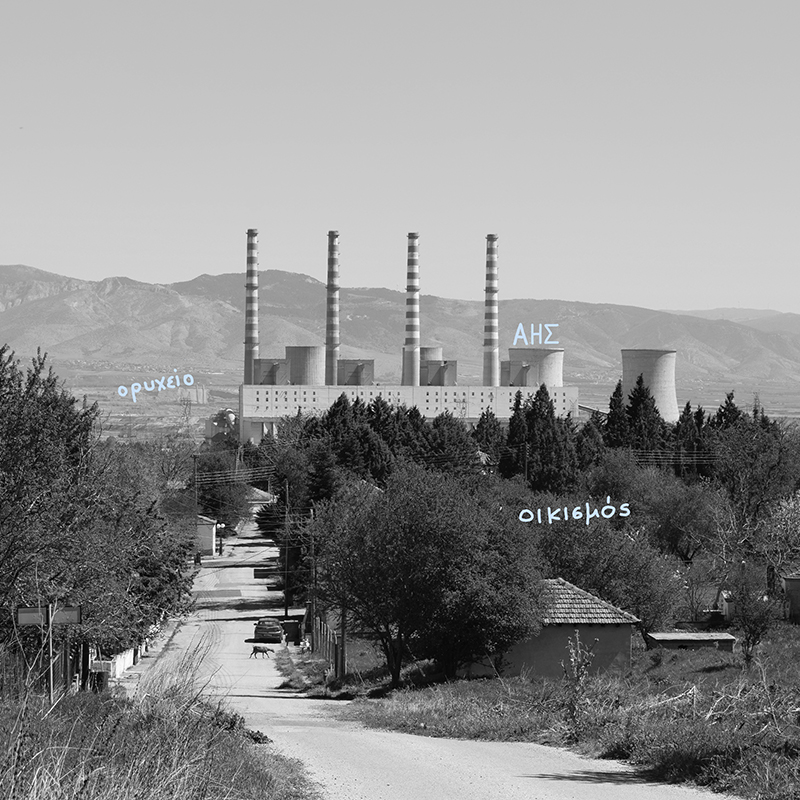
Ptolemaida, as the region with the largest exploitable lignite reserves in Greece, became the locus of lignite mining and the efforts to electrify and rebuild post-war Greece. The opening of the mines in 1957, contributed to the achievement of energy sovereignty and the economic development of the country and caused a series of transformations in the region’s landscape. Over the course of nearly seven decades, relentless mining activity has left its mark on the area, dramatically shaping the landscape, and disrupting the social and productive structures. The settlements disappeared to make way for the mining process, the communities that inhabited them found themselves uprooted and in constant displacement and movement, and the ecosystems that once thrived in the area were destroyed with an indeterminate recovery time. The term «slow violence,» introduced by Rob Nixon in his 2011 book «Slow Violence and the Environmentalism of the Poor,» is considered useful for studying these impacts. By mapping the manifestations of «slow violence» in the Ptolemaida area across multiple scales, this research attempts to highlight the stories and narratives of those marginalized by lignite mining, a process whose consequences are inextricably linked to the Anthropocene Epoch. In the midst of the abrupt delignification of Ptolemaida and the country in general, and the challenges of climate breakdown, alternative mappings of lignite mining history are crucial for contemplating restorative practices, social and environmental justice, and understanding the overall human footprint on the planet in the Anthropocene era we are currently experiencing.