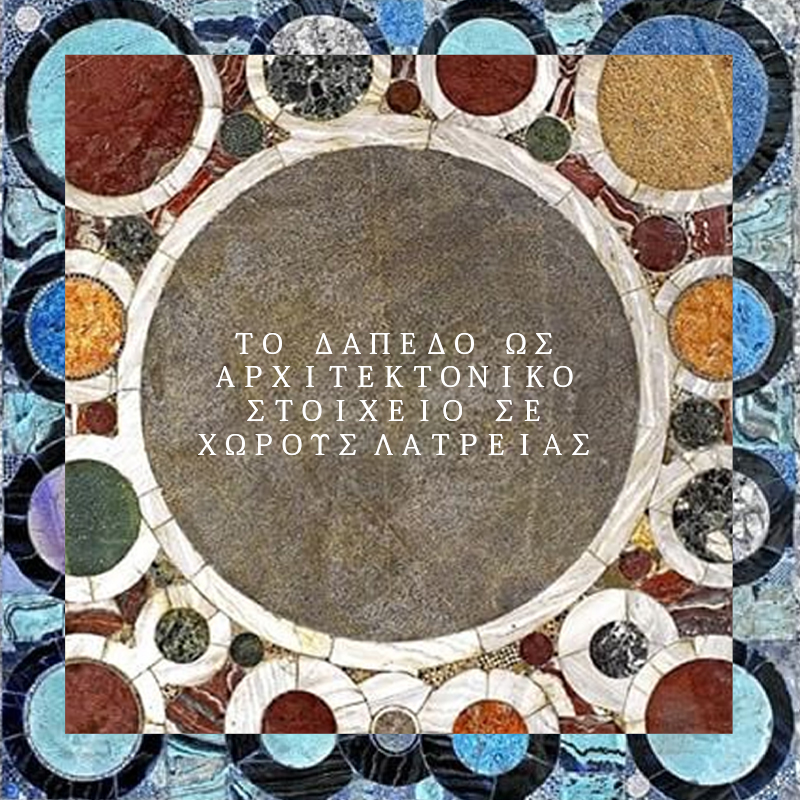
The paving of religious places of worship is an integral part of history, consisting of expensive materials and symbolism, as well as particular elements of the construction of the pavements over the centuries. This research paper presents and analyses samples of Christian church coatings in the European region, with the main focal points being the Mediterranean, Britain and France. Emphasis is placed on the choice of materials as well as the reasons that may have led to it, the techniques used, the geometry and the image produced by the whole floor in each church, as well as the impression it leaves on the visitor. Observing the various examples highlights styles and reoccurring themes or motifs in churches of the same or different countries, as a result of specific phenomena in relation to the time period in which the floor was constructed or exchanges of ideas between artists of that period.
Church architecture, in which flooring is included, apart from its visual and aesthetic stimulation, follows a set of regulations. Geometric shapes, the placement of certain elements on the surface, the conversation between the floor and the rest of the interior, ultimately give the church both prestige and meaning, while it is not at all rare for some places of worship to be distinguished only by the appearance of the floor which they "house".